
A self-driving car is only as good as the system watching over it.
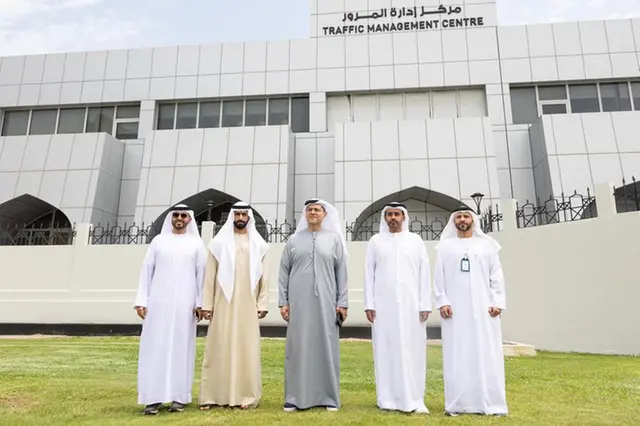
Abu Dhabi just opened a central control room for autonomous vehicles. The Integrated Transport Centre (ITC), which operates under the Department of Municipalities and Transport, launched this facility to monitor every self-driving car, truck, and delivery vehicle across the emirate.
This is not a small upgrade. It is a fundamental shift in how the city thinks about driverless transport.
Most coverage of autonomous vehicles focuses on the cars themselves. The sensors, the software, the cameras. But the real story is always about who is in charge. A vehicle without a driver still needs a system to manage it. Abu Dhabi just built that system.
The control room uses a platform called AViTOMS. That stands for Autonomous Vehicle Integration and Testing Operations Management System. The platform tracks vehicle locations, speeds, and routes in real time. It records trips, coordinates emergency responses, and generates reports. It also manages permits and approves operational routes for licensed providers.
The facility operates during approved hours. That means officials can respond immediately to any operational or emergency. This is not passive monitoring. This is active management.
The Control Room Turns Autonomous Vehicles into a Managed Fleet
A self-driving car on its own is an experiment. A self-driving car connected to a central command center is a service.
Without oversight, autonomous vehicles operate in isolation. Each car makes its own decisions based on its own sensors. That works for a handful of vehicles. It breaks down at scale.
Abu Dhabi now has a single point of control for all autonomous vehicle services operated by licensed providers. The control room provides direct supervision through advanced systems for real-time monitoring, data analysis, and decision support.
Dr Abdulla Hamad AlGhfeli, Acting Director General of the ITC, put it clearly. He said the control room responds to the rapid adoption of smart mobility technologies. Those technologies require an advanced supervisory system to ensure real-time monitoring and efficient risk management.
That is the core insight. Technology moves fast. Regulation must move faster. The control room closes that gap.
Safety Is Not a Feature. It Is the Foundation.
Every autonomous vehicle announcement promises safety. But safety does not come from the vehicle alone. It comes from the entire ecosystem.
The control room enables coordinated emergency responses with relevant authorities. If a self-driving car encounters a problem, the system does not leave it to figure things out alone. Human operators can step in. They can reroute vehicles. They can shut down operations if necessary.
Hamad Adel Al Afeefi, Executive Director of the Intelligent Transportation Systems Sector, said the center’s initiatives reflect a shift toward an integrated digital services model. That model strengthens Abu Dhabi’s leadership in the smart transportation sector.
This is not theoretical. Abu Dhabi has already been testing autonomous vehicles on its roads. The city conducted supervised trials of Tesla’s self-driving technology. It launched a pilot project for autonomous freight trucks within Khalifa Economic Zones. It introduced robotaxi services operated by Uber and WeRide.
Each of these projects needs oversight. The control room provides that oversight in one place.
The License Plates Are Not Just for Show
The control room opened on July 10. Three days later, Abu Dhabi introduced dedicated license plates for autonomous vehicles.
The plates have a unified blue design. Vehicles providing commercial services display the words “Auto Drive.” Vehicles used for testing and pilot programs display the word “Test”.
This matters for two reasons.
First, identification. Authorities and road users can now easily recognize autonomous vehicles on the road. That improves field monitoring and supports road safety.
Second, data collection. The plates help authorities and operators collect operational data. That data shapes policy and regulation as the sector expands.
The plates and the control room work together. The plates make vehicles visible. The control room makes them manageable.
Abu Dhabi Is Not Alone, But It Is Moving First
Dubai has its own autonomous vehicle framework. The Roads and Transport Authority adopted executive regulations in December 2025 under Law No. 9 of 2023. Dubai targets 25 percent autonomous journeys by 2030.
Ras Al Khaimah issued a law regulating autonomous vehicles in January 2026.
But Abu Dhabi is the first to build a dedicated control room for the entire emirate. That is a different level of commitment.
The control room covers all autonomous vehicle services operated by licensed providers. It fosters a regulatory environment that ensures smart mobility solutions are adopted with the highest standards of safety and efficiency.
This is not a pilot project. This is infrastructure.
Why This Matters for the Industry
The autonomous vehicle industry faces a trust problem. People are nervous about self-driving cars. They have seen the headlines about accidents and software failures.
A control room does not eliminate risk. But it reduces uncertainty. It shows that someone is watching. Someone can intervene.
That matters for adoption. People are more likely to use a service they believe is safe. Regulators are more likely to approve services they believe are managed properly. Investors are more likely to fund services they believe are sustainable.
Abu Dhabi is sending a message. The city is serious about autonomous vehicles. But it is serious about safety first.
The Bigger Picture
Abu Dhabi is building a smart transportation system. Not just smart vehicles, but a smart system.
The control room is one piece. The license plates are another. The trials and pilot projects are more pieces.
But the control room is the backbone. It is the place where all the pieces come together. It is the system that makes autonomous vehicles work as a fleet, not as a collection of experiments.