
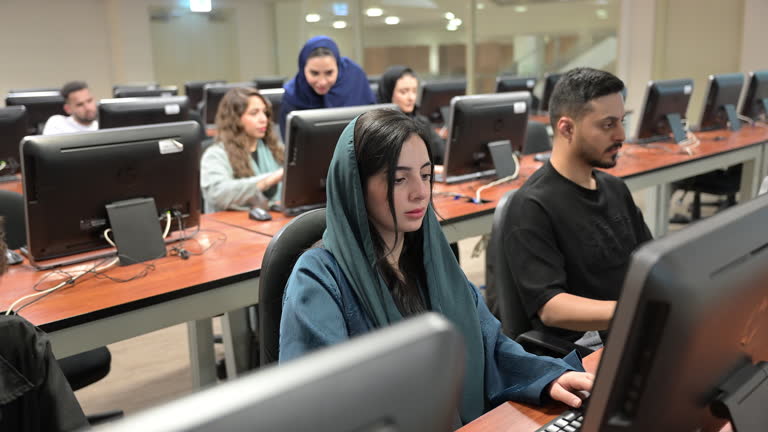
Saudi Arabia’s Ministry of Communications and Information Technology recently launched a national AI program that will provide training to ten regions across the Kingdom. The initiative, run in partnership with Google Cloud, offers week-long training combining virtual sessions with hands-on labs in cities from Jeddah to Dammam. Topics include generative AI, data analytics, machine learning, and cybersecurity.
The Kingdom Has Been Building This Foundation for Years
The AI and Cloud Kingdom Tour did not appear out of nowhere. It sits on top of work that started years ago.
In 2019, Saudi Arabia established the Saudi Data and Artificial Intelligence Authority (SDAIA) to lead the national strategy for data and AI. The strategy rests on six pillars: ambition, competencies, policies, investment, innovation, and ecosystem. This gave the Kingdom a structured approach while other countries were still figuring out what AI even meant for their governments.
By March 2026, the Saudi Cabinet had declared 2026 the Year of Artificial Intelligence. That designation was not ceremonial. It signaled that AI had moved from a technology priority to a national transformation lever. The Kingdom ranked 14th in the 2025 Global AI Index and led the Arab world in AI model development. These are not accidental achievements.
Training One Million People Changes the Game
The new tour with Google Cloud targets students, graduates, developers, and engineers. Participants receive completion badges and skill badges issued by Google Cloud. This gives them credentials that matter in the job market.
But this is only the latest layer. The SAMAI initiative has already trained more than one million Saudi citizens in AI. SAMAI 2, launched in January 2026, partners with 11 government ministries to embed AI skills across the public sector. The ministries include health, finance, justice, education, and energy. This is not random. These are the sectors where AI can deliver the biggest productivity gains.
More than 11,000 specialists have received advanced AI training. Two-thirds of Saudi government workers now use AI tools daily. Nearly half have been using AI for more than a year. The government is not preparing for an AI future. It is living in one.
Big Tech Is Betting Billions on Saudi Infrastructure
Training means nothing without the infrastructure to run AI systems. Saudi Arabia has been building that, too.
AWS is investing more than $5.3 billion in a dedicated cloud region in Saudi Arabia, scheduled to go live in 2026. The Kingdom partnered with AWS to launch a $5 billion AI Zone that will leverage AWS infrastructure, including UltraCluster networks and Amazon SageMaker. As part of that deal, AWS will train 100,000 Saudis in AI and cloud technologies.
Google Cloud is also expanding. The AI and Cloud Kingdom Tour is one piece of a broader push. Microsoft confirmed its Saudi data centre region will be available from the fourth quarter of 2026. The Kingdom already has around 40 operational co-location data centres. The Hexagon Data Centre in Riyadh, launched in early 2026, is the world’s largest government-run data centre with 480 MW capacity.
These are not symbolic investments. They are physical infrastructure that will support AI deployment at scale.
Data Sovereignty Is the Real Prize
Here is what makes Saudi Arabia’s approach different from many other countries. The Kingdom is not just adopting AI. It is building AI infrastructure that it controls.
Investment in sovereign data centres has accelerated sharply. The goal is to ensure sensitive data remains under domestic control. Magna AI and Emaar Executive Company recently signed an agreement to build sovereign AI data centre infrastructure across Saudi Arabia. The aim is to enable organisations to train and deploy AI models while maintaining control over data, governance, and compliance.
IBM’s research shows that 90% of Saudi executives believe AI sovereignty should be part of their business strategy in 2026. This is not about nationalism. It is about practicality. AI systems depend on data. If that data leaves the country or sits on platforms owned elsewhere, the country loses control over its own digital future. Saudi Arabia is making sure that does not happen.
The Economic Stakes Are Massive
All of this investment has a clear purpose. The Saudi government projects that AI could contribute up to $135 billion to the national economy by 2030. That is about 12.4% of GDP. For context, that is larger than many entire national economies.
Government spending on emerging technologies increased by over 56% in 2024. AI companies raised $9.1 billion in funding. The cumulative scale of committed investment in Gulf AI infrastructure has crossed $40 billion across announced programs. These are not small numbers.
The Kingdom is positioning itself as a global AI hub. It became the first Arab nation to join the Global Partnership on AI. It is not just importing technology. It is building the capability to develop and export its own solutions.
Why This Matters Beyond Saudi Arabia
Other countries are watching what Saudi Arabia is doing. The approach offers a model for how nations can build AI capability without surrendering control to foreign tech companies.
The combination of massive infrastructure investment, nationwide training programs, sovereign data centres, and clear regulatory frameworks creates something unusual. Most countries have pieces of this puzzle. Saudi Arabia is assembling the whole thing at once.
The AI and Cloud Kingdom Tour with Google Cloud is a small part of this larger picture. But it is a telling part. When a government takes AI training to ten different regions, when it partners with global tech companies while maintaining its own strategic direction, when it trains a million citizens and builds the world’s largest government data centre, something significant is happening.