For the estimated 537 million adults living with diabetes worldwide, the daily ritual of monitoring blood glucose is a constant, often painful, reminder of their condition. The finger prick, a small, sharp jab that draws a drop of blood for testing, is the single biggest reason people with diabetes stop tracking their glucose consistently. This simple act, repeated multiple times a day, creates friction, discomfort, and, for many, a psychological barrier to effective disease management.
Now, a team of researchers and students at Qatar University believes it has found a way to remove that barrier entirely. Their invention, GlucoWatch, is a wearable device that estimates blood glucose levels without a single drop of blood. It is a development that could reshape how millions of people manage their diabetes and how medical technology is being developed in the Middle East.
The Technology Behind the Watch
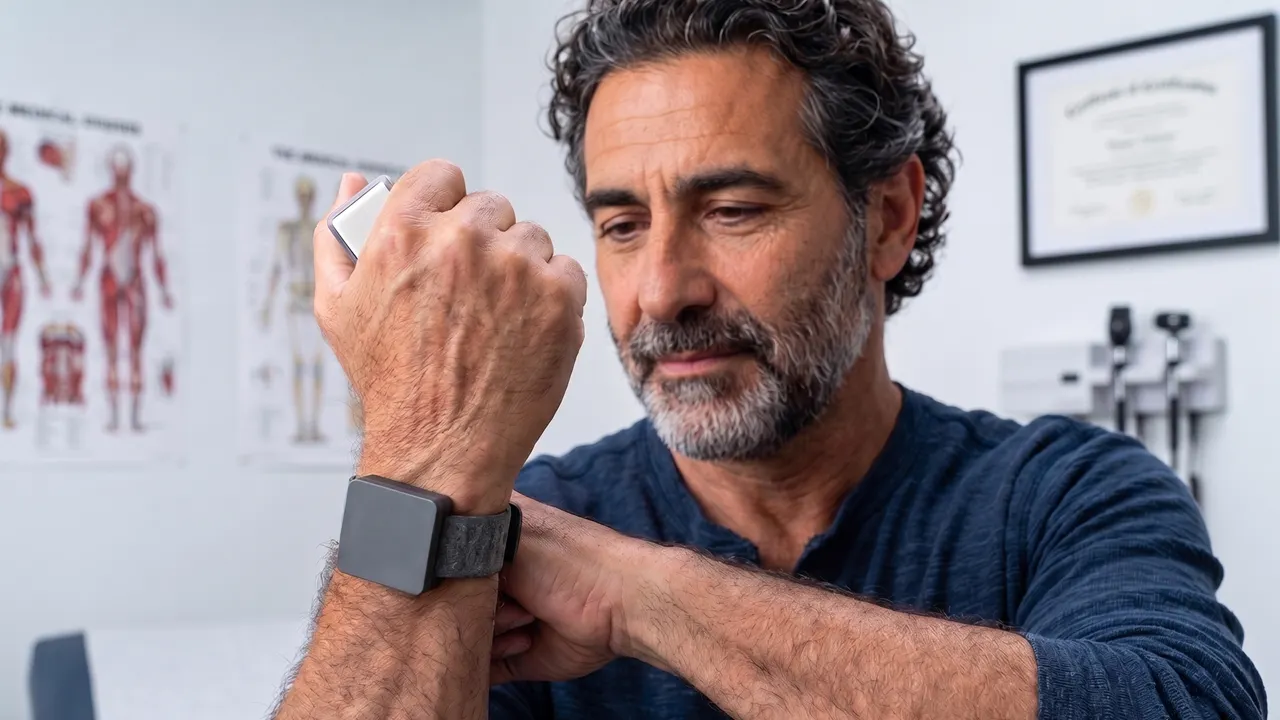
GlucoWatch is not a traditional continuous glucose monitor (CGM). Instead of relying on a tiny sensor filament inserted under the skin, it uses a combination of hardware and artificial intelligence to estimate glucose levels from the body’s surface.
The device, which resembles a smartwatch, reads physiological signals from the wearer. It analyses heart rate signals, blood pressure readings, and selected demographic data. An AI model then processes these inputs to generate a glucose estimate, which is displayed on a connected mobile application. The system is designed to issue alerts when glucose levels fall outside medically approved ranges, and it allows users to share their health data with family members or healthcare providers under privacy safeguards.
The research team, led by Dr Khalid Abualsaud, included computer engineering students Nora Al Bardini, Mazoon Al Shahwani, Fatima Al Kaabi, and Sara Al Muhannadi. What began as a graduation project evolved into a specialised research initiative, progressing through prototype design, AI algorithm development, mobile app creation, and initial validation testing against reference measurements.
The project has already secured recognition. GlucoWatch won a gold medal at the International Invention Fair of the Middle East, held in Kuwait in 2023. A US patent application for the technology has also been published.
The Significance of GlucoWatch
The significance of GlucoWatch extends beyond the device itself. It addresses a fundamental problem in diabetes care.
For people with diabetes, consistent glucose monitoring is not optional. It is essential for managing the condition, preventing complications, and making informed decisions about diet, exercise, and medication. But the finger prick is a barrier. It is inconvenient, painful, and a constant reminder of illness. Many people simply stop testing as frequently as they should.
Non-invasive monitoring, the ability to track glucose without breaking the skin, has been described as one of the most sought-after breakthroughs in medical device research globally. Major med-tech firms have poured years and considerable funding into cracking this problem, with limited commercial success so far. The fact that a working, patented prototype has emerged from a university graduation project, rather than a corporate lab, is notable.
GlucoWatch is entering a market that is poised for significant growth. The global non-invasive glucose monitoring device market was valued at approximately USD 1 billion in 2024 and is expected to reach USD 2.3 billion by 2031, growing at a compound annual growth rate of 12.60 percent. Other projections suggest even more aggressive growth, with some estimates forecasting the market to expand from USD 62 million in 2025 to USD 318 million by 2035, a CAGR of 25.5 percent.
The Competitive Ecosystem
GlucoWatch is not the only player in the non-invasive glucose monitoring space, but its approach is distinct.
Most commercially available CGMs, such as those from Dexcom and Abbott, still require a sensor filament inserted under the skin. While these devices eliminate the need for finger pricks for calibration, they still involve a degree of invasiveness. Trinity Biotech, for example, is developing a redesigned needle-free glucose sensor that delivers accurate readings across a full 15-day wear period without finger-stick calibration. Biolinq has received de novo classification for a needle-free glucose monitor that uses a microsensor array.
GlucoWatch’s approach is different. It does not rely on any sensor inserted into the skin at all. Instead, it uses AI to analyse physiological signals from the body’s surface. This makes it completely non-invasive, a distinction that could be a significant advantage for user adoption.
However, this approach also faces challenges. The accuracy of glucose estimates derived from physiological signals like heart rate and blood pressure is a subject of ongoing research. The body’s response to glucose fluctuations is complex and can be influenced by factors such as stress, exercise, and illness. Developing an AI model that can reliably estimate glucose levels across a diverse population is a significant technical hurdle.
The research team at Qatar University is aware of these challenges. They are now expanding their database, improving their AI models, and developing an advanced version of the wearable device. They are also pursuing partnerships with healthcare and industrial organisations to bring the technology to market at an affordable cost. The team aims to complete scientific validation and regulatory steps before introducing the device to patients in Qatar and beyond.
The Middle East’s Innovation Moment
GlucoWatch is part of a broader trend. Across the Middle East, governments and universities are investing heavily in research and development, particularly in areas like artificial intelligence and healthcare technology.
Qatar, in particular, has positioned itself as a hub for innovation. The country has invested in world-class research institutions, including Qatar University and the Qatar Foundation, and has created a regulatory environment that encourages the development and commercialisation of new technologies.
The emergence of GlucoWatch from a university research project, rather than a corporate lab, is significant. It demonstrates that the region is not just a consumer of technology but a producer of it. It also highlights the potential of university-industry partnerships to translate research into commercial products.
The research team’s plans to pursue partnerships with healthcare and industrial organisations are a critical next step. Bringing a medical device to market requires more than just a working prototype. It requires clinical validation, regulatory approval, manufacturing capabilities, and a distribution network. These are areas where established healthcare and industrial partners can provide essential expertise and resources.
The Path to Commercialisation
The road from a university lab to a commercial product is long and uncertain. For GlucoWatch, several hurdles remain.
First, the device must undergo rigorous clinical validation. The AI model’s glucose estimates must be proven accurate across a wide range of patients and conditions. The research team is already expanding its database and improving its AI models, but this is a process that will take time and resources.
Second, the device must secure regulatory approval. In the United States, this means clearance from the Food and Drug Administration. In other markets, it means approval from local regulatory bodies. The team has stated its intention to complete the necessary regulatory steps before introducing the device to patients.
Third, the device must be manufactured at scale and at a cost that makes it accessible to patients. The research team has expressed a commitment to bringing the technology to market at an affordable cost. Achieving this will require partnerships with manufacturers and a business model that balances affordability with sustainability.
Finally, the device must compete in a crowded market. While GlucoWatch’s completely non-invasive approach is a differentiator, it will face competition from established players like Dexcom and Abbott, as well as emerging players like Trinity Biotech and Biolinq.
The Way Forward for Non-Invasive Monitoring
GlucoWatch is a reminder that the most significant innovations often come from unexpected places. A university research project, driven by students and a dedicated researcher, has produced a patented, working prototype that addresses one of the most persistent challenges in diabetes care.
The device’s success is not guaranteed. The path to commercialisation is long and uncertain. But the fact that it exists at all is a signal. The Middle East is not just a market for medical technology; it is becoming a source of it.
For the millions of people with diabetes who dread the daily finger prick, GlucoWatch represents a future where managing their condition might be a little less painful, a little less inconvenient, and a little more human. That future is not here yet, but it is closer than it was yesterday.