
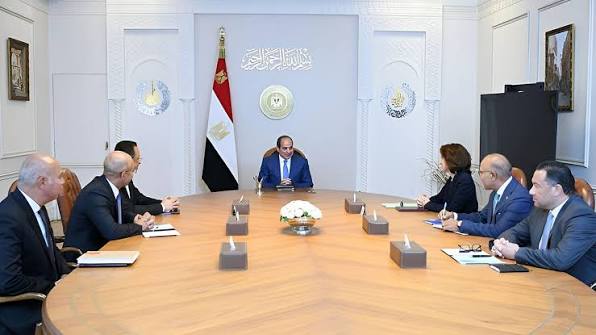
Egypt has secured a significant commitment from one of Europe’s largest telecom operators. Orange Group has pledged €25 million to support artificial intelligence and advanced technology startups in the country, alongside training grants for approximately 200,000 Egyptians. The announcement came during a meeting between President Abdel Fattah El-Sisi and Orange Group CEO Christel Heydemann on September 27, 2026.
The pledge is more than a corporate social responsibility gesture. It is a strategic alignment between a global telecom operator and a nation racing to position itself as a regional AI hub. Egypt’s National AI Strategy 2025-2030 aims to make technology contribute 7.7% of GDP by 2030, train 30,000 AI specialists, and support 250 AI startups. Orange’s commitment feeds directly into those targets.
Orange Brings Capital, Training, and Infrastructure
The €25 million allocation targets startups operating in artificial intelligence and advanced technologies. Orange will also equip several Egyptian universities with modern technology laboratories, giving students hands-on experience with advanced digital tools.
The training component covers artificial intelligence, data analytics, cloud computing, and cybersecurity. Participants can earn internationally recognised professional certifications through partnerships with global technology companies. This builds on Egypt’s existing digital skills programs. The communications ministry signed a three-year agreement with Intel earlier in September to train one million citizens annually in AI and safe technology use.
President El-Sisi also called for cooperation with Orange on the second phase of Egypt’s National Digital Health Project. He pointed to the group’s expertise in digital infrastructure, cloud computing, cybersecurity, and systems integration. The presidency did not announce a formal agreement on that phase, but the discussion signals where Egypt wants Orange’s capabilities directed.
Egypt’s AI Strategy Needs Private Sector Partners
Egypt’s AI ambitions are substantial. The country aims to build a National Foundation Model and shift from consuming foreign technology to creating sovereign AI tools built with local data. It also wants 36% of the population using AI-powered tools daily by 2030.
Those goals require more than government funding. They need private sector capital, technical expertise, and execution capacity. Orange’s pledge addresses all three. The company already operates 5G infrastructure, data centers, and cloud services in Egypt. It has the technical foundation to support AI workloads at scale.
Egypt has attracted other major infrastructure investments. Vodafone Business, Elsewedy Electric, and Cassava Technologies are building Egypt’s first sovereign AI data center with Nvidia GPUs, targeting 200 megawatts of capacity and $1 billion in investment. Telecom Egypt and other operators have also expanded data center capacity. Orange’s AI commitment complements these efforts rather than competing with them.
Orange Is Building a Regional AI Strategy
Orange’s Egypt pledge is part of a broader strategic push across Africa and the Middle East. The group’s “Trust the Future” strategy, launched in February 2026, identifies AI, cloud computing, and cybersecurity as core growth areas. Orange plans to invest more than €5 billion across the region between 2026 and 2028, targeting 40 million new customers and double-digit growth in business-to-business services.
The company is developing local language AI models integrated into its Max it super app, which serves 23 million active users across Africa. Its AI research team has fine-tuned models to understand Wolof, Bambara, Lingala, and other languages that global AI systems do not support. That localisation strategy matters for Egypt, where Arabic-language AI capabilities remain underdeveloped relative to English and Chinese models.
Orange Egypt already launched an AI Campus in April 2026 through a partnership with Paragon Adeer and Plug and Play. The 500-acre campus will host an “AI 100” program targeting the creation of 100 AI startups in Egypt by 2030. The €25 million pledge adds fuel to that initiative.
The Regional Competition for AI Leadership Is Intensifying
Egypt is not building its AI ecosystem in isolation. Saudi Arabia and the UAE have moved aggressively to attract AI infrastructure and talent. Saudi Arabia’s OmniOps signed a sovereign AI deal with HPE to build a full-stack AI ecosystem within the Kingdom. The UAE launched FedAI, a national technical ecosystem for agentic AI across federal government operations.
Egypt’s advantage lies in its talent pool, lower operating costs, and strategic location. The country has over 100,000 ICT graduates annually and a growing startup ecosystem that attracted $327 million in venture funding in the first half of 2026. Orange’s training pledge for 200,000 Egyptians strengthens that talent pipeline.
The competition also extends to telecom operators. MTN Group announced a strategic partnership with a UAE-based data center investment platform to build AI-ready infrastructure across Africa, starting with 150 megawatts of capacity in Nigeria and South Africa. Vodafone is building sovereign AI capacity in Egypt. Orange is responding by deepening its commitment to Egypt and positioning the country as a model for other African markets.
Human Capital Is the Bottleneck Egypt Must Solve
AI infrastructure without skilled people to operate it is wasted investment. Egypt faces a shortage of AI specialists, data scientists, and cloud engineers. The National AI Strategy aims to train 30,000 specialists by 2030, but that number falls short of what a rapidly digitising economy needs.
Orange’s training grants for 200,000 Egyptians address the scale problem. The focus on internationally recognised certifications matters because it creates a credential that employers can trust. A certification from a global technology partner carries weight with multinational companies and local firms alike.
The university laboratory component ensures that students encounter real AI tools before they enter the workforce. That practical exposure shortens the learning curve for employers and increases the likelihood that graduates find work in the sector. For a country where youth unemployment remains a persistent challenge, the stakes are high.
What Orange Gets From the Partnership
Orange’s investment is not philanthropy. Egypt represents one of the company’s largest markets in Africa and the Middle East. Orange Egypt serves millions of subscribers and generates significant revenue. The €25 million pledge deepens the company’s relationship with the Egyptian government, which regulates its operations and controls spectrum allocations.
The training initiative also builds Orange’s future workforce. Egyptian engineers and developers who train on Orange’s platforms and tools may eventually work for Orange or build products that integrate with its services. The startup funding gives Orange early visibility into emerging AI companies that could become acquisition targets or strategic partners.
There is a geopolitical dimension as well. France-based Orange is competing with Chinese and American technology companies for influence in Egypt’s digital economy. By positioning itself as a trusted partner for AI development, Orange strengthens its position against Huawei, which operates a local cloud in Egypt, and against American hyperscalers that dominate cloud services.
The Gap Between Pledges and Outcomes
Announcements of this kind often fail to deliver the promised results. The €25 million allocation must translate into actual investments in startups that can scale. The 200,000 training slots must lead to employment or business creation, not just certificates. The university laboratories must remain operational and updated long after the announcement cycle ends.
Egypt’s regulatory environment will determine whether Orange’s investment succeeds. The Digital Sovereignty and Fair Data Compensation Bill, if passed, would require foreign companies to store Egyptian data locally and contribute 2% of Nigerian revenue to an AI development fund. Similar policies could affect Orange’s data operations.
The challenge is coordination. Egypt has multiple AI initiatives running simultaneously: the National AI Strategy, the Intel training agreement, the Vodafone sovereign AI data center, and now Orange’s pledge. These efforts need to reinforce each other rather than compete for the same talent, startups, and government attention.
A Model That Other African Markets Can Study
Orange’s approach in Egypt offers a template for how telecom operators can contribute to national AI ecosystems. The company brings capital for startups, training for workers, and infrastructure for deployment. It aligns those contributions with government strategy rather than operating independently. And it builds on existing assets, such as 5G networks and data centers, rather than starting from scratch.
Other African governments that want to attract similar commitments should note what Egypt did. It created a clear national AI strategy with specific targets. It engaged directly with Orange’s leadership at the presidential level. And it offered a market large enough to justify significant investment.
The pledge will not solve Egypt’s AI challenges on its own. The country still needs more data centers, more compute capacity, and more local language models. But it moves the ecosystem forward. For Orange, Egypt is a test case for whether a telecom operator can play a meaningful role in building national AI capability. The results will shape how the company invests across the rest of Africa and the Middle East.