Most countries talk about AI sovereignty as a policy goal. Egypt just made it a physical asset.
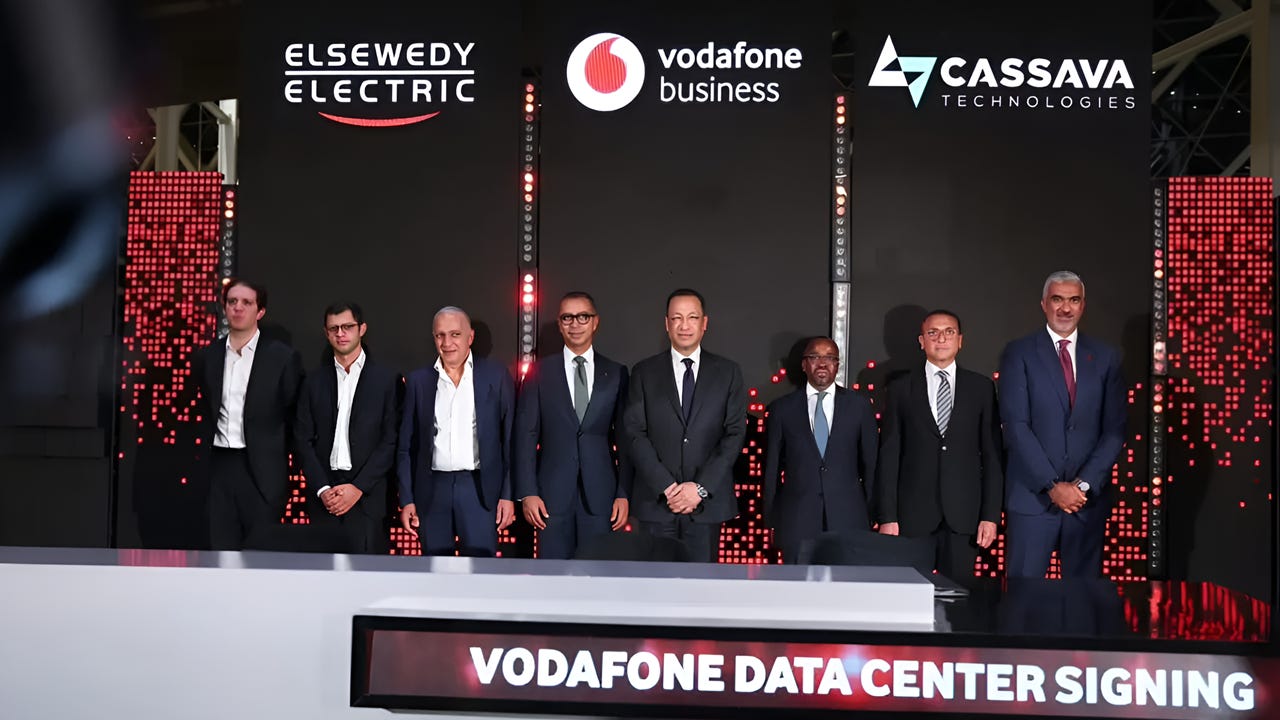
On September 8, 2026, Vodafone Business, Cassava Technologies, and Elsewedy Electric signed agreements in Cairo to build two things at once. The first is a data centre joint venture called Africa Data Centres Egypt, with a target of 200 megawatts and roughly $1 billion in investment at full buildout. The second, and the one that matters more, is Egypt’s first sovereign AI factory. It runs on Nvidia accelerated computing and sells GPU access locally through a service model.
The distinction between those two projects is the whole story.
A Data Centre Is Just Real Estate
Data centres are buildings filled with servers. They are valuable infrastructure, and Africa needs many more of them. But a data centre alone does not give a country control over the intelligence running inside it.
An Egyptian bank can rent space in a local data centre and still run its AI models on software built elsewhere. The hardware inside can come from another continent. The person managing the system can sit in another time zone. Data residency is satisfied. Sovereignty is not.
Mahmoud El-Khatib, Vodafone Egypt’s Vice President of Enterprise Business, framed the AI factory as keeping data inside Egypt while meeting regulatory requirements. That is the first layer. The second layer is that the compute itself, the GPUs that actually train and run AI models, now sits on Egyptian soil.
Nvidia Chips Change the Economics for Egyptian Builders
Training an AI model requires thousands of specialised processors working in parallel. Those processors, mostly made by Nvidia, are expensive and scarce. For years, any Egyptian company or government agency wanting to build serious AI had one option. Rent compute from a cloud provider abroad, and accept that the data travels with it.
The new AI factory changes that calculation. Through GPU-as-a-Service, Egyptian organisations can access Nvidia accelerated computing without buying the hardware themselves. A fintech startup in Cairo can train a fraud detection model without sending transaction data to Virginia. A hospital can run diagnostic AI without exporting patient records. A government ministry can deploy a citizen service without depending on a foreign cloud provider’s uptime.
The training and enablement programmes attached to the partnership matter for the same reason. Access to GPUs is useless without people who know how to use them. Egypt needs engineers who can configure clusters, optimise models, and manage inference workloads at scale. The Nvidia ecosystem training gives organisations a path to build that capability locally rather than hiring it from abroad.
Cassava Brings the Operating Experience
Cassava Technologies is not a household name, but it has been building Africa’s digital infrastructure for years. Its Africa Data Centres subsidiary operates the continent’s largest network of carrier-neutral data centres. Its Liquid Intelligent Technologies unit runs more than 100,000 kilometres of fibre across Africa.
That operating experience is what makes the Egypt project credible. Building a data centre is a construction project. Operating one reliably for years is a different skill. Cassava has done it in Johannesburg, Cape Town, and Nairobi. Bringing that playbook to Cairo is the practical value Vodafone and Elsewedy get from the partnership.
Ahmed El Beheiry, Cassava’s Group Chief Technology and AI Officer, described the ambition directly. He said African businesses should be architects of global technology rather than only consumers of it . The Egypt AI factory is the latest step in that strategy. Cassava already announced plans for five AI factories across Africa, with South Africa, Nigeria, Kenya, and Morocco on the list alongside Egypt.
Sovereignty Without Isolation
Egypt’s Communications Minister Raafat Hendy made a point that cuts against the usual framing of sovereignty. He said digital sovereignty does not mean closing off. It means opening to technology, investment, and international partnerships while owning the infrastructure and frameworks that protect critical data.
That distinction matters because sovereignty debates often slide into protectionism. Countries that try to build everything alone end up with inferior technology and higher costs. Egypt’s approach is different. It brings in Nvidia chips, Vodafone’s enterprise services, and Cassava’s operating expertise. It builds the physical layer locally and retains control over how it is used.
The national data centre strategy Hendy’s ministry is preparing reflects the same logic. It aims to assess Egypt’s storage and computing needs, update regulations, and attract both local and foreign investment. The goal is not to exclude global players. It is to make Egypt a place where global players want to operate, on terms Egypt sets.
The Real Test Is Power and Talent
Two constraints will determine whether Egypt’s AI ambitions succeed or stall.
The first is electricity. Data centres consume enormous amounts of power. The Egypt project starts at 20 megawatts and targets 200 megawatts, a tenfold increase. Getting there requires more than a construction schedule. It requires reliable, affordable power at scale. The presence of Elsewedy Electric in the joint venture signals that the partners understand this. Energy infrastructure is not a side issue in this project. It is the foundation.
The second is talent. Training programmes within the Nvidia ecosystem help, but Egypt needs thousands of engineers and technicians who can build and operate AI infrastructure. The project is expected to create around 200 direct jobs and 2,000 indirect ones. Those numbers are modest. The broader ecosystem impact depends on whether the skills developed inside these facilities spread to the wider economy.
Egypt Is Building the Layer That Makes AI a National Asset
For African countries watching this deal, the lesson is not that Egypt has more money or better geography. The lesson is that AI sovereignty is achievable through partnerships that build physical capacity locally. Egypt did not wait for an American cloud provider to open a region. It did not rely on policy statements alone. It brought together a telecom operator, an energy company, and an infrastructure operator with a track record on the continent, and it put Nvidia chips on Egyptian soil.
The AI factory is not just infrastructure. It is a signal that Egypt intends to be a producer of AI capability, not only a consumer of it. Other African governments have the same opportunity. The question is whether they will build the same kind of partnerships, or keep waiting for someone else to build it for them.