
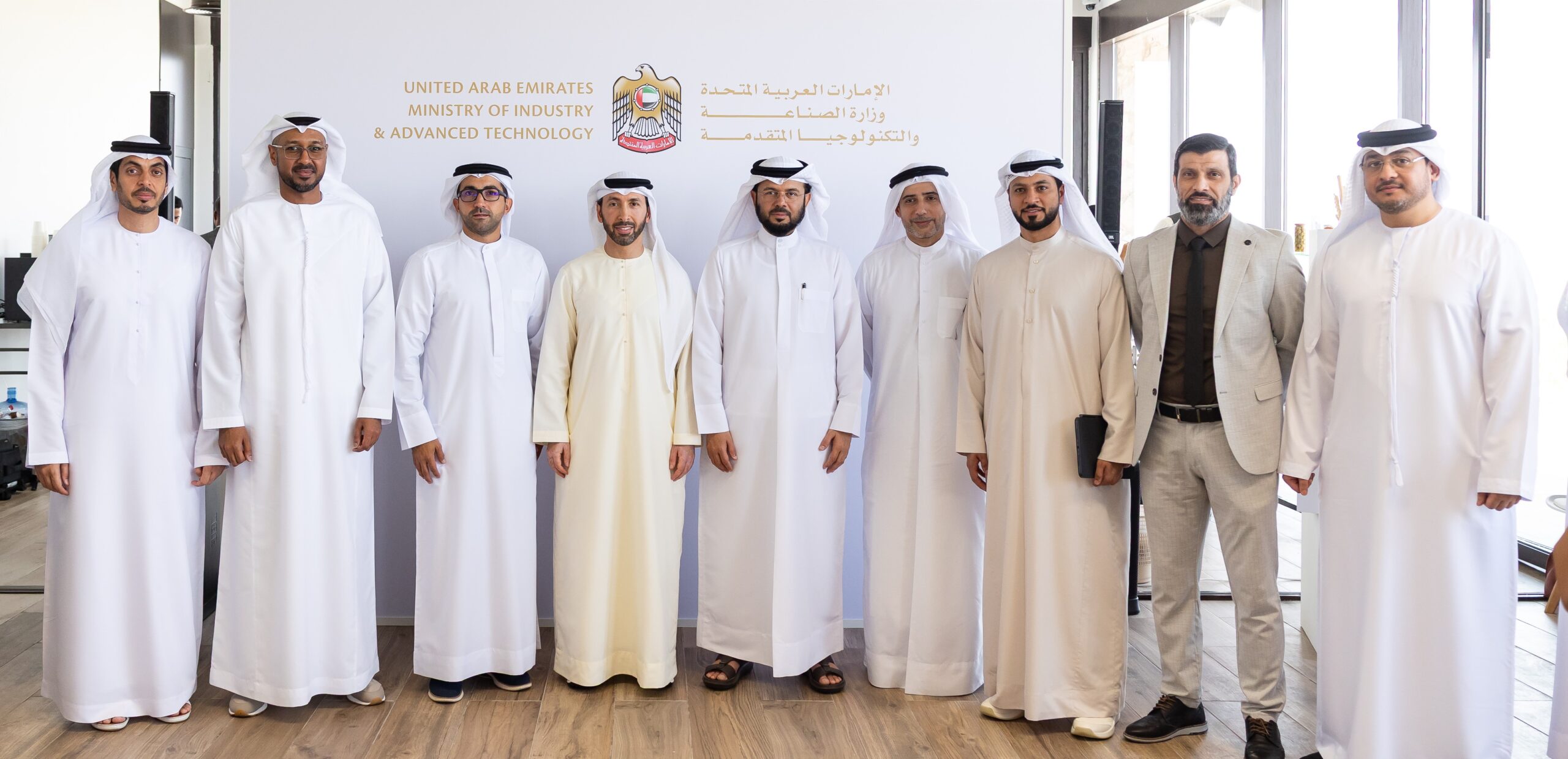
The UAE’s Ministry of Industry and Advanced Technology (MoIAT) recently held a meeting at a wheat farm in Sharjah. The location itself tells you something. They did not host this in a glass tower in Dubai. They chose Mleiha Wheat Farm, a working agricultural site, to talk about food factories and government services.
The ministry, working with the Sharjah Agricultural and Livestock Production Establishment (EKTIFA), gathered investors, factory owners, and private companies. The topic was Agentic AI. That is a type of artificial intelligence that can act on its own to complete tasks, not just answer questions. But the real story here is not the technology itself. The real story is how the UAE is fixing a problem that plagues every growing economy: government services that cannot keep up with industry.

The Food Sector Needs More Than Just Farms
Food security is a sensitive topic in the UAE. The country imports most of its food. Domestic chicken meat production will reach 75,000 metric tons in 2026, but that only covers about 15 percent of what people actually consume. That gap puts pressure on the entire food supply chain.
Every factory that processes food, every distributor, and every importer deal with government permits, inspections, and approvals. These processes take time. When a factory waits for a license renewal or an inspection clearance, production slows down. Slower production means less local food on shelves. Less local food means more reliance on imports. That is the cycle the UAE wants to break.
MoIAT Undersecretary Hasan Jasem Al Nowais made this clear. He said the ministry is focused on listening to customers from industrial and service companies to design services that are more efficient and aligned with the sector’s needs. This is not just talk. The ministry is holding these interactive councils across different emirates. They are going to the factories instead of waiting for factory owners to come to them.
Agentic AI Fixes a Specific Problem
Agentic AI is different from the chatbots you see on websites. A chatbot answers questions. Agentic AI takes action. If a food factory needs to renew a permit, an Agentic system can check the documents, verify compliance, flag missing items, and even schedule the inspection. It does not just tell the factory owner what to do. It does part of the work.
The ministry plans to deploy this type of AI in the services they provide to the food sector. The goal is to reduce time and effort, simplify procedures, and support factories’ capacity to grow and expand. That is a practical use of AI. It is not about flashy demonstrations. It is about making the government work faster so food producers can work faster.
This matters because the food industry in the UAE is not just about feeding people. It is about industrial growth. Al Nowais called the food industries sector one of the vital sectors supporting food security and sustainable industrial growth in the UAE. When the government streamlines its services, it removes a bottleneck. Factories can expand. They can hire more people. They can produce more local food.
The Government Is Asking Before Building
Many governments build digital services and then hope people use them. The UAE is taking a different path. The Interactive Council at Mleiha Wheat Farm was not a presentation. It was a conversation. The ministry brought together the people who actually run food factories. They asked about needs and solutions related to enhancing the customer experience.
This approach has a name in business: customer-centric design. But in government, it is rare. Most agencies design services based on what is convenient for them, not what is convenient for the user. The ministry is reversing that. They are having direct dialogue with factories and turning it into a practical input for developing services.
Al Nowais highlighted that they are keen to go out into the field and meet customers across the UAE’s emirates. That is a deliberate strategy. The ministry knows that factory owners will not always speak up in a formal setting. By going to them, by holding councils in places like a wheat farm, they create an environment where people feel comfortable sharing real problems.
The Private Sector Is Already Moving
The government is not alone in this. Private companies are adopting AI in the food sector at the same time. In February 2026, the NRTC Group launched Mazraati, a farm-to-fork digital platform designed to improve traceability, quality control, and logistics coordination across the UAE’s agri-food supply chain. The platform uses AI to cut down on food waste and improve transparency.
Nestlé also launched the SparX Innovation Hub at its new MENA head office in Expo City Dubai in July 2026. The hub is designed to accelerate AI-powered, consumer-led innovation across the region. These are not startups. These are major global players investing in AI for food.
When the government modernizes its services at the same time that private companies are adopting AI, the entire ecosystem moves forward together. A factory using AI for quality control still has to deal with government permits. If those permits are also powered by AI, the whole process becomes seamless. That is the vision.
What This Means for Factory Owners
For a food factory owner in Sharjah, this change is tangible. Instead of filling out paper forms or navigating a confusing website, they will interact with an AI system that understands their business. The system will know what permits they need, when they expire, and what documents are missing. It will guide them through the process without requiring them to become experts in government bureaucracy.
The ministry says the goal is to simplify procedures and support factories’ capacity to grow and expand. That is a direct benefit. When a factory spends less time on paperwork, it spends more time on production. More production means more revenue. More revenue means more investment in equipment and staff.
Al Nowais emphasised that they continue to develop services by deploying Agentic AI as a tool to raise efficiency and enhance the industrial investor journey. The industrial investor journey is the entire experience of starting and running a factory in the UAE. The government is trying to make that journey shorter and smoother.
The Broader Lesson for Other Countries
The UAE’s approach offers a lesson for other countries struggling with industrial growth. You cannot just throw money at factories and expect them to thrive. You have to fix the underlying systems that slow them down. Bureaucracy is a silent killer of productivity. It does not show up in headlines, but it shows up in delayed shipments and missed opportunities.
By using AI to streamline government services, the UAE is addressing the root cause of inefficiency. They are not just building better farms or better factories. They are building a better government that supports those farms and factories. That is a more sustainable strategy.
The food industry council at Mleiha Wheat Farm was a small event. But it was part of a larger movement. The UAE is systematically applying AI to its industrial bureaucracy. They are asking factory owners what they need. They are designing services around those needs. And they are using technology to make those services faster and more reliable.
That is how you build an industrial economy. With systems that actually work.