
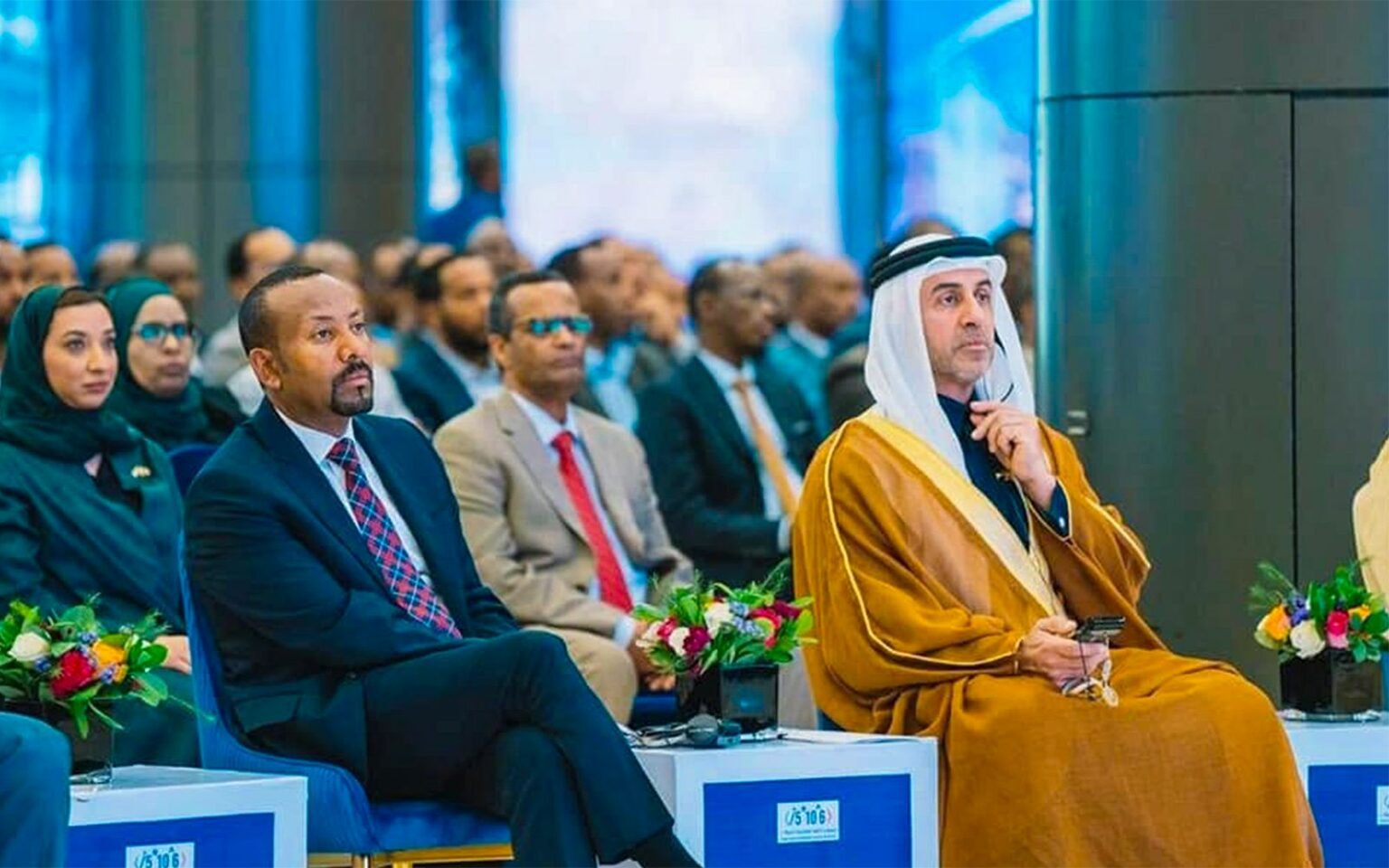
Ethiopia and the United Arab Emirates expanded their joint digital skills programme from five million to seven million participants after surpassing the original enrolment target nearly two years ahead of schedule. The announcement came from Dubai on 6 July, with both governments revealing that the 5 Million Ethiopian Coders initiative had recorded 5,005,146 enrolments by June 2026. The programme exceeded its goal well before the planned completion at the end of the year.
Launched in July 2024, this initiative stands as one of Africa’s largest digital skills programmes. It provides free online training through the learning platform Udacity, covering programming fundamentals, data science, Android development, and artificial intelligence. Most courses run for six to seven weeks and are offered in English through schools and technical institutions across both urban and rural areas.
Prime Minister Abiy Ahmed welcomed the milestone and attributed the programme’s rapid growth to strong interest from young people across the country. UAE Minister of Cabinet Affairs Mohammad bin Abdullah Al Gergawi said the initiative demonstrates the impact international partnerships can have in building digital capabilities among young people. He positioned the programme as part of broader cooperation between the two countries on technology and skills development.
Why Ethiopia Attracted 5 Million Learners in Under Two Years
The initiative launched on 23 July 2024 and reached 5,005,146 enrolments by June 2026. Prime Minister Abiy captured the achievement simply: “What we set out to achieve in three years, we have accomplished in less than two”.
This rapid uptake did not happen by accident. Ethiopia has one of the youngest populations in the world, and youth unemployment remains persistently high, especially in urban areas. For many young Ethiopians, a private course teaching similar digital skills can cost 20,000 Birr, roughly 150 euros. That places quality tech education far beyond the reach of most families. The programme removes that barrier entirely by offering training at no cost.
The curriculum also matches what the global job market actually demands. Students learn web programming, Android development, data science, and artificial intelligence fundamentals. These are not abstract subjects. They are practical skills that companies around the world need right now. The programme gives young Ethiopians a direct pathway into the global digital economy without requiring a university degree or expensive tuition fees.
Gender Inclusion Targets Add Another Layer of Ambition
The initiative aims to ensure that at least half of all participants are women, because technology sectors worldwide suffer from significant gender gaps. Ethiopia’s programme deliberately addresses this imbalance from the start.
Reaching gender parity at scale is not easy. It requires targeted outreach, safe learning environments, and content that appeals equally to young women. The programme’s focus on inclusion signals that digital transformation in Ethiopia is not just about quantity but about who gets to participate. If the initiative achieves this target, it could become a model for other African nations grappling with similar challenges.
A Proven Model Adapted for Ethiopian Reality
The programme draws directly from the UAE’s One Million Arab Coders initiative, launched in 2017. That earlier programme trained one million participants across the Arab world and established a clear framework for delivering digital skills at scale. Ethiopia adapted this model under its Digital Ethiopia strategy, tailoring it to local needs and conditions.
The adaptation appears to have worked. The programme exceeded its target in less than two years, suggesting that the core model translates effectively across different contexts. The UAE brings technical expertise, curriculum design, and platform access. Ethiopia contributes a massive youth population eager for opportunity and a government committed to digital transformation. This partnership model offers lessons for other countries looking to scale digital skills training quickly.
Digital Infrastructure Must Keep Pace with Skills Training
Skills alone do not create economic value. Graduates need the digital backbone to turn their knowledge into income. Ethiopia’s data centre market has grown significantly in recent years, providing the physical infrastructure that supports software development, cloud-based innovation, and business outsourcing.
The global IT software outsourcing market is expected to reach over 800 billion dollars by 2030. Companies continuously seek locations offering skilled talent at competitive costs. Ethiopia possesses natural advantages, including a large young population, time zone overlap with European business hours, and labour costs below those of established outsourcing destinations. However, international companies evaluate workforce capability alongside infrastructure reliability, political stability, and operational risk. Ethiopia must strengthen all these elements to capture a meaningful share of this market.
This Programme Fits the National Strategy
The coding initiative aligns with Ethiopia’s broader Digital Ethiopia 2025 strategy, which aimed to bridge the digital skills gap. That strategy has now evolved into Digital Ethiopia 2030, a comprehensive roadmap targeting a future where the digital economy accounts for 12 percent of national GDP and generates one million new jobs.
The new strategy moves beyond basic internet access to prioritise what officials call digital sovereignty. By developing national cloud infrastructure and sovereign data systems, the government aims to reduce dependence on external platforms. The government is betting heavily on its youth, aiming to train 10 million citizens in formal digital skills and support over 5,000 active startups. The coding programme represents the first major step toward that larger goal.
Prime Minister Abiy described the milestone as the beginning of a new phase of ambition rather than the end of the journey. The new target of seven million participants reflects that ambition. Neither government disclosed a timeline for achieving this expanded goal, but the early momentum suggests they expect similar enthusiasm from Ethiopian youth.
The programme delivers free online courses through Udacity, covering programming fundamentals, data science, Android development, and artificial intelligence. Learners who complete the courses receive a certificate issued by Udacity. The initiative also reflects the strengthening relationship between Ethiopia and the UAE, which has grown beyond digital skills to include broader cooperation in financial services and digital infrastructure.
The expansion of the Ethiopian Programmers Initiative marks a significant step towards realising a shared vision of sustainable development and technological advancement, ensuring that millions of young Ethiopians are equipped with the skills necessary for success in a competitive global economy.