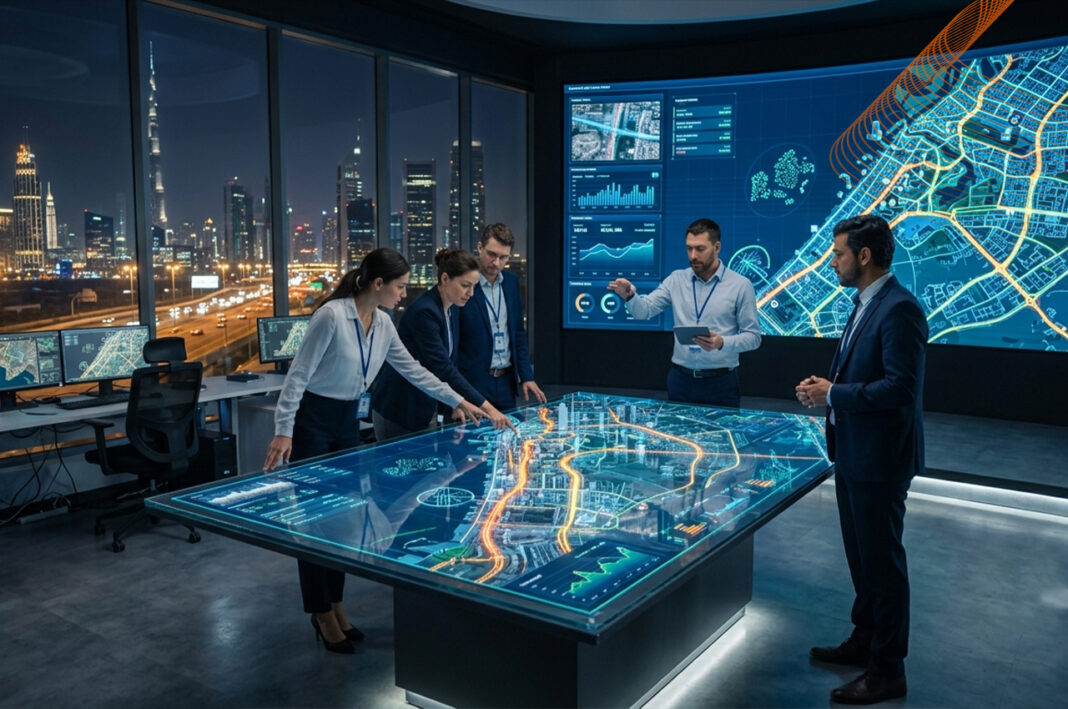
Dubai just built a perfect digital copy of itself. Every building. Every road. Every pipe underground.
The city now has a virtual twin that mirrors the real one in real time. It is a working tool that city officials will use to make decisions about how people live, work, and move around.
Sheikh Hamdan bin Mohammed, the Crown Prince of Dubai, officially launched the Dubai Digital Twin Platform in early July 2026. The platform already contains 3D models of more than 195,000 buildings across the emirate. It also covers over 330,000 infrastructure assets. This is one of the most complete city-scale digital twins anywhere in the world.
The Platform Gives Dubai a Real-Time Replica of Its Physical World
A digital twin is a virtual model that updates itself as the physical city changes. Sensors placed around Dubai feed data into this model constantly. Traffic flows change. The model changes. A new building goes up. The model updates. Water pipes get old. The model tracks their age.
This is different from a static 3D map. Static maps show you what a city looked like when someone took the pictures. A digital twin shows you what is happening right now.
Dubai Municipality built this platform using a combination of technologies. They used drones with LiDAR sensors to capture precise measurements of buildings. They used mobile mapping vehicles to scan streets. They integrated data from the Internet of Things, machine learning, and artificial intelligence.
The result is a living digital city that sits alongside the physical one.
Urban Planners Can Now Test Decisions Before Spending Money
This is where the real value shows up. City planning has always involved guesswork. You build a new road and hope it eases traffic. You approve a new development and hope the infrastructure can handle it. Sometimes you are right. Sometimes you are not.
Dubai’s digital twin removes much of that guesswork. Planners can now run simulations before they break ground. They can test how a new shopping mall will affect traffic on surrounding roads. They can see how a new residential tower will impact energy demand. They can model what happens to air quality when they change bus routes.
This capability saves money. It saves time. It saves the headaches that come with fixing problems after they happen.
The platform supports what city officials call “what-if” scenario planning. You ask a question. The twin gives you an answer based on real data. You do not have to build something to find out whether it works.
Emergency Response Gets a Powerful New Tool
Natural disasters do not send warning emails. Floods happen. Fires start. Accidents occur. Cities that respond faster save more lives.
Dubai’s digital twin helps with exactly this kind of situation. Officials can model emergency scenarios like evacuations or severe rainfall events. They can see which roads will flood first. They can figure out the safest evacuation routes before a crisis happens.
The platform can simulate the impact of heavy rain on different neighbourhoods. This matters because Dubai does experience flash floods. Knowing where water will pool allows the city to position resources ahead of time.
Emergency planners can also model pandemic responses. They can test how diseases might spread through different parts of the city. They can figure out where to set up testing sites or treatment centres for maximum effect.
This is preparation that saves lives. You cannot do this kind of planning with paper maps and spreadsheets.
Infrastructure Maintenance Shifts From Reactive to Predictive
Every city has ageing infrastructure. Pipes burst. Power lines fail. Roads crack. Most cities fix things only after they break. This approach costs more money and causes more disruption.
Dubai’s digital twin allows for predictive maintenance. The platform tracks the age and condition of assets across the city. It can identify which water pipes are most likely to fail based on their age and material. It can spot which roads need resurfacing before potholes form.
Machine learning algorithms analyse real-time data from building sensors. They identify patterns that humans might miss. A slight vibration in a bridge might indicate a structural issue. A gradual increase in energy usage in a building might signal failing equipment.
The platform catches these signs early. Maintenance teams get alerts before something breaks. They fix problems on their own schedule instead of reacting to emergencies.
This approach reduces costs. It reduces downtime. It keeps the city running smoothly.
Public and Private Sectors Are Collaborating on This Effort
Dubai did not build this platform alone. The government signed partnerships with major companies to support the next phase of development.
Dubai Municipality signed Memorandums of Understanding with Al-Futtaim Group and Huawei during the launch event. These partnerships aim to strengthen collaboration on digital twin technologies and research. The private sector brings technical expertise and resources. The government provides data and regulatory support.
This collaborative model is central to Dubai’s approach. The city sees digital transformation as a team effort. Government entities work with private companies. They share data. They share knowledge. They build solutions together.
The Geographic Information Systems Centre at Dubai Municipality stewards the platform’s base map. They continually enrich data in partnership with other key entities. This includes the Dubai Land Department, which provides real estate data. It includes the Roads and Transport Authority, which provides traffic data.
This integration of data from multiple sources makes the twin more accurate and more useful.
The Platform Aligns With Dubai’s Economic Goals
This digital twin is not a standalone project. It fits into a larger strategy called the Dubai Economic Agenda D33. That agenda aims to double the size of Dubai’s economy over the next decade. It focuses on digital transformation and innovation as key drivers of growth.
The digital twin supports these goals in several ways. It makes the city more attractive to investors. Companies want to locate in cities that are well-managed and technologically advanced. It creates opportunities for tech companies to build applications on top of the platform. It generates data that can fuel new businesses and services.
The platform also supports Dubai’s ambition to become the world’s best city to live, work, and invest in. Better urban planning leads to a better quality of life. Less traffic congestion means less time wasted in cars. Better emergency response means safer neighbourhoods. Predictive maintenance means fewer service disruptions.
These improvements compound over time. A city that runs smoothly attracts more people and more businesses. More people and businesses generate more tax revenue. More revenue allows for more investment in city services.
Dubai Is Not Alone, but It Is Ahead of Most
Other cities are building digital twins too. Rotterdam has one. Valencia has one. Tampere in Finland has one. But Dubai’s effort stands out for its scale and completeness.
The global market for digital twin city solutions reached $3.85 billion in 2025. It is projected to grow to $8.58 billion by 2032. This growth reflects a broader trend. Cities around the world are realising that data-driven management is the future.
Gartner predicted that 50% of large cities would use digital twins to optimise traffic and reduce emissions by 2026. Dubai is already there. It is not waiting for the technology to mature. It is building and deploying it now.
This gives Dubai a first-mover advantage. The city gains experience that other cities will need years to accumulate. It attracts talent and companies that want to work with this technology. It sets standards that others may follow.
What This Means for Ordinary Residents
All of this sounds technical. But the benefits filter down to everyday life.
Less traffic congestion means shorter commutes. Better emergency response means safer communities. Predictive maintenance means fewer power outages and water disruptions. Smarter urban planning means more parks, better public transport, and more livable neighbourhoods.
Residents may not see the digital twin. They will feel its effects. A pothole gets fixed before it damages your car. The traffic light timing changes to reduce your wait time. A new bus route appears exactly where people need it.
These are small improvements individually. Together, they add up to a city that works better for everyone who lives in it.
The Path Forward Requires Continuous Work
Building a digital twin is not a one-time project. It requires constant updating. The city changes every day. New buildings go up. Roads get repaved. Infrastructure ages.
Dubai Municipality acknowledges this ongoing need. They plan continuous data capture efforts. They will keep updating the models. They will keep integrating new data sources.
The platform also needs new applications. The infrastructure exists. Now the city needs to build tools on top of it. They need software that helps specific departments do their jobs better. They need interfaces that make the data accessible to non-technical staff.
This is where partnerships with the private sector become crucial. Tech companies can build applications that the government does not have the capacity to develop internally. Universities can conduct research that improves the platform’s capabilities.
The digital twin is a foundation. The real value will come from what people build on top of it.
A Smarter City Benefits Everyone
Dubai’s digital twin represents a significant step forward in how cities manage themselves. It moves urban planning from guesswork to data-driven decision-making. It shifts maintenance from reactive to predictive. It turns emergency response from chaotic to coordinated.
Other cities will follow. They will build their own digital twins. They will learn from Dubai’s experience. They will adapt the technology to their own needs.
But Dubai built this first. They built it at scale. They built it with real data and real partnerships. That gives them a head start that will be hard to close.
The virtual copy of Dubai is not just a technological achievement. It is a statement about how the city intends to operate in the future. Data-driven. Efficient. Prepared.
That is a model worth paying attention to.