
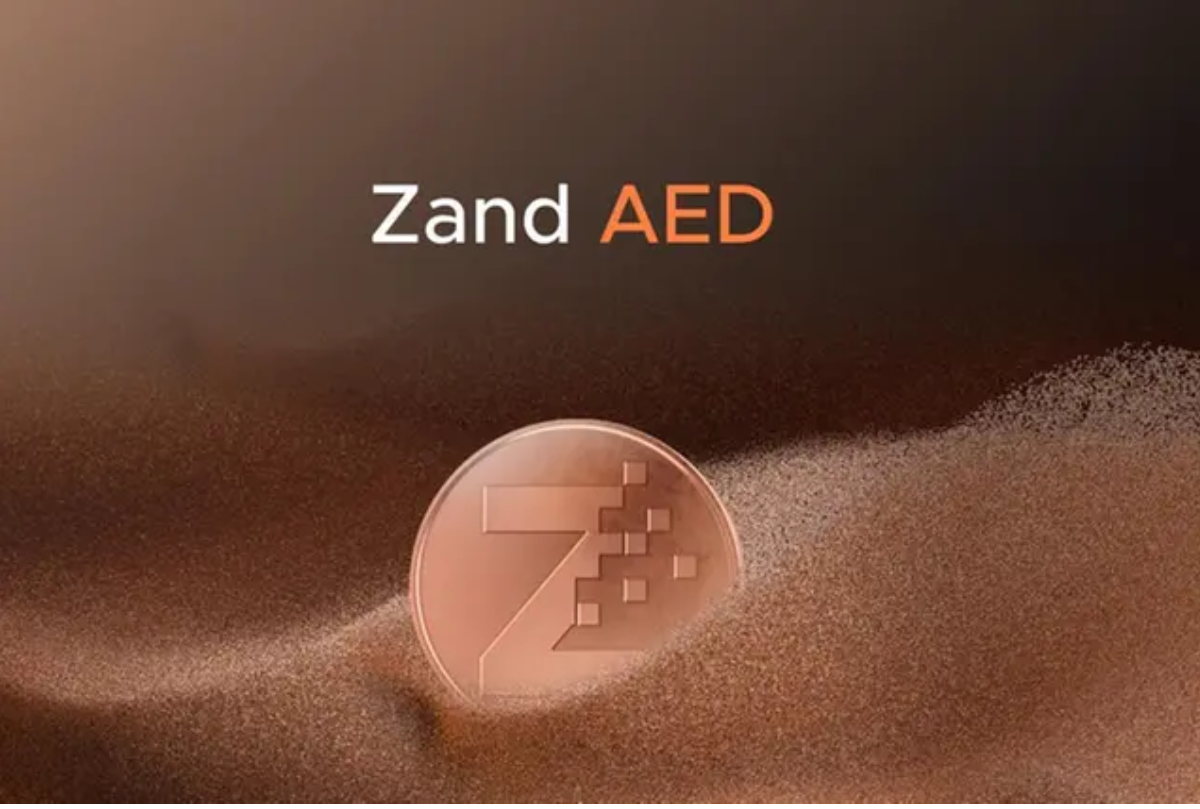
The UAE approved Zand AED in November 2025 and it became the first GCC country to sign off a fully regulated, national-currency stablecoin under direct central bank supervision. It is the clearest sign yet that the dirham is stepping into a blockchain future, not as an experiment but as an official part of the financial system.
Zand’s token is backed one to one by dirham reserves held in segregated, regulated accounts through Zand Trust, the issuing entity under Zand Bank PJSC. That single detail changes the tone of the announcement. This is not a private issuer operating in a grey zone. It is a licensed digital bank building on the Central Bank of the UAE’s own rulebook. The approval effectively moves the national currency onto public blockchain rails with the regulator watching every step.
Most countries are still writing consultation papers on stablecoins or running small CBDC pilots inside closed sandboxes. The UAE skipped the slow path. It went straight for a model that puts digital money into the open economy today.
How The UAE Set The Stage Before Anyone Else
The foundation for this moment was laid a year earlier. In June 2024, the UAE released the Payment Token Services Regulation, a document that quietly solved the hardest part of stablecoin oversight. It created clear licensing rules for issuers, reserve requirements, redemption obligations and custody standards. It also defined how a regulated token could exist inside the country’s broader financial system.
By the time Zand arrived with its proposal, the regulatory rails were already in place. The central bank did not need to invent a framework. It simply applied one it had built in advance.
This is where the UAE’s approach diverges from global peers. Other financial hubs are still debating how to classify stablecoins or whether commercial banks should be allowed to issue them. The UAE treated the topic as an infrastructure decision. Build the rules early. Set the compliance bar high. Then allow regulated players to execute.
It is the same mindset behind the UAE’s participation in the mBridge wholesale CBDC project. The country experiments at the wholesale level but avoids dragging the retail economy through long pilots. A fully backed stablecoin fills that gap faster and with far less friction.
Why The UAE Chose A Regulated Stablecoin Before A Retail CBDC
The UAE did not wait for a retail CBDC to mature. It picked the faster path. A regulated stablecoin issued by a licensed bank can move into the market immediately without the long rollout, public testing and behavioural change that a state-led CBDC normally requires.
Zand already had the pieces in place. A digital banking licence. A trust entity supervised by the Central Bank. A Fitch BBB plus rating that signals institutional oversight. The regulator simply plugged these components into the framework it created in 2024. That allowed the country to put a dirham backed token into circulation with none of the delays that slow down central bank digital currency projects.
There is also a practical reason this model works. Stablecoins fit naturally into the systems businesses already use. Developers know how to build with them. Banks can integrate them without rebuilding their core infrastructure. A retail CBDC, by contrast, demands new rails and new user habits. A regulated stablecoin sits inside the financial architecture that already exists.
For the UAE, the decision was simple. Move now with a compliant private issuer or wait years for a full CBDC stack. The approval shows which option offered more momentum.
What Zand AED Changes For Payments, Banks And Developers
The arrival of a one to one AED stablecoin creates an immediate shift in how money can move inside the country. Payments can settle on public blockchains. Treasury teams can move funds between accounts without the delays of legacy rails. Remittances, one of the UAE’s biggest financial corridors, gain a faster and cheaper path.
For banks, this introduces a new competitive advantage. Any institution connected to Zand AED’s rails can offer on chain settlement to corporate clients. That is something many banks in the region have been slow to build on their own. The stablecoin gives them a ready made tool.
Developers gain the most flexibility. A regulated dirham token means they can build consumer apps, loyalty systems, tokenised assets and automated payment flows without touching unregulated issuers or offshore coins. It reduces compliance risk and gives startups a currency that aligns with local law.
The psychological shift is just as important. The dirham is now programmable. It can sit inside smart contracts and interact with digital assets under central bank rules. That moves the UAE from talking about blockchain finance to actually running it at scale.
Where This Trajectory Leads In 2026
Zand AED is not a pilot. It is the first step in a wider transformation the UAE has been building toward for years. By 2026, stablecoins will sit beside bank transfers. Corporates will treat on chain settlement as standard practice. Developers will use regulated dirham tokens to build products that previously relied on offshore alternatives.
The approval also forces a regional reset. Bahrain spent years positioning itself as the Gulf’s crypto friendly zone. Saudi Arabia is testing digital settlement in controlled environments. Singapore and Hong Kong continue refining rules without committing to national-currency stablecoins. The UAE has moved past debate and into execution. That alone will attract talent, partners and capital.
The bigger story is strategic. The country is building a hybrid model where private stablecoin issuers operate under tight central bank supervision. It avoids the slow lane of a retail CBDC rollout but still delivers digital money with institutional protections. Zand AED is the template. More regulated tokens will follow.
The direction is clear. The dirham is going on chain, and the UAE wants to set the global pace for how regulated digital money actually works in practice.