
Techsoma
Latest AI Innovation Global Reports Startups FinTech Funding Tech
Next-Gen Gadgets for ME Middle Eastern Startup Ecosystem FutureTech in ME Reports Artificial Intelligence Middle East Innovation Frontier Global News Reports Middle Eastern Startup Ecosystem Fintech Investment Funding FutureTech in ME
Techsoma Middle East
  • Next-Gen Gadgets for ME
  • Middle Eastern Startup Ecosystem
  • FutureTech in ME
  • Reports
No Result
View All Result
Techsoma
  • Next-Gen Gadgets for ME
  • Middle Eastern Startup Ecosystem
  • FutureTech in ME
  • Reports
No Result
View All Result
Techsoma
No Result
View All Result
Home Fintech

Visa Breaks Banking Barriers With Stablecoin Payments Across Three Continents

by Faith Amonimo
December 3, 2025
in Fintech
Reading Time: 3 mins read
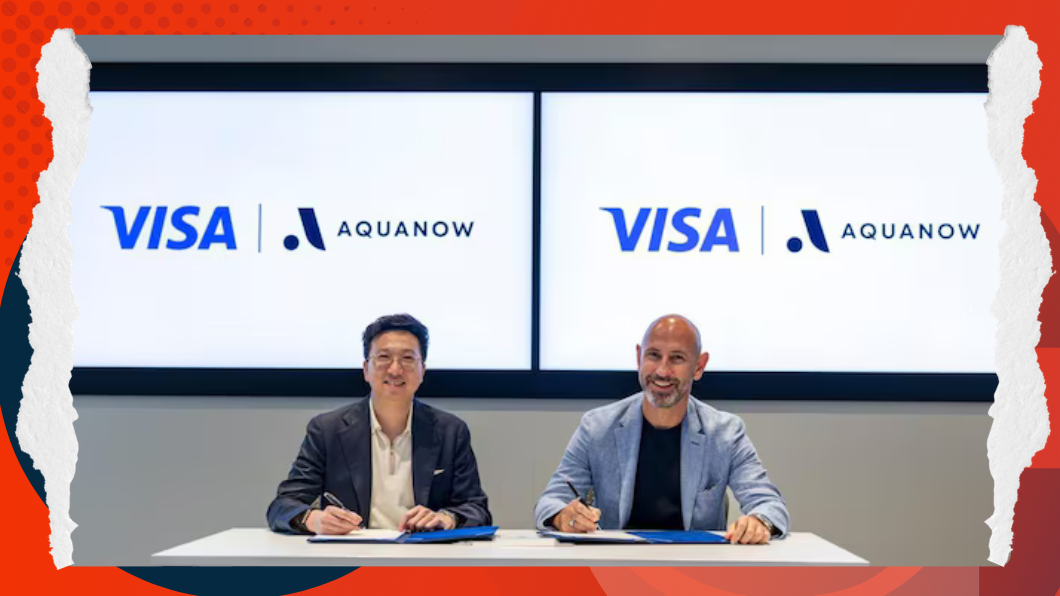
visa stablecoin payments cemea aquanow partnership

Visa just made cross-border payments faster and cheaper for millions of people across Central and Eastern Europe, the Middle East, and Africa. The payments giant now lets banks settle transactions in digital dollars, rather than waiting days for traditional bank transfers.

The company partnered with Aquanow, a crypto infrastructure firm, to bring USD Coin (USDC) settlements to the CEMEA region. Banks can now skip the usual maze of correspondent banking and settle payments in minutes, not days.

Visa’s Digital Dollar Experiment Pays Off

Visa first tested stablecoin settlements in 2023. The pilot program worked so well that monthly volumes now hit $2.5 billion annually. That success convinced Visa to expand beyond its initial markets.

“Financial institutions in CEMEA can now experience faster and simpler settlements,” said Godfrey Sullivan, Visa’s head of product and solutions for the region. The new system cuts out multiple middlemen that slow down international payments.

Advertisement Advertise on Techsoma

Banks using Visa’s network can now settle obligations with approved stablecoins like USDC. This removes the need to wait for traditional bank clearing systems that can take several business days.

How Stablecoin Settlements Change Banking Operations

Traditional cross-border payments bounce between multiple banks before reaching their destination. Each hop adds time, fees, and complexity. Stablecoins eliminate most of these steps.

When a bank in Poland sends money to a bank in Kenya, the transaction now settles on blockchain rails instead of correspondent banking networks. The process takes minutes instead of days and works 365 days a year, including weekends and holidays.

Aquanow provides the technical infrastructure that connects Visa’s payment network to blockchain systems. The Toronto-based company handles billions of dollars in crypto transactions monthly and employs over 170 people globally.

Stablecoin Market Grows Faster Than Expected

Stablecoins processed $5.5 trillion globally in 2024, up from $3.5 trillion in 2023. These digital dollars now rival traditional payment networks in transaction volume.

Monthly stablecoin volumes reached $450 billion in 2024 – roughly half of Visa’s $1 trillion monthly processing volume. The gap continues to narrow as more financial institutions adopt digital settlement methods.

Phil Sham, Aquanow’s CEO, sees this as institutions joining the digital economy. “Visa and Aquanow are unlocking new ways for institutions to participate in the digital economy, using stablecoin technology to settle with internet speed and transparency.”

Regional Banking Benefits From Blockchain Rails

The CEMEA region faces unique challenges with cross-border payments. Many countries deal with currency volatility, limited banking infrastructure, and high remittance costs.

Stablecoin settlements address these pain points directly. Recipients can receive USD-backed payments without needing traditional banking relationships. The system works even in regions where correspondent banking is expensive or unavailable.

Visa recently launched a pilot program called Visa Direct that lets businesses send stablecoin payouts directly to digital wallets. Companies fund these payouts with regular money, but recipients get the option to receive stablecoins instead.

Banks Move Beyond Traditional Settlement Systems

Aquanow earned recognition on Deloitte’s Technology Fast 500 list for two consecutive years, achieving 3,022% revenue growth over four years. The company now serves over 300 institutional clients, including banks, neobanks, and payment companies.

The partnership reduces Visa’s reliance on traditional systems with multiple intermediaries. Banks get faster settlements while maintaining the security and reliability they expect from Visa’s network.

This expansion follows growing demand from financial institutions for more efficient cross-border payment options. Traditional correspondent banking often involves multiple intermediary banks, each adding costs and delays to international transfers.

Future of Digital Payment Infrastructure

Visa’s stablecoin expansion signals changes in payment infrastructure. Major financial institutions now view blockchain-based settlements as practical alternatives to legacy systems.

The company continues investing in digital asset capabilities while maintaining its traditional payment network. This dual approach lets banks choose the settlement method that works best for each transaction.

Stablecoin volumes continue growing as more institutions discover the benefits of 24/7 settlement capabilities. The technology particularly appeals to banks serving regions with limited traditional banking infrastructure or high cross-border payment costs.


Related Techsoma coverage

  • erad Secures USD 125 Million to Scale AI-Driven SME Financing Across the GCC
  • Fintech Enabled Gold ATM Launches In Dubai As Emirates Gold And Public Gold Roll Out Network
  • Egypt Grants tpay Licence for Mobile-Based Government Payments
Faith Amonimo

Faith Amonimo

Faith Amonimo is a Tech Writer and Newsletter Editor at Techsoma, where she reports on technology and digital innovation across...

Recommended For You

The barq payments app on a smartphone, after the Saudi fintech reached a $1.85 billion valuation
Fintech

Saudi Fintech barq Becomes a Unicorn Two Years After Launch

by Onyinye Moyosore
September 21, 2026

Saudi Arabia has a new billion-dollar startup. Riyadh-based payments company barq has raised $329.5 million, and investors now value the whole company at $1.85 billion. That makes it a unicorn,...

Read moreDetails
A picture of Tally solutions staff

Tally Solutions Gains Full UAE Accreditation for E-Invoicing Compliance

July 27, 2026
Bank of Egypt and Mastercard collaboration

National Bank of Egypt Partners Mastercard for New USD Corporate Debit Card

July 27, 2026
cbd 1

Commercial Bank of Dubai Launches Mobile Bank for SMEs

July 17, 2026
Valu Egypt

Valu Launches Egypt’s First Instant Cashback Loyalty Program For Fintech Payments

July 13, 2026
Next Post
HPE and NVIDIA continue partnership

HPE Expands NVIDIA Partnership to Power Secure and Scalable AI Factories

500 Global

500 Global and Sanabil Unveil Their 10th Accelerator Batch

Please login to join discussion

Recent News

The barq payments app on a smartphone, after the Saudi fintech reached a $1.85 billion valuation

Saudi Fintech barq Becomes a Unicorn Two Years After Launch

September 21, 2026

World Bank Funds Plan to Bring Digital Learning to Jordan’s 3,500 Schools

September 14, 2026
Egypt sovereign AI factory partnership between Vodafone, Elsewedy Electric, and Cassava Technologies

Egypt Gets Its First AI Factory With Nvidia Chips and Local Data Storage

September 14, 2026

Saudi Sovereign AI Deal: OmniOps and HPE Build Full-Stack Control

September 14, 2026
UAE agentic AI government FedAI rollout

The UAE Is Betting Its Government on AI That Can Act Alone

September 14, 2026

Techsoma Middle East reports on startups, artificial intelligence, fintech, cybersecurity, digital policy, and the people shaping the region’s technology economy.

SEARCH BY CATEGORIES

  • Amazon (6)
  • Apps (9)
  • Artificial Intelligence (305)
  • Aviation (5)
  • Business (15)
  • Clean Energy Tech (9)
  • Coding (1)
  • Creator Economy (7)
  • Cryptocurrency (12)
  • Cybersecurity (25)
  • E-commerce (9)
  • EdTech (7)
  • Electric Cars (14)
  • Fintech (57)
  • Future Tech (16)
  • FutureTech in ME (44)
  • Gaming (5)
  • Global News (113)
  • Healthcare (13)
  • Image Generation (3)
  • Investment Funding (49)
  • Investor Hotspots (31)
  • Latest Gadgets (5)
  • Metaverse (1)
  • Middle East Event Radar (32)
  • Middle East Innovation Frontier (134)
  • Middle East Tech Revolution (29)
  • Middle Eastern Startup Ecosystem (61)
  • Mobility / Logistics (16)
  • Next-Gen Gadgets for ME (15)
  • Opinions (14)
  • Politics (1)
  • Proptech (3)
  • Reports (69)
  • Robotics (17)
  • Social Media (13)
  • Space Tech (3)
  • Startups (12)
  • Tech (4)
  • Tech & Society (6)
  • Tech Gadgets (8)
  • Tech Policy in Middle East (13)
  • Technology (21)
  • Telecommunications (13)
  • Trade & Policy (5)
  • Uncategorized (8)
  • Venture Capital (4)
  • Wearable Tech (3)

Recent News

The barq payments app on a smartphone, after the Saudi fintech reached a $1.85 billion valuation

Saudi Fintech barq Becomes a Unicorn Two Years After Launch

September 21, 2026

World Bank Funds Plan to Bring Digital Learning to Jordan’s 3,500 Schools

September 14, 2026
  • About
  • Advertise
  • Privacy & Policy
  • Contact
  • Editorial Standards
  • Corrections Policy
  • Terms and Conditions

Copyright 2026 Techsoma Middle East. All rights reserved.

Welcome Back!

Login to your account below

Forgotten Password?

Retrieve your password

Please enter your username or email address to reset your password.

Log In
Techsoma

© 2026 Techsoma Media.

Company

Apps Startups Tech Reports

Legal

Terms Privacy RSS

Latest

Saudi Fintech barq Becomes a Unicorn Two Years After Launch Saudi Arabia has a new billion-dollar startup. Riyadh-based payments company barq has raised $329.5 million, and investors now... World Bank Funds Plan to Bring Digital Learning to Jordan’s 3,500 Schools Jordan has 3,500 public schools. Most of them do not have the basic infrastructure to support modern digital... Egypt Gets Its First AI Factory With Nvidia Chips and Local Data Storage Most countries talk about AI sovereignty as a policy goal. Egypt just made it a physical asset. On...
Techsoma Network Techsoma Network Techsoma Africa Techsoma Middle East Techsoma Canada
Transparency About Editorial Standards Corrections Privacy Terms Contact
No Result
View All Result
  • Next-Gen Gadgets for ME
  • Middle Eastern Startup Ecosystem
  • FutureTech in ME
  • Reports

Copyright 2026 Techsoma Middle East. All rights reserved.