
For years, the tech world operated on a simple assumption. To build a billion-dollar company, you needed to be in Silicon Valley. You needed the right coffee shops, the right investor dinners, and the right zip code.
That assumption is crumbling.
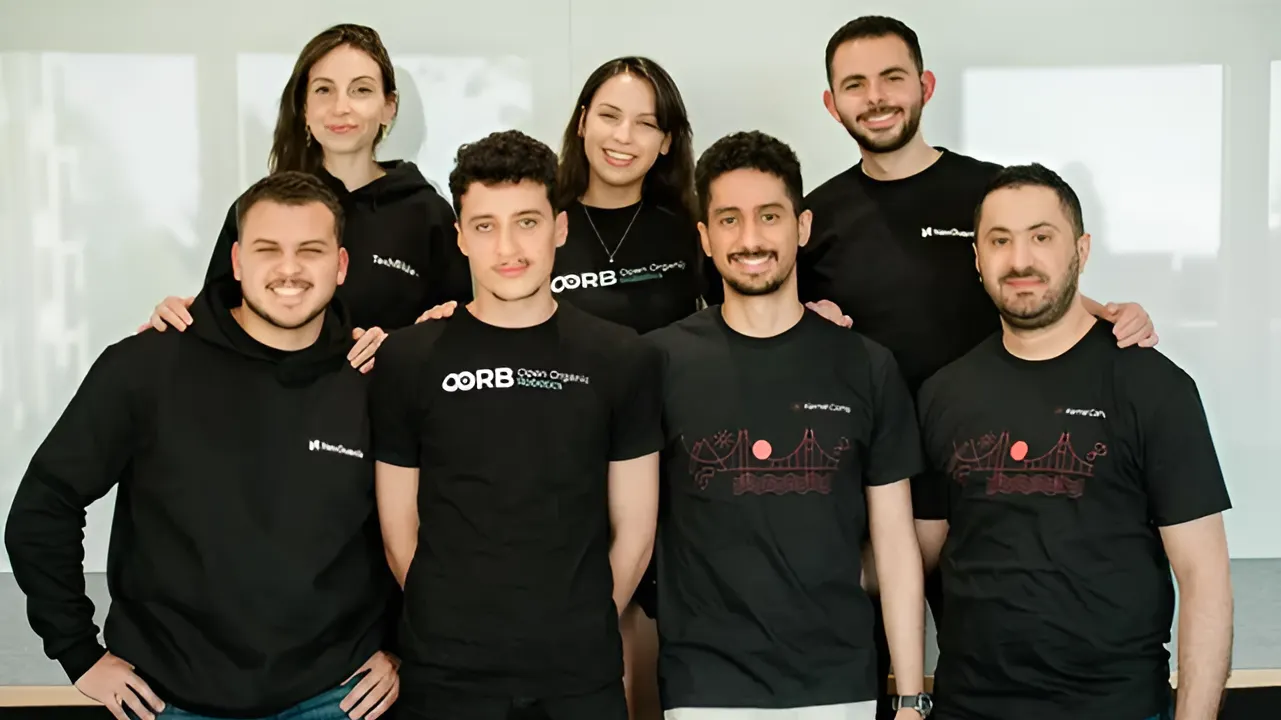
Five startups from Tunisia, Morocco, Jordan, and Egypt just graduated from Kernel Camp, an eight-week residency in Silicon Valley run by venture capital firm Propeller. They spent two months embedded in the heart of global tech. They ate dinner with executives from OpenAI, Meta, Airbnb, and JPMorgan. They pitched angels on Sand Hill Road, the most famous street in venture capital. And they proved that great ideas no longer need a US passport to get noticed.
This is not just another accelerator graduation. This is a signal that the centre of gravity in tech is shifting.
Technical Talent Exists Everywhere. Networks Do Not
The MENA region produces exceptional engineers. Anyone who has followed the global AI race knows this. But technical skill alone does not build a global company.
Silicon Valley runs on relationships. Founders there grow up with access to mentors, operators, and investors who have built and sold companies before. They get introductions without asking. They learn the unwritten rules of scaling a business through osmosis.
MENA founders have never had that luxury. They have the coding chops. They have the product vision. But they have lacked the structured pathways into the networks that turn startups into industry leaders.
Kernel Camp directly addressed this gap. It did not just fly founders to California for a few workshops. It placed them inside the ecosystem. They attended weekly mentorship dinners with leaders from the world’s most influential tech companies. They visited the offices of major software businesses to see how these organisations actually operate. They sat in rooms where deals get made and partnerships get formed.
That kind of immersion cannot be replicated through Zoom calls or online courses.
The Companies Prove the Point
The five graduates are not building simple apps. They are building deep-tech solutions that solve complex enterprise problems.
OORB from Tunisia built a robotics observability platform that tracks every robot run and diagnoses failures. Techbible from Morocco created an AI Stack Manager that maps every SaaS tool inside a company and tracks spending. FirstFlow from Jordan developed an in-chat onboarding platform that guides users through AI agent adoption. Nexguards from Egypt runs AI-powered social engineering simulations for enterprise security training. Flowbrave from Morocco turns static business processes into AI-guided workflows.
These are not experimental side projects. These are enterprise-ready products built by founders who understand real business pain points.
They were selected from the top three percent of applicants. That level of selectivity suggests the quality of talent in the region is already world-class. The missing piece was always exposure, not ability.
The Bridge Is Now Two-Way
Here is what makes this story different from previous attempts to connect MENA with Silicon Valley.
Previous efforts often treated the region as a source of cheap engineering talent or an emerging market to sell into. The flow was one-way. Western companies came to hire or to sell.
Kernel Camp represents a different model. Propeller is building a bridge that works in both directions. MENA founders gain access to US capital and networks. US investors gain access to a pipeline of technically exceptional founders building for global markets.
Zaid Farekh, founder of Propeller, put it clearly. The future of MENA tech is not local. It is global. That is a strategy backed by real investment and real results.
What This Means for the Next Generation
The five graduates of Kernel Camp will return to their home countries with something money cannot buy. They will carry relationships with Silicon Valley operators who can open doors. They will understand how US investors think and what they expect. They will have built credibility with some of the most influential people in tech.
That experience will ripple outward.
Other founders in the region will see what is possible. Investors will take MENA startups more seriously. The talent that used to leave for the US will have more reason to stay and build at home.
This is how ecosystems grow. Not through announcements or government grants alone. Through tangible proof that founders from the region can compete on the global stage.
A New Chapter for Global Tech
Silicon Valley will always be important. It has accumulated decades of density, capital, and expertise that cannot be replicated overnight.
But its monopoly on ambition is over.
The five startups that just graduated from Kernel Camp represent something larger than themselves. They represent a generation of founders who refuse to accept that geography determines destiny. They represent a region that is no longer waiting for permission to build.
The tech industry is becoming more distributed. The next wave of great companies will come from places that were previously overlooked. And if the first Kernel Camp cohort is any indication, the MENA region will be well represented in that wave.