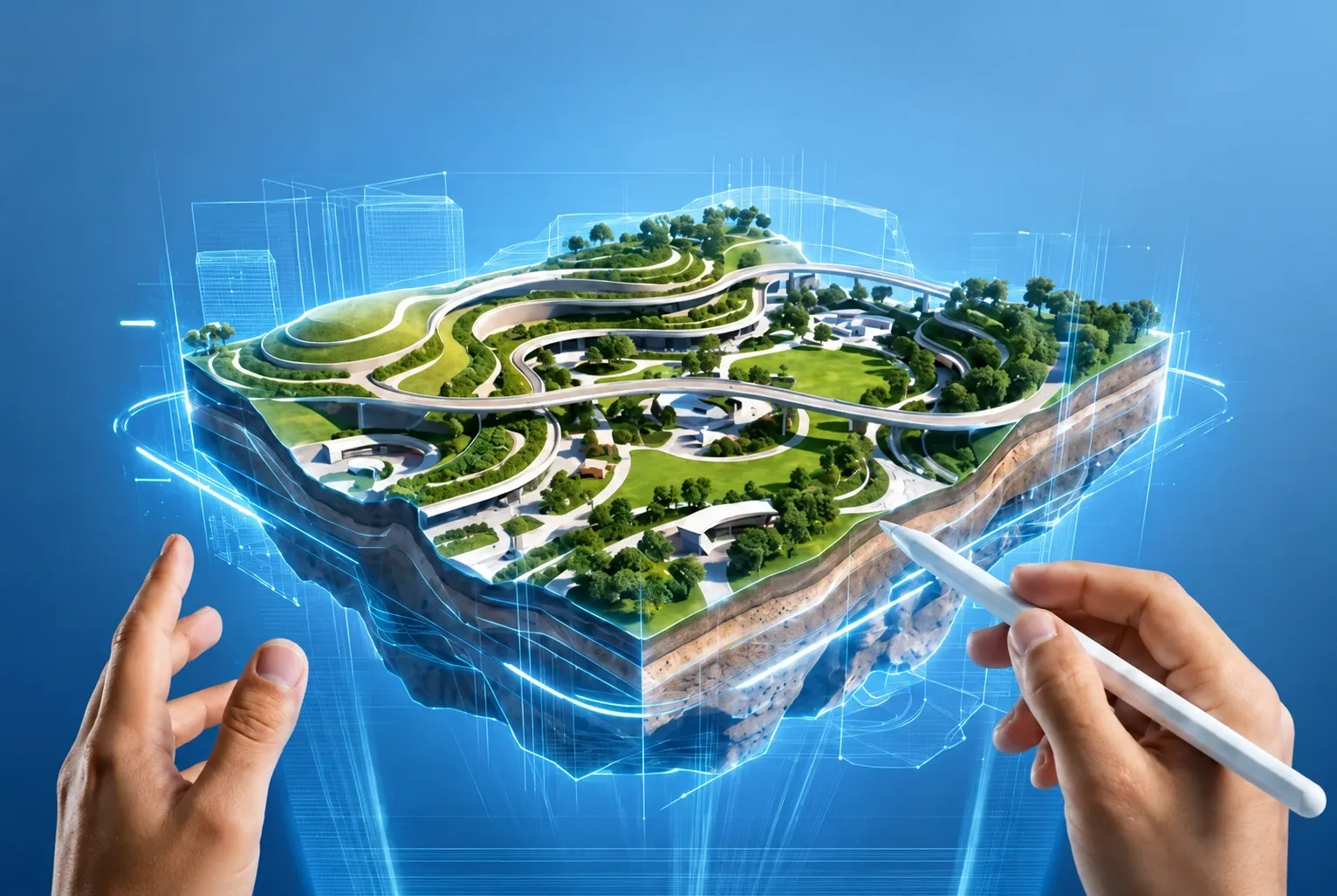
Dubai Municipality has launched a global competition to redesign Al Safa 2 Park using artificial intelligence. The challenge, announced on June 28, 2026, marks the first time a city has asked designers worldwide to use AI tools for a complete park master plan.
The initiative comes under the directives of Sheikh Hamdan bin Mohammed bin Rashid Al Maktoum, Dubai’s Crown Prince. It forms part of the city’s broader push to integrate advanced technology into urban planning and public spaces.
What the Challenge Involves
Participants must create a full master plan for Al Safa 2 Park. The submission needs to include data analysis, visualisations, detailed drawings, and a clear explanation of how AI tools shaped the design process.
The challenge asks designers to focus on several outcomes. The park should enhance sustainability, accessibility, wellbeing, social interaction, and overall quality of life.
Dubai Municipality wants the final design to be both visionary and practical. The goal is not just to produce impressive concepts but to develop plans that can actually be built.
Who Can Take Part
The competition is open to a wide range of participants. Professionals in urban planning, architecture, landscape architecture, and public space design can enter.
Students at undergraduate, master’s, and PhD levels are also eligible. Researchers, startups, AI specialists, and technology innovators can join as well.
This broad eligibility reflects Dubai’s aim to attract fresh ideas from different backgrounds. The city wants input from both seasoned experts and emerging talents.
How AI Fits Into the Design Process
The challenge treats AI as a tool to support human creativity, not replace it. Participants must show how they used AI at different stages of their work.
AI can assist with site analysis, user insights, concept generation, and scenario testing. It can help with spatial planning, environmental response, shade optimisation, and microclimate improvements.
Designers can also use AI for performance analysis and data-informed decision-making. The technology helps generate deeper insights into how people use spaces, how climate affects comfort, and how to make parks more responsive to community needs.
But the final decisions must remain human-led. AI provides the data and options; people make the choices.
The Prize and Judging Criteria
The competition carries a total prize pool of AED200,000. The first-place winner receives AED100,000, second place gets AED65,000, and third place takes AED35,000.
A judging panel of government leaders and international experts in design, architecture, AI, and city planning will evaluate the submissions.
The panel will assess entries on several criteria. These include the strength of the AI-integrated approach, spatial intelligence, feasibility, human-centred experience, inclusivity, sustainability, and the clarity of the design narrative.
The judges will also look at how well participants translate data analysis into practical spatial outcomes.
Community Gets a Say
After the panel shortlists the best entries, the public gets to vote. Dubai Municipality will invite the community to help select the winning designs.
This approach reflects the city’s commitment to involving residents in shaping public spaces. The goal is to ensure parks meet actual community needs and aspirations.
A Bigger Push for Smart Cities
This park challenge is not an isolated project. It sits within a larger wave of AI-driven urban initiatives in Dubai.
The city recently approved several major projects, including a new Falcon Market and an 8-kilometre lighting upgrade for Dubai Creek. These projects blend artificial intelligence with heritage and modern design.
Dubai’s leadership has set a clear direction. Sheikh Hamdan chairs the Higher Committee for Future Technology Development and the Digital Economy, which aims to make Dubai a global hub for AI solutions.
The park design challenge aligns with this vision. It positions Dubai as a testing ground for how AI can shape public spaces in practical, livable ways.
A New Model for Public Space Design
Bader Anwahi, CEO of the Public Facilities Agency at Dubai Municipality, described the challenge as an exploration of a new model for public space design. AI helps generate deeper insights into people, place, climate, and usage patterns.
The final outcome must remain practical, inclusive, and centred on human experience. Al Safa 2 Park offers a real-world test case for this approach.
The municipality’s focus is on developing a park that is accessible and engaging for all ages and abilities. The design should reflect community needs and Dubai’s identity as a city of innovation.
Applications for the challenge remain open until August 15, 2026. Interested participants can submit their entries through https://aipark.dm.gov.ae/ai-competition.