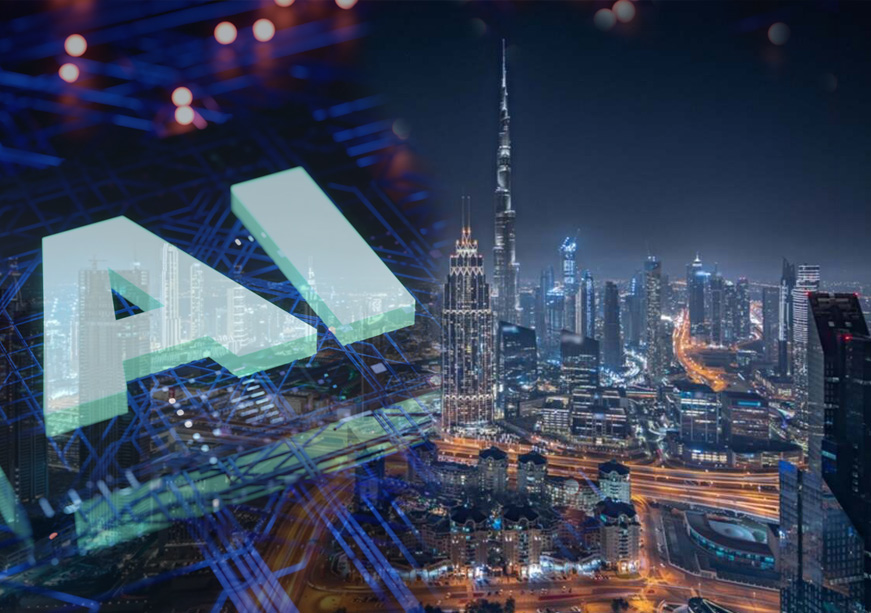
According to PwC’s 2026 AI Jobs Barometer, which analyzed more than one billion job postings across 27 countries, the UAE ranks among the fastest-growing AI talent markets globally. AI hiring has risen steadily across every sector in the country.
But the real story is not just about hiring. It is about what happens when a nation decides to bet its future on one technology.
The Two-Track Labor Market
PwC’s research reveals a crucial distinction. AI is not simply replacing jobs. It is splitting the labor market into two tracks.
The first track involves jobs that AI professionalises. These roles see AI handling basic tasks while leaving more expert work for people. These jobs account for 22 percent of advertised roles and show 42 percent higher wage growth since 2021.
The second track involves jobs that AI democratises. These roles see AI taking on complex tasks. They account for 52 percent of roles and are falling behind on both wages and growth.
For the UAE, understanding which track each role sits on is now strategic for workforce planning. The most AI-exposed occupations show the largest skill shifts and the greatest expansion in the average number of new skills required per occupation.
Junior positions in the most AI-exposed categories are seven times more likely than the least-exposed junior roles to demand traditionally senior skills like leadership and strategic thinking. Entry-level jobs are being fundamentally redesigned.
The Numbers Behind the Ambition
The UAE set a target for AI to contribute 40 percent of its GDP by 2031. That is an ambitious goal for any country. But the UAE is backing it with real money.
Total AI-related investments for 2024 and 2025 exceeded AED543 billion, with global firms including Microsoft and KKR announcing major commitments. Microsoft alone will spend more than $7.9 billion in the UAE on AI and cloud infrastructure from the start of 2026 through 2029.
The country also joined the Pax Silica program, a US-led initiative aimed at securing the supply chain for semiconductor chips and AI. This move gives the UAE access to critical hardware at a time when chip supply is a global bottleneck.
Adoption That Outpaces the World
The UAE has recorded the highest AI adoption rate globally, with 70.1 percent of the working-age population using AI in the first quarter of 2026, according to Microsoft’s Global AI Diffusion Report. That is nearly four times the global average of 17.8 percent.
Government adoption is even more striking. The UAE reached 97 percent AI tool use in government in 2025.
Businesses are following suit. An IBM study found that 77 percent of UAE senior leaders report significant productivity improvements from AI, well above the European average of 66 percent. Forty-four percent of UAE businesses anticipate AI return on investment in under a year.
The UAE government is now advancing plans to become the first nation globally to adopt agentic AI models within the next two years. Agentic AI refers to systems that can plan, execute, and oversee tasks without constant human supervision.
The Talent Pipeline
The UAE understands that infrastructure alone is not enough. You need people to build and use these systems.
The National Experts Program AI Track (NEP-AI) began in June 2026 with 32 Emiratis participating in a seven-month program to develop strategic projects and strengthen the national talent pipeline. The program supports five key priorities of the UAE National AI Strategy 2031: strengthening the country’s position as a global AI hub, increasing competitiveness through applied AI, accelerating AI adoption in government services, developing Emirati talent, and connecting research and infrastructure capabilities with real-world applications.
The UAE also launched the “AI for All” initiative with Google, a nationwide campaign throughout 2026 to promote AI literacy. The program targets students, teachers, university learners, government employees, and small and medium-sized enterprises. Everyone will be equipped with AI literacy covering productivity and privacy principles.
Stanford’s AI Index Report 2026 highlights the UAE’s strong position as a leading AI hub. The country ranks among the fastest-growing globally in AI engineering skills, with technical capability expanding faster than general AI awareness. AI talent concentration in the UAE increased by more than 100 percent between 2019 and 2025.
The Business Impact
For companies operating in the UAE, the government is creating conditions for AI adoption to flourish.
The wage premium for AI skills is positive across the majority of nations in the PwC study, and the UAE is no exception. Financial services records the highest AI wage premium in the UAE. Sectors more exposed to AI generally command higher wages than less exposed peers.
Globally, companies most exposed to AI have tripled their productivity growth lead over least-exposed companies since 2022. The most AI-exposed firms are also growing headcount 52 percent faster than the least exposed and recording higher wage growth, 24 percent versus 17 percent.
These numbers challenge the narrative that AI primarily displaces workers. Early adopters are not shrinking their workforces. They are growing them.
What Comes Next
The UAE government expects to meet its AED3 trillion AI economic target by 2031 ahead of schedule. That confidence is backed by real progress.
The country is moving from AI adoption to AI integration. The next phase involves embedding AI into the core of how government and businesses operate. Agentic AI will play a central role. The UAE aims to be the first nation to deploy these systems at scale across federal entities.
For workers, the two-track labor market is here. Jobs that work with AI will thrive. Jobs that get replaced by AI will struggle. The choice is whether to be on the right side of that divide.
For businesses, the UAE offers a market where AI adoption is encouraged, infrastructure is being built, and talent is flowing in. Companies that move early will capture the productivity gains. Those that wait will fall behind.
The Bottom Line
The UAE is not just adopting AI faster than other countries. It is building an entire economy around the technology. The investments are real. The infrastructure is being built. The talent is arriving. The adoption numbers are unmatched.
The question is no longer whether the UAE will become an AI hub. It already is one. The question is how far it can go. Based on the current trajectory, the answer is further than most people expect.