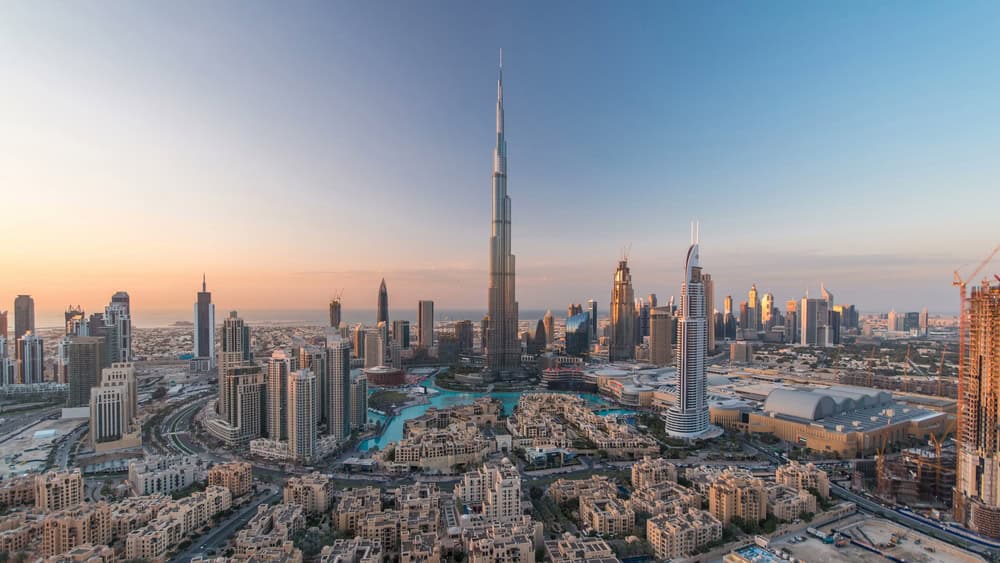
The United Arab Emirates is not waiting for the future of artificial intelligence to arrive. It is building that future right now. By 2026, the first phase of the Stargate UAE project will go online in Abu Dhabi, marking the arrival of the largest AI computing campus outside the United States.
This is not a research experiment or a pilot program. This is a national infrastructure project on the same scale as building a new power grid or a major port.
The Scale of What Is Being Built
The UAE-US AI Campus in Abu Dhabi will span 19.2 square kilometres and consume up to five gigawatts of power. That is enough electricity to power a small city.
The first 200-megawatt phase of Stargate UAE will come online in the third quarter of 2026. This initial cluster alone will be one of the largest data centres in the world. When fully complete, the campus will host the most powerful concentration of AI computing power outside the United States and China.
A global technology alliance is behind this effort. G42, the Abu Dhabi-based AI company, is building the cluster. OpenAI and Oracle will operate it. NVIDIA will supply its latest Grace Blackwell GB300 systems. Cisco will provide the security and connectivity infrastructure. SoftBank Group is also a partner.
Why This Matters for the Global AI Race
The world is in a race for computing power. Training advanced AI models requires massive amounts of compute, and that compute requires specialised chips, vast amounts of electricity, and sophisticated cooling systems.
The UAE has positioned itself to win this race. The country has 35 operational data centres and a USD 44 billion data centre investment pipeline, representing 55 percent of total GCC investments. Microsoft alone will spend more than USD 7.9 billion in the UAE on AI and cloud infrastructure from 2026 to 2029, bringing its total UAE investment to USD 15.2 billion since 2023.
AWS and Google Cloud also have established infrastructure in the country. The UAE is not trying to become an AI hub. It already is one.
The Sovereign AI Strategy
The UAE’s approach to AI is different from that of most countries. The government has made AI a national priority from the very top. In 2017, the UAE appointed the world’s first Minister of State for Artificial Intelligence. It later founded the Mohamed bin Zayed University of Artificial Intelligence, now regarded as one of the world’s leading AI research institutions.
The Stargate project is the physical manifestation of this strategy. The campus will provide nation-scale compute resources that enable the UAE to build, deploy, and scale AI systems within its own borders. This is what experts call “sovereign AI” – the ability for a country to control its own AI infrastructure and data.
The UAE has also signed the Pax Silica agreement with the United States, committing to cooperation on technology supply chains and semiconductor access. This agreement gives the UAE access to advanced AI chips that are otherwise difficult to obtain.
The Business Opportunity
For businesses, the Stargate UAE project creates a unique opportunity. The infrastructure is being built faster than the applications that will run on it. This gap between infrastructure and applications is where new companies can emerge and grow.
The campus will serve the MEASA region – Middle East, Africa, and South Asia – which represents an USD 8 trillion economy. American companies will be able to deploy AI solutions across this region using infrastructure located in the UAE.
Innovation City in Ras Al Khaimah, the UAE’s first AI-powered free zone, is being built specifically for AI companies. This free zone offers fast incorporation, clear regulation, and the backing of a sovereign government that has already decided AI is the future.
For founders building AI-native products, the convergence of infrastructure at scale, mass adoption, and government support is rare. Historically, this combination has existed in only one place at a time. Silicon Valley built the internet era. The UAE in 2026 is building the AI era.
The Technical Challenge
Building AI infrastructure in the Gulf region presents unique challenges. The climate is hot, and AI data centres generate enormous heat. Training AI models at scale in 50-degree Celsius temperatures requires advanced cooling solutions.
The project has addressed these challenges through careful planning. The facility will be powered by nuclear, solar, and natural gas to minimise carbon emissions. The design-to-build approach ensures a seamless transition from concept to execution.
Procurement of all long-lead equipment is complete, and mechanical systems have already been delivered to the site. Construction is well underway and progressing steadily towards the 2026 delivery date.
The Economic Impact
AI is expected to contribute over USD 96 billion to the UAE’s GDP by 2031, with annual growth projected between 20 and 30 percent. The Stargate project is the engine that will drive this growth.
The UAE is also investing in the United States. The country plans to invest approximately USD 1.4 trillion in the US across 30 major projects, including AI infrastructure, energy, and manufacturing. This two-way investment flow strengthens the economic partnership between the two countries.
The UAE-US AI Campus is expected to play a key role in expanding the technology ecosystem in the UAE and the wider region. It will support the development of next-generation AI applications, research capabilities, and large-scale computing infrastructure.
What Comes Next
The first 200 megawatts of compute will come online in 2026. The full buildout of Stargate UAE is expected to be completed within three years.
But the UAE is not stopping there. In February 2026, Abu Dhabi announced plans to establish an 8-exaflop AI supercomputer in India. This project, funded by Emirati capital and using American chips, will strengthen India’s ability to build and deploy AI systems within its own borders.
The UAE is building AI infrastructure not just at home, but across the region. The broader GCC is moving in the same direction, with Saudi Arabia and Qatar also making sovereign, generational bets on AI. A Gulf AI stack is emerging – an integrated compute infrastructure across the region encompassing advanced chips, massive data centres, energy systems, and technical talent.
The Bottom Line
The Stargate UAE project represents a fundamental shift in how nations approach AI. The UAE is not just buying AI models or hiring AI talent. It is building the physical infrastructure that will power the next generation of AI applications.
This infrastructure will serve as the foundation for an AI-native society. It will enable scientific discovery across healthcare, energy, finance, and transportation. It will create jobs, attract talent, and drive economic growth.
The UAE has made its bet on AI. The infrastructure is being built now. The opportunity is here. The question for founders, investors, and businesses is not whether to engage with this ecosystem. It is whether they will move fast enough to capture the opportunity.