
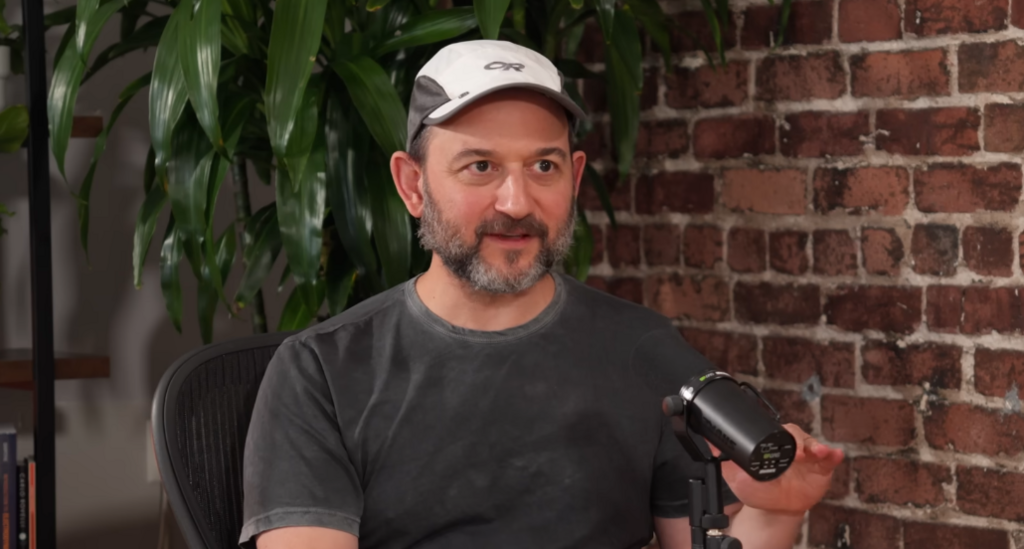
The artificial intelligence industry’s talent war has claimed one of Google’s most consequential engineers. Noam Shazeer, vice-president of engineering at Google and co-lead of the company’s Gemini AI models, has announced his departure from the search giant to join OpenAI.
The move was announced on June 18, 2026, and has quickly been read across the industry as one of the most significant personnel shifts of the year.
From Google’s First 100 to the Transformer Era
Shazeer is not a peripheral figure. He joined Google in 2000 and was among the company’s first 100 employees. Over two decades, his work grew in scope and influence until it shaped the very infrastructure modern AI runs on.
He is widely recognised for co-authoring the landmark 2017 research paper “Attention Is All You Need,” which introduced the transformer architecture — the breakthrough that became the foundation for modern generative AI systems and the large language models powering today’s AI chatbots.
His departure from Google is not without precedent. Shazeer left Google in 2021 to co-found the chatbot startup Character.AI, but rejoined Google’s AI team, DeepMind, in 2024 as part of a $2.7 billion deal.
What OpenAI Gains
For OpenAI, the acquisition is a statement of intent. Shazeer joins as the ChatGPT maker is preparing for a blockbuster initial public offering, with the AI race intensifying among leading companies.
Sam Altman, OpenAI’s CEO, made clear that this hire had long been on his agenda. Altman said Shazeer is “one of the people I have most wanted to work with since the very beginning of OpenAI,” adding that he believed “it will be worth the wait.”
For OpenAI, bringing in Shazeer strengthens a team already racing to develop more powerful AI systems and maintain its lead against rivals backed by some of the world’s largest technology companies.
What Google Loses
The departure stings. Shazeer had been serving as a vice president of engineering and a technical leader for Gemini, Google’s flagship AI model family that competes directly with ChatGPT.
Google’s response was measured. The company said it was “grateful for Noam’s meaningful contributions.” Shazeer, for his part, acknowledged the weight of the decision. In his announcement on X, he wrote that he was “incredibly proud of the amazing team at Google and everything we’ve built together,” describing the move as “a difficult decision.”
The Talent War Intensifies
Shazeer’s switch is the latest episode in what has become an unprecedented scramble for elite AI researchers. The move comes amid a talent war among OpenAI, Google, Meta and Anthropic, with industry reports pointing to compensation packages running into tens of millions of dollars for top researchers. OpenAI’s Altman recently claimed Meta had attempted to lure some OpenAI employees with signing bonuses of up to $100 million.
The scramble has also led to a wave of multi-billion-dollar acqui-hires and strategic deals aimed primarily at securing top researchers: Google’s Character.AI deal and Meta’s hiring of Scale AI founder Alexandr Wang are prominent examples.
For Google, losing a researcher who helped shape both the Transformer era and Gemini highlights how difficult it has become even for the biggest firms to retain top AI talent.
As competition for the next generation of AI models sharpens, Shazeer’s move makes one thing plain: in this industry, talent has become the most contested resource of all.