
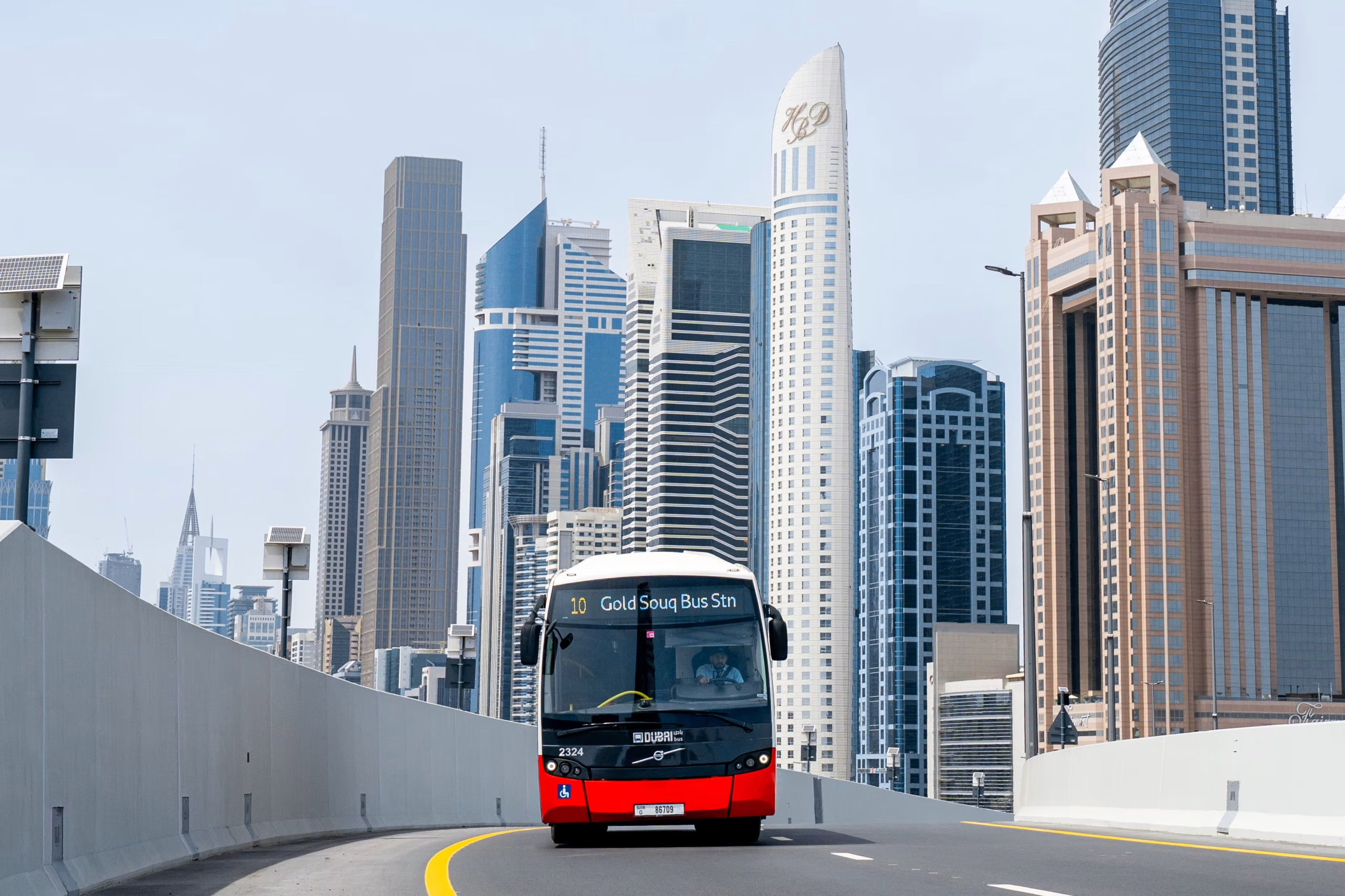
Dubai has introduced artificial intelligence into its public bus operations under the oversight of the Roads and Transport Authority. The system focuses on real-time monitoring and adjustment of bus routes, timing, and network flow using live city data.
Instead of relying only on pre-planned schedules, the system now reacts to traffic conditions, passenger movement, and disruptions as they happen during the day.
Bus operations now respond to live city movement
Bus systems in most cities still depend on fixed timetables. These timetables assume that traffic behaves in predictable patterns. In reality, congestion changes within short periods and often without warning.
Dubai’s transport system now uses AI to track these changes in real time. The system monitors road conditions and passenger demand. It then adjusts bus timing and routing to reduce delays and improve flow across the network.
This reduces the gap between planned operations and actual road conditions. Buses no longer follow rigid timing when the city behaves differently from the plan.
How the Roads and Transport Authority uses data across the network
The Roads and Transport Authority runs a transport system that already collects large volumes of operational data. This includes GPS tracking from buses, ticketing information, road traffic feeds, and station-level activity.
AI systems process this data continuously. They identify congestion points, detect delays early, and adjust service distribution across routes.
Instead of waiting for manual reports, the system reacts while events are still unfolding. Control teams still oversee operations, but AI handles rapid analysis that supports faster decisions.
This reduces pressure on operators during peak hours when delays spread quickly across multiple routes.
Why traditional bus planning struggles in fast-growing cities
Urban transport planning often relies on historical patterns. Planners study past traffic data and design routes based on expected demand.
This method struggles in cities where growth, events, construction, and commuter behaviour shift daily conditions. A route that works well in the morning may break down by midday due to sudden congestion.
Dubai’s transport environment reflects this reality. Passenger flow does not stay stable long enough for fixed schedules to remain fully accurate throughout the day.
AI systems address this gap by reacting to live inputs instead of static assumptions. They adjust operations based on what is happening now, not what happened last month.
Inside the operational thinking behind AI-driven transport
Transport authorities now work with three layers of data. The first layer tracks vehicle movement. The second monitors passenger demand through ticketing and station activity. The third captures road conditions through traffic systems and sensors.
The AI system connects these layers and produces operational signals. These signals guide decisions such as bus frequency adjustments, route changes, and redistribution of fleet resources.
For the Roads and Transport Authority, this reduces dependence on manual coordination during high traffic periods. It also improves consistency across the network when disruptions affect multiple routes at once.
What this means from a founder and systems builder’s view
From a product and infrastructure perspective, transport AI does not succeed on prediction alone. The real challenge lies in execution speed and system coordination.
Most transport agencies already have access to data. GPS systems, payment systems, and traffic feeds generate continuous information. The problem lies in turning that data into real operational changes without delay.
Builders in this space focus on three core problems. They unify fragmented transport data. They build models that detect delays early. They design control systems that allow transport managers to act immediately without waiting for long analysis cycles.
Dubai’s approach shows a move toward operational AI, where systems not only report conditions but actively influence daily transport decisions.
Business and city-level impact of real-time bus control
AI-driven bus operations change cost structure and service performance at the same time. When buses adjust to real traffic conditions, fuel waste reduces because vehicles avoid unnecessary delays and idle time.
Fleet utilisation also improves. Buses spend more time moving passengers and less time stuck in avoidable congestion. This allows transport operators to handle more demand without increasing fleet size at the same rate.
Public confidence also improves when delays are reduced. That leads to higher public transport usage, which reduces pressure on road networks and private vehicle dependence.
For city governments, this creates a long-term efficiency gain. Infrastructure investments can focus on optimisation instead of constant expansion.
How AI transport systems connect to future city planning
Transport systems are now moving toward integration across services. Bus networks no longer operate in isolation. They connect with metro systems, ride-hailing demand, and traffic control systems.
Dubai’s approach fits into this direction. The system treats transport as one connected network where changes in one part affect the rest.
This creates a continuous feedback loop. Traffic conditions influence bus movement. Bus movement influences passenger distribution. Passenger distribution then feeds back into future routing decisions.
Cities that adopt this model reduce reliance on fixed timetables and move toward adaptive mobility systems that respond throughout the day.
Dubai’s decision to integrate AI into bus operations through the Roads and Transport Authority shows how transport systems are changing their operating logic. The focus now sits on real-time response instead of fixed planning cycles.
This shift affects how buses move, how cities manage congestion, and how transport agencies think about efficiency. It also signals a broader move toward systems that adjust continuously as city conditions change.