
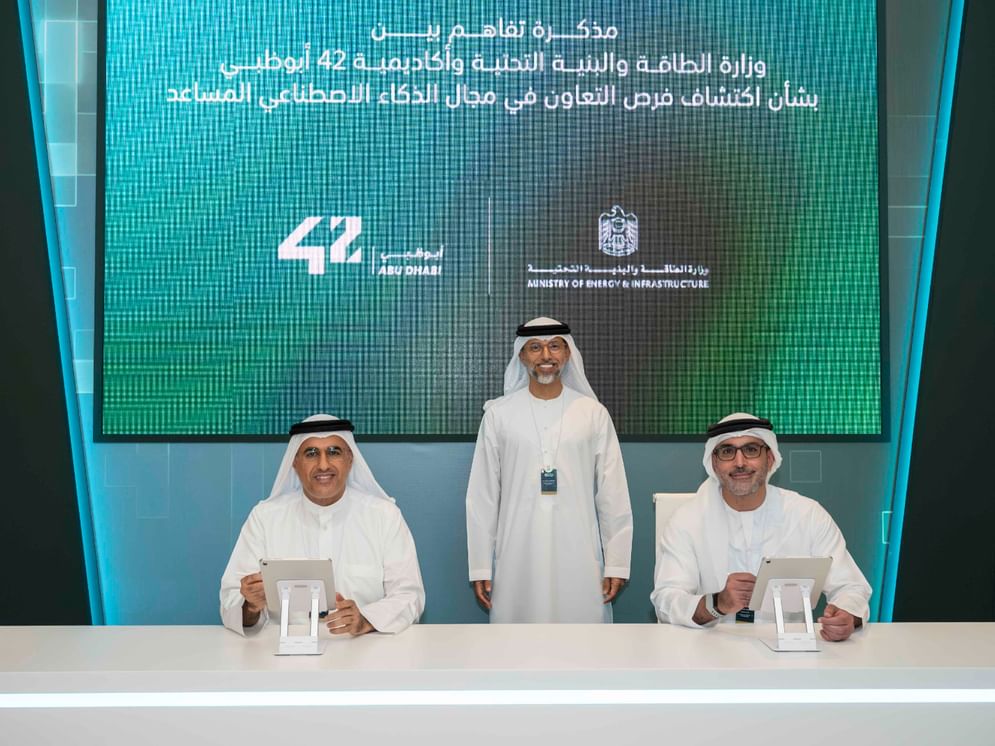
The Ministry of Energy and Infrastructure has introduced the National Data Center Observatory, an AI-based platform that helps planners and investors find the best locations for new data centers while checking the effect on energy networks, infrastructure, and resource use. The ministry also signed an agreement with 42 Abu Dhabi to build digital skills that support this push.
Governments can no longer treat data center planning as a property issue alone. They now need to plan power, cooling, and talent at the same time.
A smarter way to pick sites
The National Data Center Observatory stands out because it focuses on the hard part early. It helps decision makers study site readiness before money goes into land, substations, fiber links, cooling systems, and permits. That matters because the global data center race now runs on access to power and suitable land. Cushman and Wakefield says those two factors now shape where operators build next.
The UAE also wants this platform to support investment decisions. WAM reported in October 2025 that the UAE data center market was worth about $1.26 billion in 2024 and is set to grow past $3.3 billion by 2030. That kind of expansion needs tighter planning, not broad promises.
Power now sets the pace
AI has changed the math inside data centers. New AI servers pack more compute into each rack, and that raises power density fast. The IEA says accelerated servers driven mainly by AI will account for almost half of the net increase in global data center electricity demand through 2030. That is why grid planning now sits at the center of every serious build plan.
The UAE faces another pressure, which is heat. Data Center Knowledge reports that high ambient temperatures in the country make cooling systems more complex and more expensive, especially for dense AI workloads. A national observatory that studies energy networks and resource efficiency can help avoid bad site choices before developers break ground.
Skills need the same attention
The agreement with 42 Abu Dhabi adds the people layer to the infrastructure plan. The coding academy offers tuition-free education and a Level 6 qualification equivalent to a bachelor’s level program in software development and AI applications. Data centers do not run on concrete and cables alone. Operators need people who understand cloud systems, automation, cybersecurity, and AI workloads.
This talent push also matches what other tech firms are doing in the country. Microsoft says it aims to skill one million learners in AI in the UAE by 2027. The country wants local infrastructure, local processing, and local talent to support both.
The next test is delivery
The strongest part of the observatory is its focus on execution. It connects AI policy with the basic issues that decide if a data center project works, such as land quality, substation access, cooling needs, and network fit. That gives the UAE something more useful than a broad AI slogan. It gives the market a planning tool.
Still, the hard work starts after the announcement. Operators in the UAE already promote greener facilities such as Moro Hub’s solar-powered data center, while Khazna says it is working toward carbon neutrality by 2050. Those goals now face a stronger test as AI demand keeps rising. Strong planning will help. Efficient delivery will matter even more.
The UAE wants to decide where AI infrastructure should go before demand outruns power, cooling, and local skills. It also shows how the data center story has changed. The next winners will be the ones who plan early and build well.