
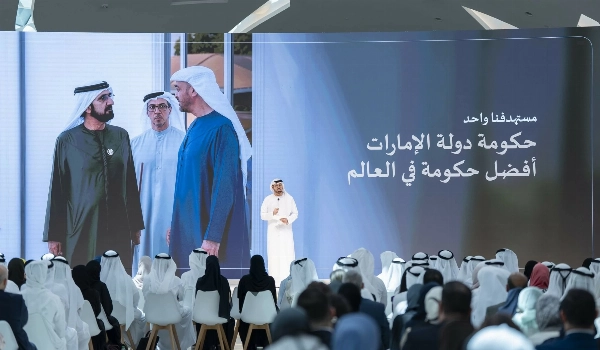
The UAE government has set an ambitious target for artificial intelligence. It wants 50 percent of federal operations to run on Agentic AI models within two years. This represents a major shift in how the country delivers public services.
The announcement came during a workshop in Dubai. The Presidential Court and the Ministry of Cabinet Affairs organized the event. Six hundred employees from both entities took part in the sessions.
Mohammad Al Gergawi, Minister of Cabinet Affairs, leads the National Committee for the Agentic AI Project. He described the directive as a defining strategic step. The goal is to redesign how government works to make it more efficient and productive.
What Is Agentic AI
Agentic AI differs from traditional AI systems. Traditional AI reacts to specific commands and stops after producing an output. Agentic AI systems act independently. They can plan, reason, and continue working until they complete a goal.
These systems learn and adapt through ongoing actions. They do not simply answer questions. They execute complex tasks in dynamic environments. This makes them suitable for government operations that involve multiple steps and decisions.
The Government’s Two-Year Plan
The UAE aims to convert half of all federal operations to Agentic AI within 24 months. This covers procedures and services across all government entities.
The Ministry of Cabinet Affairs has set an even higher target. It plans to convert 75 percent of its own operations to Agentic AI models. The Presidential Court also aims for 75 percent conversion of its services within the same timeframe.
These targets focus on improving operational efficiency. The government wants to accelerate task completion and strengthen information reliability. It also aims to support evidence-based decision-making.
Recent Workshop Brings Key Players Together
The workshop in Dubai marked a significant step forward. Officials reviewed targets for the next phase of AI-powered government transformation. They explored new operating models designed to raise efficiency and improve service quality.
A separate workshop took place earlier in June. It brought together more than 300 participants from 50 federal entities. This session aimed to launch implementation tracks for the new government system.
Participants discussed the criteria for selecting priority operations. These included transaction volume, service complexity, and number of beneficiaries. They also considered readiness for digital transformation.
Implementation Happens in Four Stages
The government will roll out Agentic AI across four stages. The first stage involves assessment and readiness. This helps entities understand their current capabilities and identify gaps.
The second stage focuses on capability building. Teams receive training and develop the skills needed to deploy AI tools effectively.
The third stage involves pilot deployment. Entities test AI agents on selected services or operations. This allows them to refine their approach before full-scale rollout.
The fourth stage is the launch of specialised AI agents and full-scale implementation.
Each government entity will select a specific service for implementation within a 90-day framework. This framework consists of three phases. These are exploration, design, and implementation planning.
Training 80,000 Federal Employees
The UAE plans to train 80,000 federal government employees in Agentic AI technologies. This massive training programme ensures that staff can work effectively with the new systems.
The government emphasises that AI will not replace people. Al Gergawi stressed that Agentic AI makes people more capable. It opens wider possibilities for creativity, innovation, and impact.
Shamsa Al Falasi, Executive Director of Transformation and Development at the Presidential Court, highlighted this point. She said real transformation starts with changing how people think. It expands their capacity to see further and decide better.
She explored the role of Agentic AI in shifting government employees from tool users to system drivers. This enables institutions to develop smarter solutions.
Building Sovereign AI Infrastructure
The Presidential Court is building advanced national capabilities in artificial intelligence. This includes a sovereign AI technical infrastructure. The Diwan GPT platform provides a secure AI environment for government use.
The court is also developing an AI culture framework. Dedicated capability-building programmes support employees in adopting new technologies.
These initiatives align with the UAE National AI Strategy 2031. The strategy positions the country to become a world AI leader by 2031. It targets AED 335 billion in economic growth from AI sectors.
Awards to Drive Innovation
Al Gergawi announced the launch of the “Top 3 AI Agents Award” within the Ministry of Cabinet Affairs. This award encourages the development of AI solutions that deliver measurable impact across government functions.
The Presidential Court will launch its own Top 3 AI Agents Award. This serves as a dedicated incentive initiative for Presidential Court employees.
These awards aim to drive innovation and reward teams that create effective AI agents. They encourage employees to develop solutions that improve government services.
What This Means for Government Services
The shift to Agentic AI will change how citizens interact with government. Services should become faster and more efficient. Decision-making will rely more on data and evidence.
The government expects to reduce the time needed to complete institutional support functions. This includes strategies, policies, and legislation. The changes should improve output quality across all government operations.
The UAE aims to become the first nation globally to adopt Agentic AI models across government. This ambition builds on the country’s early investments in artificial intelligence.
The new Artificial Intelligence and Data Authority will support this transformation. It will unify public data, AI, and digital government capabilities into a single national ecosystem. This ensures alignment between digital initiatives at the federal and local levels.
The Path Forward
The UAE has set clear targets and established a structured implementation process. The two-year timeline creates urgency while allowing for careful planning.
The 90-day framework for each entity provides a manageable starting point. Entities will explore their options, design solutions, and plan implementation within this period.
Regular monitoring will ensure progress stays on track. Support will be provided where needed.
The government’s commitment to training 80,000 employees shows that people remain central to this transformation. The focus on capability building ensures that staff can work alongside AI systems effectively.
This initiative represents a new phase in the UAE’s digital transformation journey. The country continues to position itself at the forefront of nations ready to embrace advanced technology.