Saudi Arabia has launched an AI hackathon for people with disabilities in Riyadh. This program treats accessibility as serious product work with clear use cases in daily life, health, education, and Hajj services. It also adds workshops, mentoring, funding access, partnerships, and an acceleration phase that pushes teams toward usable products instead of short-lived demos.
The strongest AI products now solve narrow and painful problems well. They read for people with low vision, support speech, guide movement, improve rehab, and help users work around limits that older software ignored. When a public program starts with those needs, it gives developers a better brief and gives users a better chance of seeing tools that work in daily life.
This puts accessibility inside product building
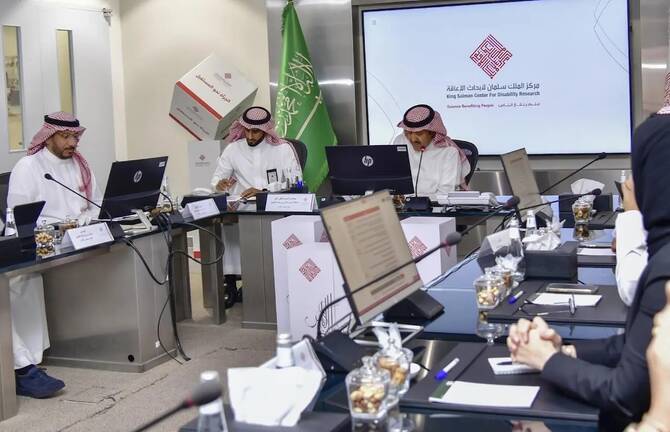
The hackathon structure explains why this story deserves more than a basic news rewrite. The King Salman Center for Disability Research built four tracks around everyday assistive tools, health and rehabilitation, education access, and Hajj and Umrah services. Teams move through workshops in June, a qualifying stage, two months of acceleration, and a final submission that requires a prototype, demo video, presentation deck, and impact report. That process looks much closer to early product development than a simple publicity event.
This approach also reflects Saudi Arabia’s wider AI buildout. The government has named 2026 the Year of Artificial Intelligence and tied that effort to its national AI strategy, data infrastructure, specialist training, and rising investment. In that setting, an accessibility focused hackathon does more than showcase inclusion. It connects disability services to a national technology agenda that already has money, talent programs, and state attention behind it.
Founders need pilots and buyers
Founders in this space face a very specific problem. A smart demo does not build a company on its own. Teams need hospitals, schools, ministries, mobility providers, or pilgrimage operators that will test the product, share data, and then buy it. The Riyadh program shows some awareness of that reality because it offers mentorship, funding opportunities, partnerships, and a judging model that rewards impact, feasibility, sustainability, and prototype quality.
The prize pool still tells only part of the story. SR220,000 can help teams start. It will not carry hardware teams through long build cycles, clinical testing, procurement reviews, or field deployment. If Saudi Arabia wants lasting companies in this category, the winners will need pilot access after October, not only cash awards on stage. Public institutions, hospital groups, schools, transport networks, and Hajj service operators can turn a good event into a real market.
Hajj, health, and education create real demand
The strongest part of the hackathon design sits in its use cases. Health and rehab need movement analysis, remote care, and assistive devices that adapt to the person using them. Education needs reading support, adaptive learning, and better access to content. Hajj and Umrah services need guidance, navigation, booking help, safety support in crowds, and field tools that work under pressure. These are hard product problems, but they are also clear market problems.
The relevance extends beyond Saudi Arabia. Disability affects 1.3 billion people, or 16 percent of the world’s population, according to the World Health Organization. The same WHO fact sheet says disability inclusive prevention and care for noncommunicable diseases can return almost 10 dollars for every dollar spent. That gives governments, health systems, insurers, and companies a strong business reason to act. Accessibility does not sit outside performance. It supports it.
The next phase of AI will reward products that work in ordinary life. People do not need endless generic tools that repeat what they already know. They need software and devices that read menus, describe images, guide movement, support speech, personalize learning, and make crowded places easier to navigate. Apple and Microsoft already ship parts of that model. Saudi Arabia now wants local builders to apply the same logic to Arabic users, local services, and one of the most demanding mobility settings in the world.
This is why the Riyadh hackathon deserves attention. It points tech work back to a basic rule. Good products solve real problems for real people. If Saudi Arabia keeps backing this effort with pilots, procurement, and product discipline, it will build more than a good headline. It will help prove that the most valuable AI stories now start with usefulness, inclusion, and trust.