Techsoma
Latest AI Innovation Global Reports Startups FinTech Funding Tech
Next-Gen Gadgets for ME Middle Eastern Startup Ecosystem FutureTech in ME Reports Artificial Intelligence Middle East Innovation Frontier Global News Reports Middle Eastern Startup Ecosystem Fintech Investment Funding FutureTech in ME
Techsoma Middle East
  • Next-Gen Gadgets for ME
  • Middle Eastern Startup Ecosystem
  • FutureTech in ME
  • Reports
No Result
View All Result
Techsoma
  • Next-Gen Gadgets for ME
  • Middle Eastern Startup Ecosystem
  • FutureTech in ME
  • Reports
No Result
View All Result
Techsoma
No Result
View All Result
Home Artificial Intelligence

Saudi Arabia Slashes Foreign Worker Pay Packages as $925B Fund Pivots to AI

by Faith Amonimo
November 19, 2025
in Artificial Intelligence, Clean Energy Tech, Mobility / Logistics
Reading Time: 4 mins read
saudi arabia cuts foreign worker salaries ai pivot

Saudi Arabia has ended the era of sky-high pay packages for foreign workers. Companies now offer modest salary increases instead of the 40% premiums that once doubled expatriate incomes.

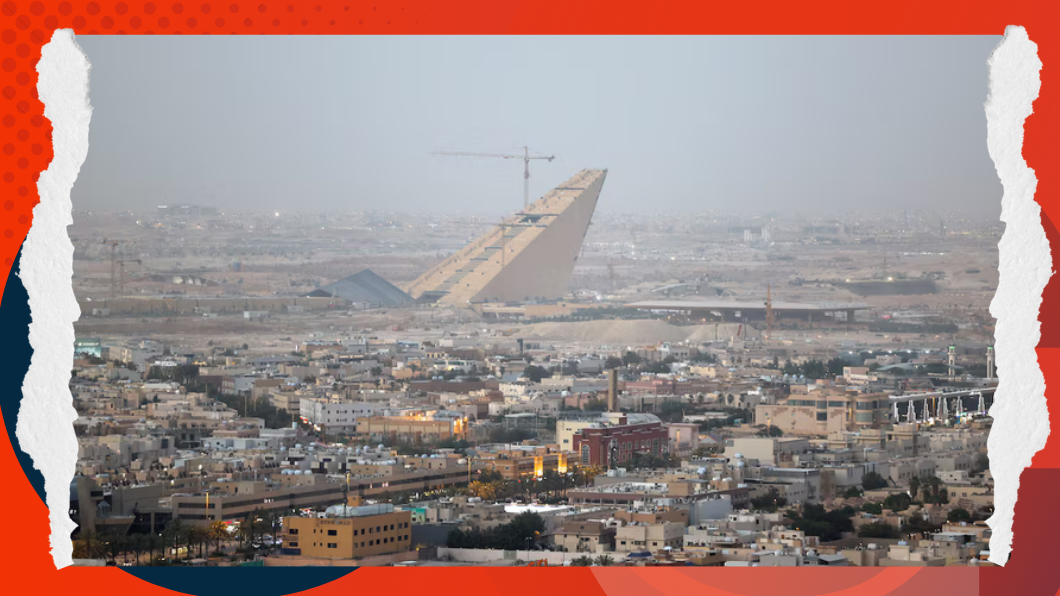
This reflects a major change in Saudi Arabia’s economic strategy. The kingdom’s $925 billion Public Investment Fund is moving money away from massive construction projects toward artificial intelligence, logistics, and mining operations.

Budget Cuts Hit Megaproject Hiring

Recruiters report a dramatic change in hiring patterns across Saudi Arabia. Project managers who previously earned $100,000 in the kingdom for jobs that paid $60,000 in Dubai now see far smaller pay gaps.

“On one hand, you have the region’s biggest economy rationalizing and on the other side, you have a huge supply of candidates who are very open to coming to the region,” said Magdy Al Zein, managing director at recruiter Boyden. “So what you get is employers rethinking packages.”

Advertisement Advertise on Techsoma

The kingdom’s flagship projects face significant delays. NEOM, the $500 billion futuristic desert city, and Trojena, set to host the 2029 Asian Winter Games, now operate under tight budget constraints.

PIF Strategy Shift Drives Changes

The Public Investment Fund’s new focus explains the hiring slowdown. The sovereign wealth fund is steering investments away from real estate megaprojects that dominated the early years of Vision 2030.

Instead, the fund now prioritizes sectors with faster returns:

  • Artificial intelligence and data centers
  • Logistics and supply chain operations
  • Mining and rare earth minerals
  • Religious tourism expansion

This strategic pivot comes as the PIF faces pressure to generate better short-term returns. The fund’s annual average return dropped to 7.2% between 2017 and 2024, down from 8.7% at the end of 2023.

Oil Price Pressures Add to Spending Cuts

Lower oil prices compound Saudi Arabia’s budget challenges. The kingdom needs crude prices near $100 per barrel to balance its budget, according to International Monetary Fund estimates. Recent price declines have widened the fiscal deficit despite production cuts aimed at supporting global oil markets.

These financial pressures compel government-linked companies to reconsider costly foreign hiring practices. Many firms now direct their limited recruiting budgets toward “hot jobs” in AI and digital sectors rather than traditional roles in construction and manufacturing.

Competition Increases for Available Positions

Saudi Arabia’s labour market transformation has created more competition for foreign workers. The kingdom achieved record-low unemployment among Saudi citizens at 6.3% in the first quarter of 2025. Private sector employment for Saudis grew 31% between 2016 and the second quarter of this year.

This domestic job growth reduces reliance on foreign expertise in many sectors. Companies can now choose from larger pools of qualified candidates, both Saudi and international, giving employers more negotiating power over salaries.

Salary Gaps with the UAE Narrow Significantly

The pay difference between Saudi Arabia and the United Arab Emirates has shrunk dramatically. Recruiters report only 5% to 8% salary premiums for Saudi positions compared to UAE roles, down from much larger gaps in previous years.

“Convincing people to move from the UAE is a challenge; they expect a high premium,” Al Zein noted. The UAE’s established infrastructure, international schools, and healthcare systems continue attracting talent despite smaller pay differences.

Dubai-based recruiter Trefor Murphy of Cooper Fitch confirmed the convergence: “There is little difference now between average salaries in Saudi Arabia and the UAE.”

Tech Sectors Still Command Premium Pay

Despite overall budget tightening, Saudi companies continue paying competitive rates for artificial intelligence and technology roles. The kingdom’s push into AI development, led by PIF-owned company Humain, creates demand for specialized digital talent.

Humain plans to build 6 gigawatts of data center capacity as part of Saudi Arabia’s AI infrastructure expansion. CEO Tareq Amin told reporters that funding flows freely for priority projects: “Everything we ask for, we get.”

Foreign Workers Still See Opportunities

While premium pay packages have decreased, Saudi Arabia remains attractive for workers from regions with slower economic growth. The kingdom’s 4.4% projected growth rate this year outpaces many global markets.

Louise Knutsson, CEO of Dubai-based Matches Talent, sees the changes as market maturation rather than contraction. “Packages are now far more measured, anchored to data, performance, and real market benchmarks,” she said. “For some, that feels like contraction. For me, it signals maturity.”

This affects primarily expatriates moving between Gulf countries. Workers from outside the region still find Saudi opportunities attractive compared to the conditions in their home market.

Vision 2030 Enters New Phase

Saudi Arabia’s economic transformation plan has reached a turning point. The kingdom achieved its Vision 2030 unemployment target six years ahead of schedule, freeing resources for other priorities.

The government now focuses on building sustainable industries rather than showcase projects. The expansion of religious tourism around Mecca and Medina offers more immediate returns than futuristic city construction.

This pragmatic approach reflects lessons learned from the early implementation of Vision 2030. Many megaprojects struggled with execution challenges and cost overruns while generating limited near-term economic benefits.

The salary adjustment represents a broader normalization of Saudi Arabia’s job market as the kingdom matures beyond oil-dependent development models.

Related Techsoma coverage

  • AI Racing Cars Reach 155 MPH in World’s First Six-Car Autonomous Grand Final at Abu Dhabi
  • Abu Dhabi Launches First Driverless Taxi Service in the Middle East Without Safety Drivers
  • The UAE Wants To Be A Country That Makes Technology, Not Just Uses It
Faith Amonimo

Faith Amonimo

Faith Amonimo is a Tech Writer and Newsletter Editor at Techsoma, where she reports on technology and digital innovation across...

Recommended For You

Egypt sovereign AI factory partnership between Vodafone, Elsewedy Electric, and Cassava Technologies
Artificial Intelligence

Egypt Gets Its First AI Factory With Nvidia Chips and Local Data Storage

by Faith Amonimo
September 14, 2026

Most countries talk about AI sovereignty as a policy goal. Egypt just made it a physical asset. On September 8, 2026, Vodafone Business, Cassava Technologies, and Elsewedy Electric signed agreements...

Read moreDetails

Saudi Sovereign AI Deal: OmniOps and HPE Build Full-Stack Control

September 14, 2026
UAE agentic AI government FedAI rollout

The UAE Is Betting Its Government on AI That Can Act Alone

September 14, 2026

Fipera’s neofashion.ai Brings AI Fashion Photography to Every Brand

August 5, 2026
Abu Dhabi's AI Judicial Platform: A Global Test Case for AI in the Courtroom

Abu Dhabi’s AI Judicial Platform: A Global Test Case for AI in the Courtroom

August 5, 2026
Next Post
Middle East entrepreneurs leadership skills

5 Effective Leadership Skills That Make Every Middle Eastern Entrepreneur Unstoppable

abu dhabi

The UAE Wants To Be A Country That Makes Technology, Not Just Uses It

Please login to join discussion

Recent News

World Bank Funds Plan to Bring Digital Learning to Jordan’s 3,500 Schools

September 14, 2026
Egypt sovereign AI factory partnership between Vodafone, Elsewedy Electric, and Cassava Technologies

Egypt Gets Its First AI Factory With Nvidia Chips and Local Data Storage

September 14, 2026

Saudi Sovereign AI Deal: OmniOps and HPE Build Full-Stack Control

September 14, 2026
UAE agentic AI government FedAI rollout

The UAE Is Betting Its Government on AI That Can Act Alone

September 14, 2026

Fipera’s neofashion.ai Brings AI Fashion Photography to Every Brand

August 5, 2026

Techsoma Middle East reports on startups, artificial intelligence, fintech, cybersecurity, digital policy, and the people shaping the region’s technology economy.

SEARCH BY CATEGORIES

  • Amazon (6)
  • Apps (9)
  • Artificial Intelligence (305)
  • Aviation (5)
  • Business (15)
  • Clean Energy Tech (9)
  • Coding (1)
  • Creator Economy (7)
  • Cryptocurrency (12)
  • Cybersecurity (25)
  • E-commerce (9)
  • EdTech (7)
  • Electric Cars (14)
  • Fintech (56)
  • Future Tech (16)
  • FutureTech in ME (44)
  • Gaming (5)
  • Global News (113)
  • Healthcare (13)
  • Image Generation (3)
  • Investment Funding (48)
  • Investor Hotspots (31)
  • Latest Gadgets (5)
  • Metaverse (1)
  • Middle East Event Radar (32)
  • Middle East Innovation Frontier (134)
  • Middle East Tech Revolution (29)
  • Middle Eastern Startup Ecosystem (61)
  • Mobility / Logistics (16)
  • Next-Gen Gadgets for ME (15)
  • Opinions (14)
  • Politics (1)
  • Proptech (3)
  • Reports (69)
  • Robotics (17)
  • Social Media (13)
  • Space Tech (3)
  • Startups (12)
  • Tech (4)
  • Tech & Society (6)
  • Tech Gadgets (8)
  • Tech Policy in Middle East (13)
  • Technology (21)
  • Telecommunications (13)
  • Trade & Policy (5)
  • Uncategorized (8)
  • Venture Capital (4)
  • Wearable Tech (3)

Recent News

World Bank Funds Plan to Bring Digital Learning to Jordan’s 3,500 Schools

September 14, 2026
Egypt sovereign AI factory partnership between Vodafone, Elsewedy Electric, and Cassava Technologies

Egypt Gets Its First AI Factory With Nvidia Chips and Local Data Storage

September 14, 2026
  • About
  • Advertise
  • Privacy & Policy
  • Contact
  • Editorial Standards
  • Corrections Policy
  • Terms and Conditions

Copyright 2026 Techsoma Middle East. All rights reserved.

Welcome Back!

Login to your account below

Forgotten Password?

Retrieve your password

Please enter your username or email address to reset your password.

Log In
Techsoma

© 2026 Techsoma Media.

Company

Apps Startups Tech Reports

Legal

Terms Privacy RSS

Latest

World Bank Funds Plan to Bring Digital Learning to Jordan’s 3,500 Schools Jordan has 3,500 public schools. Most of them do not have the basic infrastructure to support modern digital... Egypt Gets Its First AI Factory With Nvidia Chips and Local Data Storage Most countries talk about AI sovereignty as a policy goal. Egypt just made it a physical asset. On... Saudi Sovereign AI Deal: OmniOps and HPE Build Full-Stack Control Most countries treat artificial intelligence as something you buy from someone else. You rent compute from a cloud...
Techsoma Network Techsoma Network Techsoma Africa Techsoma Middle East Techsoma Canada
Transparency About Editorial Standards Corrections Privacy Terms Contact
No Result
View All Result
  • Next-Gen Gadgets for ME
  • Middle Eastern Startup Ecosystem
  • FutureTech in ME
  • Reports

Copyright 2026 Techsoma Middle East. All rights reserved.