
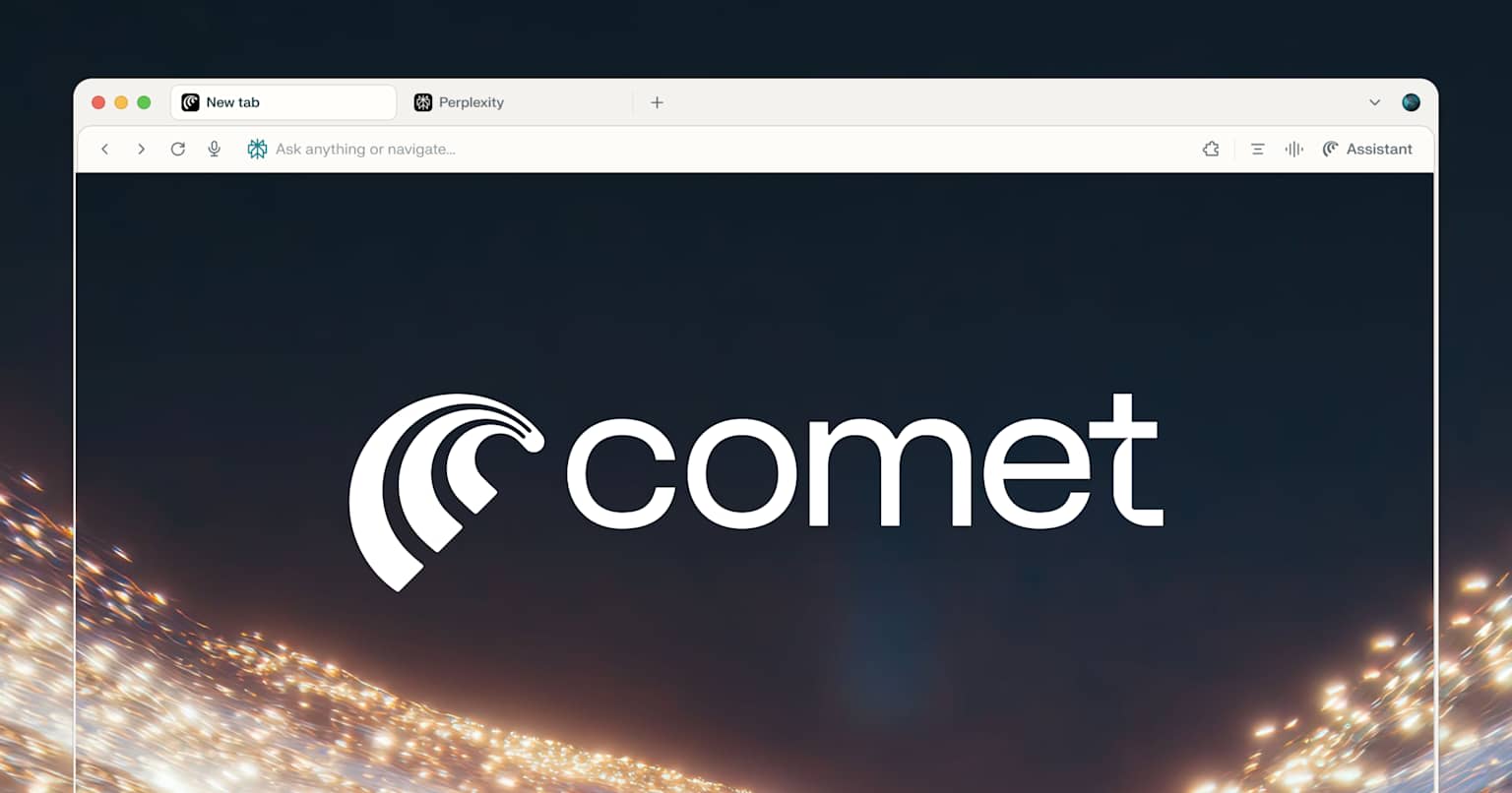
Perplexity just launched Comet, an AI-powered browser that could disrupt Chrome’s 68% market share. The startup’s latest product transforms how users interact with the web by embedding artificial intelligence directly into browsing sessions.
Comet runs on Perplexity’s search engine as the default option. Users get AI-generated summaries instead of traditional search results links. The browser includes Comet Assistant, an AI agent that works from a sidebar panel on any webpage.
The assistant can summarize emails, manage calendar events, and handle tab organization. It reads whatever appears on screen and answers questions about web content without requiring copy-paste actions. This contextual awareness sets Comet apart from standard browsers that treat AI as an add-on feature.
Early users report the assistant works well for simple tasks. It can summarize Reddit threads, explain YouTube videos, and pull information from documents. However, more complex multi-step actions often fail due to authentication issues and accuracy problems.
Performance Testing Shows Mixed Results
ZDNet’s testing revealed Comet scored 29.3 on the Speedometer 3.1 benchmark compared to Chrome’s 34.3. The performance gap reflects Comet’s beta status, with optimization still needed for speed improvements.
Google service integration presents challenges. Despite running on Chromium, Comet struggles with Gmail and Google Calendar authentication. The assistant can read and summarize content but frequently fails at advanced functions like sending emails or managing calendar invites.
TechCrunch testers found similar issues when booking travel services. The AI assistant entered incorrect dates and provided inaccurate information while attempting to complete reservation tasks.

AI Browser Competition Heats Up
OpenAI plans to release its own AI browser within weeks, according to Reuters sources. This creates direct competition between two major AI companies targeting Chrome’s dominance.
Chrome currently holds 68.32% of the global browser market, with Safari at 16.25% and Edge at 4.97%. Desktop usage shows Chrome with 66.59% market share, giving Google significant control over web access and search behavior.
The timing suggests AI companies see browsers as the next frontier for user engagement. Rather than competing solely on search results, they want to control the entire browsing experience.
Access Limited to Premium Subscribers
Comet launches exclusively for Perplexity Max subscribers who pay $200 monthly. A small group of waitlist users also gained access. This premium approach limits immediate adoption but allows controlled testing.
The browser imports Chrome bookmarks, extensions, and login credentials during setup. This smooth transition process could encourage users to switch if performance issues get resolved.
Privacy Concerns Over Data Collection
Comet Assistant requires extensive permissions to function properly. Users must grant access to screen viewing, email management, contacts, and calendar modifications. The permission list raises privacy questions about data collection practices.
CEO Aravind Srinivas previously stated the browser would track user behavior to improve AI responses. This data collection strategy conflicts with privacy-focused browsers like Brave and DuckDuckGo.
Browser Market Disruption Potential
Comet represents a fundamental shift from browsing to AI-assisted web interaction. Instead of navigating between sites manually, users can ask the assistant to research topics, compare products, or book services automatically.
The approach could appeal to users frustrated with tab management and repetitive online tasks. If technical issues get resolved, Comet might attract professionals who spend significant time on research and administrative work.
However, the browser needs performance improvements and better Google integration before challenging Chrome meaningfully. The premium pricing also limits mass adoption compared to free alternatives.
Technical Foundation Built on Chromium
Comet uses Google’s Chromium base, the same foundation as Chrome and Edge. This choice provides compatibility with existing web standards and extensions while adding AI capabilities on top.
The browser’s AI features consume 20-25% more power than Chrome during intensive tasks, according to early testing. Battery life concerns could limit laptop usage, particularly for extended browsing sessions.
Market Timing and Competition Strategy
Perplexity’s browser launch coincides with increased AI integration across tech platforms. Google added Gemini AI to Chrome, Microsoft enhanced Edge with Copilot, and Apple introduced intelligence features in Safari.
The competition focuses on making AI feel native to browsing rather than requiring separate applications. Users increasingly expect intelligent assistance for web tasks without context switching.
Comet’s success depends on solving current technical limitations while maintaining its AI-first approach. The browser offers a glimpse of future web interaction but needs refinement before mainstream adoption.