
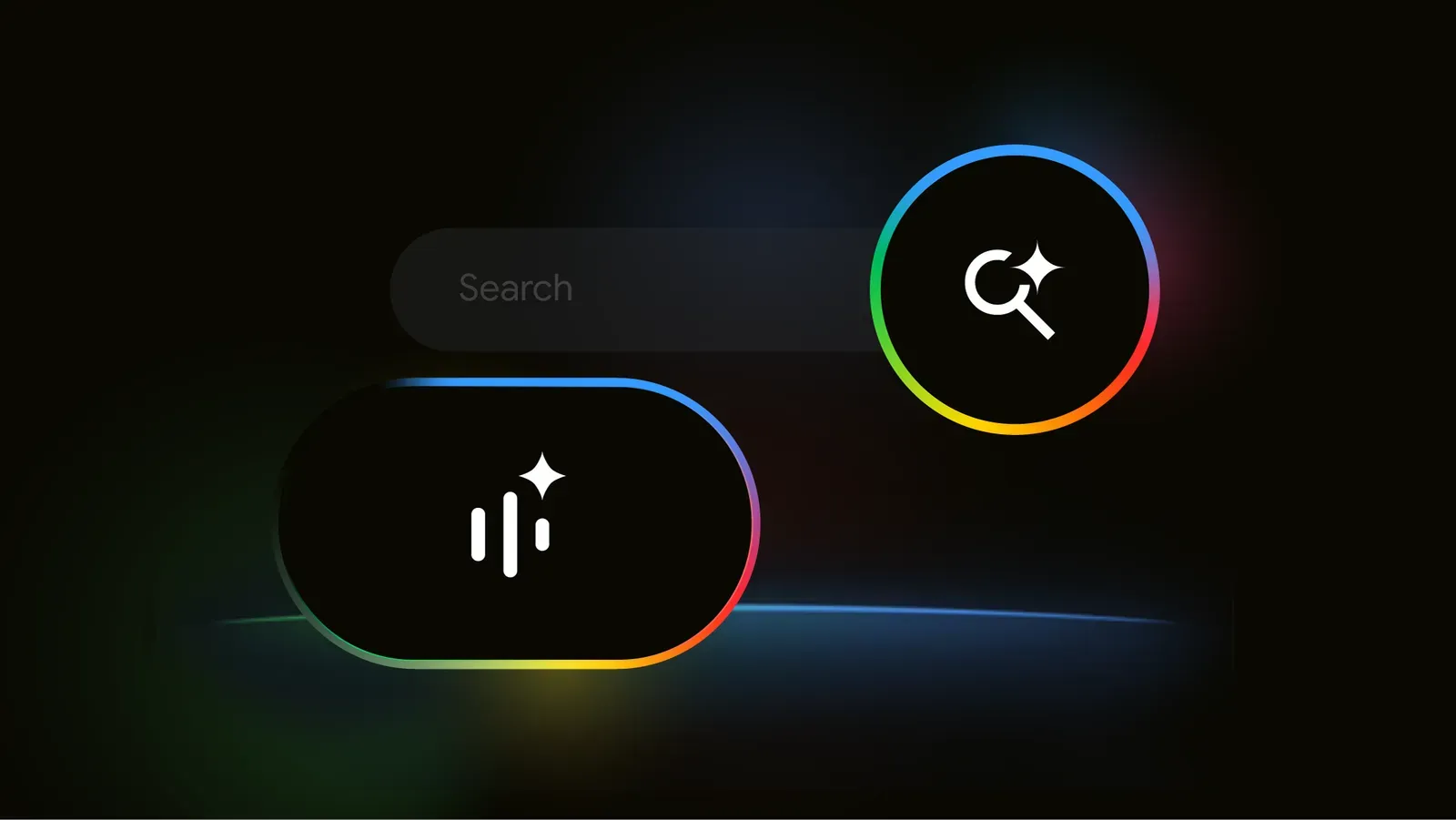
The future of search isn’t typing it’s talking. Google’s latest AI experiment brings natural voice conversations to its search engine, fundamentally changing how we interact with information online.
Picture this: You’re packing for a trip and wondering how to keep your clothes wrinkle-free. Instead of typing multiple queries, you simply ask Google out loud, and it responds like a knowledgeable friend. That’s the promise of Google Search Live, now rolling out to Labs users across the United States.
This isn’t just another voice assistant update. Search Live represents Google’s most ambitious attempt yet to transform its search engine from a query-response tool into an AI-powered conversation partner. By integrating directly into AI Mode Google’s experimental AI-enhanced search experience the feature lets users have back-and-forth discussions while searching the web in real time.
What is Google Search Live?
Search Live is Google’s new voice-first interface that lives within AI Mode, the company’s AI-powered search feature that recently became available to all US users. Unlike traditional voice search that simply converts speech to text, Search Live enables genuine conversations with Google’s custom version of Gemini, the company’s advanced AI model.
The technology goes beyond simple question-and-answer interactions. Users can ask follow-up questions, clarify their needs, and explore topics naturally all while the AI searches the web in real time to provide current, relevant information. Think of it as having a research assistant who not only understands context but can also adapt to your conversational flow.
Currently available through the Google app on Android and iOS devices, Search Live operates as a new layer within the search experience. While camera integration isn’t available yet, Google has confirmed this multimodal capability will arrive in the coming months, allowing users to point their phones at objects and ask questions about what they see.
How to Get Started with Search Live
Accessing Search Live requires just a few steps, though availability is currently limited to US users who opt into Google’s experimental features:
First, join Google Labs by visiting labs.google.com and signing in with your Google account. Look for the AI Mode experiment and click “Join waitlist” or “Try it” if immediately available. Once accepted, you’ll receive a notification this typically happens within a few days.
After gaining access, open the Google app on your Android or iOS device. You’ll notice a new “Live” icon in the search interface. Tap this icon to initiate a voice conversation. The interface is intentionally simple just start talking as you would to a friend.
The feature works best when you speak naturally rather than using keyword-heavy “search speak.” For example, instead of saying “best Italian restaurants nearby open now,” try “I’m looking for a good Italian place for dinner tonight. What do you recommend?”
Key Features That Set Search Live Apart
Search Live introduces several capabilities that distinguish it from existing voice assistants and search tools. The real-time web search integration means responses incorporate the latest information rather than relying solely on training data. As you chat, relevant links appear on screen, allowing you to dive deeper into sources without interrupting the conversation.
One particularly useful feature is background operation. You can start a Search Live conversation, switch to another app to check something, and return to continue where you left off. This multitasking capability makes it practical for real-world use cases like shopping comparisons or travel planning.
The transcript function addresses a common voice interface frustration. With a simple tap, users can view a text version of the entire conversation, making it easy to review information or share specific details. You can also switch between voice and text input mid-conversation, adapting to your environment or preference.
Google saves these conversations in your AI Mode history, creating a searchable archive of past interactions. This feature proves invaluable when you need to reference previous research or pick up a complex topic where you left off.
The Voice AI Competition Intensifies
Google’s move into conversational search comes as major tech companies race to perfect voice interactions with AI. OpenAI set a high bar with Advanced Voice Mode in ChatGPT, launched last year, which offers remarkably natural conversations but lacks real-time web access. Anthropic entered the arena in May with voice capabilities for its Claude app, focusing on thoughtful, nuanced discussions.
The competitive landscape reveals different philosophical approaches. While OpenAI emphasizes personality and natural speech patterns, Google leverages its search dominance to provide information-rich conversations. Anthropic, meanwhile, positions itself as the thoughtful alternative, excelling at complex reasoning tasks.
Apple’s conspicuous absence from this voice AI revolution speaks volumes. According to Apple software SVP Craig Federighi, the company delayed its “LLM Siri” because it couldn’t achieve desired reliability standards. This admission highlights the technical challenges involved in creating truly useful voice AI experiences.
Microsoft, despite its partnership with OpenAI, has taken a more integrated approach with Copilot, embedding voice capabilities across its productivity suite rather than creating standalone conversational interfaces. This strategy difference suggests the voice AI market may fragment based on use cases rather than converging on a single dominant approach.
What This Means for the Future of Search
Search Live signals a fundamental shift in how Google envisions search interaction. The traditional ten blue links are giving way to conversational interfaces that understand context, remember previous queries, and adapt to user needs in real time. This transformation extends beyond convenience it represents a new information paradigm.
For users, this means search becomes more accessible and intuitive. Complex research tasks that once required multiple queries and careful keyword crafting can now unfold through natural conversation. Imagine planning a home renovation by discussing options with AI that understands your budget, style preferences, and local regulations all while pulling current pricing and availability data.
The implications for SEO and content creation are profound. As search becomes more conversational, content that answers questions comprehensively and naturally will likely gain prominence. Websites may need to optimize for conversational queries rather than just keywords, fundamentally changing how we think about search visibility.
However, challenges remain. Voice interfaces must overcome accuracy issues, especially in noisy environments or with accented speech. Privacy concerns about always-listening devices need addressing. Most critically, AI must learn to acknowledge uncertainty rather than confidently providing incorrect information.
Conclusion
Google Search Live represents more than a feature update it’s a glimpse into the post-keyboard future of information access. By combining the breadth of web search with the naturalness of conversation, Google is betting that voice will become the primary interface for digital interactions.
Three key takeaways emerge from this development: First, voice AI is rapidly maturing from novelty to necessity. Second, real-time information access differentiates truly useful AI from static chatbots. Third, the race for voice interface dominance will likely determine the next decade’s tech leaders.
Ready to experience the future of search? US users can join the waitlist at Google Labs today. The broader rollout timeline remains unclear, but one thing is certain: the way we search for information is fundamentally changing.
Have you tried Search Live yet? What questions would you ask an AI that could search the web while talking with you? Share your thoughts in the comments below.
This article was rewritten with the aid of AI
At Techsoma, we embrace AI and understand our role in providing context, driving narrative and changing culture.