The Iran-US War Is Reshaping Where Money Moves In MENA — And The Q1 Numbers Prove It
Imagine trying to close a funding round while missiles are being intercepted over your city. That is not a hypothetical for founders in parts of the Middle East right now. It is the context in which MENA’s Q1 2026 startup ecosystem operated, and the numbers reflect exactly what that kind of environment does to investor confidence.
MENA startups raised $941 million in Q1 2026, according to data from Wamda’s monthly reports. That sounds like a reasonable number until you compare it to what came before. It represents a 37 per cent drop year-on-year and a 21.5 per cent decline from Q4 2025. In a region that has been aggressively building its startup ecosystem for the better part of a decade, that is a significant reversal.
The War Is Not Background Noise — It Is The Story
The Iran-US conflict that began on 28 February 2026 did not just reshape the region’s security landscape. It directly disrupted the conditions that investors need to feel comfortable writing large cheques.
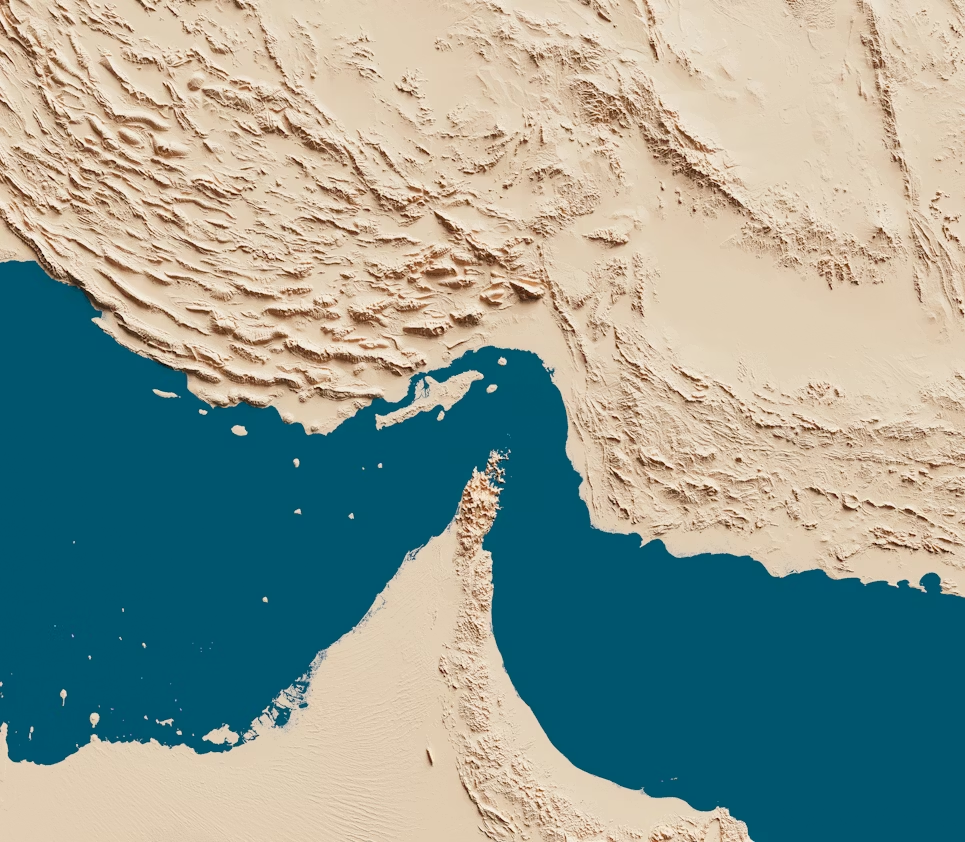
The Strait of Hormuz, through which roughly a fifth of the world’s oil passes, has been effectively closed since the war began. That disruption has rippled across oil markets, shipping lanes, and supply chains throughout the region. When trade routes become uncertain and energy costs spike, the economic environment that underpins startup growth becomes harder to predict. Investors responded the way they always do when they cannot price risk accurately: they slowed down.
The monthly funding breakdown tells the story clearly. January opened with nearly $500 million across 59 deals, before much of the conflict’s economic impact had set in. By February, as tensions deepened, that figure dropped to $326.6 million. March was the sharpest fall — only 17 startups raised capital, bringing in less than $50 million for the entire month. In roughly eight weeks, the market went from active to nearly frozen.
We covered the early warning signs of this shift in March, when we reported on data centres becoming strategic targets as the conflict expanded into digital infrastructure. The same dynamic that put physical tech infrastructure at risk has now shown up in the funding numbers. Conflict does not stop at military installations. It travels through investor psychology, risk models, and ultimately capital flows.
The UAE Exception
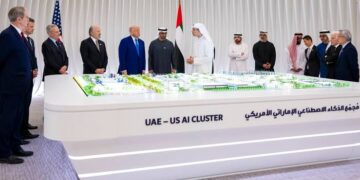
Not every market in MENA felt the freeze equally. The UAE raised $625.8 million across 46 deals in Q1, capturing roughly two-thirds of all regional funding. Saudi Arabia came second at $156.7 million across 57 deals. Egypt raised $86 million. Morocco and Bahrain brought in $22.6 million and $22 million, respectively.
The concentration is striking. The UAE, which has spent years positioning itself as the region’s most stable and business-friendly environment, is now serving as a safe harbour for capital during a period of instability. Strong infrastructure, clear regulatory frameworks, and deep access to global investor networks are paying off in exactly the conditions they were designed for.
The irony is not lost. The same conflict that is weighing down regional funding overall is arguably strengthening the UAE’s relative position, as investors consolidate their bets in the one market they feel most confident about.
What This Means For Founders Right Now
The picture is not equally bleak across all stages of startup growth. Early-stage deals held up reasonably well, with 110 deals closing and $233 million raised across the quarter. Investors are still willing to back ideas at their earliest stages, when cheque sizes are smaller and the time horizon for returns is long enough to outlast current uncertainty.
Late-stage is a different conversation. Only seven growth-stage deals closed, raising a combined $113 million. If you are a MENA founder trying to close a Series B or beyond right now, the environment is the most difficult it has been in recent memory. Investors who write those larger cheques tend to need more certainty about exit timelines, market stability, and regional conditions. None of those things are easy to guarantee while a war is active.
Fintech remained the dominant sector, accounting for 46 per cent of total funding, followed by proptech at $228.6 million and foodtech at $60 million. The sectors pulling capital are ones with clear, defensible revenue models and strong local demand — the kind of fundamentals that hold up even when macro conditions deteriorate.
The Bigger Tension
The Gulf has spent years making an argument to the world: that the Middle East is a serious, stable destination for technology investment and innovation. That argument has attracted billions in AI infrastructure commitments, hyperscaler expansions, and sovereign wealth fund bets on the digital economy’s future.
A single quarter of war-driven funding decline does not undo that. But it does test the argument in real conditions. The Q1 numbers are not a verdict on the region’s long-term trajectory. They are a snapshot of what geopolitical instability costs — in capital, in momentum, and in the confidence of the founders who are trying to build through it anyway.