
Techsoma
Latest AI Innovation Global Reports Startups FinTech Funding Tech
Next-Gen Gadgets for ME Middle Eastern Startup Ecosystem FutureTech in ME Reports Artificial Intelligence Middle East Innovation Frontier Global News Reports Middle Eastern Startup Ecosystem Fintech Investment Funding FutureTech in ME
Techsoma Middle East
  • Next-Gen Gadgets for ME
  • Middle Eastern Startup Ecosystem
  • FutureTech in ME
  • Reports
No Result
View All Result
Techsoma
  • Next-Gen Gadgets for ME
  • Middle Eastern Startup Ecosystem
  • FutureTech in ME
  • Reports
No Result
View All Result
Techsoma
No Result
View All Result
Home Artificial Intelligence

GPT‑5 for Middle East Startups: What Founders and Developers Should Know

by Kingsley Okeke
August 7, 2025
in Artificial Intelligence
Reading Time: 4 mins read
GPT‑5 for Middle East Startups: What Founders and Developers Should Know

OpenAI has officially launched GPT‑5, its most powerful language model to date. Built to support advanced reasoning, faster responses, and more reliable outputs, GPT‑5 is already being described as a major leap toward more general-purpose artificial intelligence. 

This article breaks down the new capabilities, potential risks, and how GPT‑5 could enhance Middle Eastern startups.

Key Upgrades in GPT‑5

  • Advanced Reasoning & Accuracy: GPT‑5 integrates multiple models into one unified system, making it significantly better at handling logic-based tasks, complex analysis, and long conversations. It’s 45% more accurate than its predecessor.
  • Expanded Context Window: Users can feed in hundreds of pages of text at once. This is beneficial for professionals working with policy documents, legal briefs, or technical manuals.
  • Voice, Memory & Personalisation: GPT‑5 can remember preferences, offer voice interaction, and adapt its responses to different communication styles. 
  • Coding From Conversation: The model excels at turning plain-language prompts into fully functional websites, dashboards, or tools. This opens new possibilities for SMEs and government agencies in digital transformation.

What GPT‑5 Means for Middle Eastern Founders and Developers

  1. Faster Product Development: GPT‑5 dramatically lowers the time needed to go from idea to prototype. With its ability to generate production-level code, developers in the region can build MVPs for fintech apps, ecommerce platforms, or logistics tools, without needing large engineering teams.

    Startups in Riyadh, Dubai, Cairo, and beyond can now compete globally with fewer resources.
  2. Natural Language to Interface: “Vibe coding” is one of GPT‑5’s most disruptive features. Founders can describe what they want in plain language, and GPT‑5 can generate user interfaces, data models, and logic in minutes. This bridges the gap for non-technical founders trying to ship their first product.
  3. Arabic Language Support: GPT‑5 offers improved performance in Arabic and regional dialects, making it far more useful than previous models for building localised experiences.

    Developers can now integrate Arabic NLP with more confidence and quality.
  4. Technical Co-Founder in a Box: For solo founders or small teams, GPT‑5 can serve as a hands-on collaborator. It can review code, test ideas, propose architectures, and help write documentation. With GPT‑5 Pro, even complex AI features can be rapidly tested without expensive AI talent.
  5. Time-Saving for Operational Tasks: Founders juggling operations can use GPT‑5 to handle legal templates, HR policies, pitch decks, investor communications, or financial modelling, tasks that normally take hours of manual effort.

    This helps early-stage teams stay lean and focused.
  6. Smarter Developer Tooling: Developers will benefit from better code explanations, debugging suggestions, and integrations with tools like GitHub Copilot, Figma, Notion, and Google Workspace. This enables faster iteration and cleaner workflows, key to building under tight deadlines.

Potential Risks to Monitor

  • Biotech & Dual-Use Concerns: OpenAI has flagged GPT‑5 as “high-risk” for its potential misuse in biological research. Governments across the region may need updated AI governance frameworks to mitigate these threats.
  • Misinformation & Political Sensitivity: While hallucinations are reduced, GPT‑5 can still produce confident but incorrect information. In politically sensitive environments, this remains a concern for media and public discourse.
  • Data Privacy in Regional Contexts: GPT‑5’s memory and integration features raise fresh questions about data security, especially in regions with strict regulatory environments like the UAE or KSA.

Free or Paid? Understanding Access

  • Free Use with Limits: GPT‑5 is available to all ChatGPT users, including free-tier accounts, but usage is capped.
  • Paid Plans for Professionals: The ChatGPT Pro plan, costing around $200/month, unlocks higher performance versions of GPT‑5, suitable for companies or research teams needing deeper reasoning and faster access.
  • Enterprise & Education Versions: OpenAI also offers custom integrations for governments, universities, and large organisations, especially useful for Arabic-language NLP or localised AI deployments.

The Future of AI in the Middle East

The launch of GPT‑5 marks a major moment for the Middle East’s AI ecosystem. Its potential is vast, but so are the ethical and regulatory responsibilities that come with it.

Regional leaders should take this opportunity to build national AI strategies that promote responsible use, boost AI literacy, and develop locally relevant AI tools. If deployed thoughtfully, GPT‑5 could accelerate innovation across education, finance, government, and industry. This has the potential to bring the region one step closer to global digital leadership.

Related Techsoma coverage

  • xAI Is Open-Sourcing Grok 2: Here’s What You Need to Know
  • This Stanford Professor Raises $20M to Build the ‘Android’ for Robots
  • Digital Dubai Launches World’s First Virtual ‘Emirati Family’
Kingsley Okeke

Kingsley Okeke

Kingsley Okeke contributes technology reporting and analysis to Techsoma Middle East.

Recommended For You

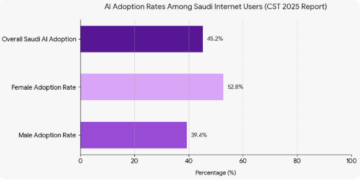
Chart showing Saudi AI adoption rate at 45.2 percent with women leading at 52.8 percent
Artificial Intelligence

Saudi AI Adoption Rate Hits 45% as Women Lead

by Faith Amonimo
July 28, 2026

Nearly half of all internet users in Saudi Arabia now use artificial intelligence tools. That is 45.2 percent of the country’s online population. This is mainstream adoption at a scale...

Read moreDetails
Anthropic Sued Over Alleged AI Patent Infringement by University of Tennessee Research Foundation

Anthropic Sued Over Alleged AI Patent Infringement by University of Tennessee Research Foundation

July 22, 2026
UAE 4

UAE Launches First AI Learning Module for National Experts Programme

July 22, 2026
Dell Technologies and Scale AI Sign Agreement to Support Qatar’s AI Ambitions

Dell Technologies and Scale AI Sign Agreement to Support Qatar’s AI Ambitions

July 21, 2026
Dubai and DaftarPay

Nemetschek Expands AI Construction Platform Across Middle East

July 16, 2026
Next Post
Jason Njoku speaking 1

Fluidity Riyadh: A New Gateway for GCC–Africa Business Partnerships

Artificial intelligence

AI in Abu Dhabi: 150 New Firms Launched in First Half of 2025

Please login to join discussion

Recent News

Chart showing Saudi AI adoption rate at 45.2 percent with women leading at 52.8 percent

Saudi AI Adoption Rate Hits 45% as Women Lead

July 28, 2026
A picture of Tally solutions staff

Tally Solutions Gains Full UAE Accreditation for E-Invoicing Compliance

July 27, 2026
Bank of Egypt and Mastercard collaboration

National Bank of Egypt Partners Mastercard for New USD Corporate Debit Card

July 27, 2026
Anthropic Sued Over Alleged AI Patent Infringement by University of Tennessee Research Foundation

Anthropic Sued Over Alleged AI Patent Infringement by University of Tennessee Research Foundation

July 22, 2026
UAE 4

UAE Launches First AI Learning Module for National Experts Programme

July 22, 2026

Techsoma Middle East reports on startups, artificial intelligence, fintech, cybersecurity, digital policy, and the people shaping the region’s technology economy.

SEARCH BY CATEGORIES

  • Amazon (6)
  • Apps (9)
  • Artificial Intelligence (297)
  • Aviation (5)
  • Business (14)
  • Clean Energy Tech (9)
  • Coding (1)
  • Creator Economy (7)
  • Cryptocurrency (11)
  • Cybersecurity (25)
  • E-commerce (9)
  • EdTech (6)
  • Electric Cars (14)
  • Fintech (56)
  • Future Tech (16)
  • FutureTech in ME (44)
  • Gaming (5)
  • Global News (113)
  • Healthcare (12)
  • Image Generation (3)
  • Investment Funding (47)
  • Investor Hotspots (31)
  • Latest Gadgets (5)
  • Metaverse (1)
  • Middle East Event Radar (32)
  • Middle East Innovation Frontier (132)
  • Middle East Tech Revolution (28)
  • Middle Eastern Startup Ecosystem (60)
  • Mobility / Logistics (16)
  • Next-Gen Gadgets for ME (15)
  • Opinions (14)
  • Politics (1)
  • Proptech (3)
  • Reports (68)
  • Robotics (17)
  • Social Media (13)
  • Space Tech (3)
  • Startups (12)
  • Tech (3)
  • Tech & Society (6)
  • Tech Gadgets (8)
  • Tech Policy in Middle East (13)
  • Technology (18)
  • Telecommunications (13)
  • Trade & Policy (5)
  • Uncategorized (8)
  • Venture Capital (4)
  • Wearable Tech (3)

Recent News

Chart showing Saudi AI adoption rate at 45.2 percent with women leading at 52.8 percent

Saudi AI Adoption Rate Hits 45% as Women Lead

July 28, 2026
A picture of Tally solutions staff

Tally Solutions Gains Full UAE Accreditation for E-Invoicing Compliance

July 27, 2026
  • About
  • Advertise
  • Privacy & Policy
  • Contact
  • Editorial Standards
  • Corrections Policy
  • Terms and Conditions

Copyright 2026 Techsoma Middle East. All rights reserved.

Welcome Back!

Login to your account below

Forgotten Password?

Retrieve your password

Please enter your username or email address to reset your password.

Log In
Techsoma

© 2026 Techsoma Media.

Company

Apps Startups Tech Reports

Legal

Terms Privacy RSS

Latest

Saudi AI Adoption Rate Hits 45% as Women Lead Nearly half of all internet users in Saudi Arabia now use artificial intelligence tools. That is 45.2 percent... Tally Solutions Gains Full UAE Accreditation for E-Invoicing Compliance   Tally Solutions has been officially listed as a fully Accredited Service Provider by the UAE Ministry of... National Bank of Egypt Partners Mastercard for New USD Corporate Debit Card   The National Bank of Egypt has partnered with Mastercard to launch a new USD-denominated corporate debit card...
Techsoma Network Techsoma Network Techsoma Africa Techsoma Middle East Techsoma Canada
Transparency About Editorial Standards Corrections Privacy Terms Contact
No Result
View All Result
  • Next-Gen Gadgets for ME
  • Middle Eastern Startup Ecosystem
  • FutureTech in ME
  • Reports

Copyright 2026 Techsoma Middle East. All rights reserved.