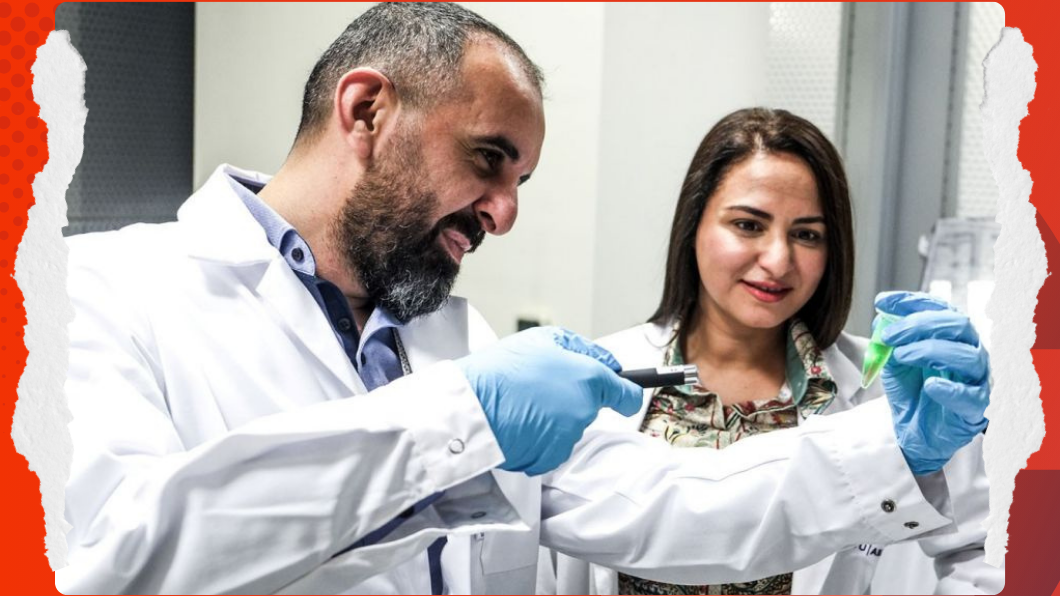
Researchers in the United Arab Emirates have developed a new medical technology that allows doctors to detect cancer and treat it at the same time. Scientists at New York University Abu Dhabi created smart MRI molecules that activate inside tumors and help doctors see cancer clearly while also damaging cancer cells.
The research appears in the Journal of the American Chemical Society and focuses on improving how doctors use MRI scans during cancer diagnosis and treatment.
Traditional MRI scans help doctors find tumors. However, they only provide images. Treatment usually starts later with separate drugs or therapies. The new molecules combine imaging and treatment in one system. This approach reduces delay between diagnosis and therapy and helps doctors target cancer cells with higher precision.
How the smart MRI molecules work
MRI scans already play a major role in cancer diagnosis. Doctors use special chemicals called contrast agents to improve the visibility of tumors in the body.
The new molecules developed by the research team behave differently. They stay inactive in healthy tissue. Once they enter a tumor, they react to the slightly acidic environment inside cancer cells. This reaction activates the molecules.
After activation, the molecules release manganese ions. These ions brighten the tumor area during an MRI scan. As a result, doctors can detect cancer cells more clearly on the scan.
At the same time, the activated molecules damage the cancer cells. This dual function allows doctors to monitor the tumor while the treatment process begins.
The molecular design behind the technology
The research team built these molecules with a unique structure. They use interlocked molecular shapes that resemble knots and rings. This structure gives the molecules greater stability and allows them to react only in specific conditions inside tumors.
Researchers combined manganese with organic components to form the compound. The manganese element helps improve MRI visibility. It also triggers the chemical reaction that harms cancer cells when the molecule activates inside a tumor.
This structure gives the molecules two important abilities. They improve imaging accuracy and they support targeted treatment.
Brain tumors become easier to detect
Brain tumors remain difficult to diagnose and monitor. Many drugs struggle to cross the blood brain barrier, a natural defense that protects the brain from harmful substances.
The smart MRI molecules developed at NYU Abu Dhabi crossed this barrier during testing. Researchers observed that the molecules reached glioblastoma tumors in the brain and accumulated in the cancer cells.
Glioblastoma stands among the most aggressive brain cancers. Doctors often struggle to track its growth with standard imaging tools. Clearer MRI images improve the chances of detecting the tumor early and monitoring treatment progress.
A safer alternative to common MRI agents
Most MRI scans rely on contrast agents that contain a metal called gadolinium. This metal improves imaging quality but it can accumulate in the body after repeated scans. In some cases it leads to safety concerns for patients with kidney problems.
The newly developed molecules use manganese instead. Researchers designed the compound to activate only inside tumors. This selective activation reduces exposure in healthy tissues and lowers the risk of side effects.
Scientists therefore view this technology as a safer option for repeated imaging during cancer treatment.
What this research means for cancer care
Doctors usually treat cancer through several stages. They detect the tumor through imaging, confirm the diagnosis, and then begin therapy. Each stage requires different tools and medications.
The smart MRI molecules combine two of these stages. Imaging and treatment occur within the same system. Doctors gain clearer images while the therapy begins at the tumor site.
Researchers tested the technology on aggressive glioblastoma tumors during laboratory experiments. The molecules produced clear MRI signals and showed therapeutic effects against cancer cells.
This result demonstrates the practical value of the technology for future clinical research.
The growing role of smart imaging in healthcare
Medical research now focuses strongly on precision medicine. Scientists aim to develop treatments that target diseased cells while protecting healthy tissue.
Smart imaging tools support this goal. They allow doctors to see the tumor location clearly and deliver treatment directly to that site.
The work at NYU Abu Dhabi reflects this global research trend. Universities, biotech companies, and hospitals invest heavily in technologies that combine diagnosis with targeted therapy.
If clinical trials confirm the current findings, these smart MRI molecules could support faster diagnosis, safer imaging, and more accurate treatment for cancer patients.