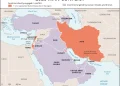

For years, data centres operated quietly behind the digital economy. Most people rarely think about them. Yet they power much of modern life. Banking systems, logistics platforms, enterprise software, and government services all run through cloud infrastructure hosted in large server facilities around the world.
Security analysts now say these facilities are increasingly becoming part of the geopolitical map.
Experts warn that modern conflicts are beginning to include digital infrastructure alongside traditional military targets. Data centres host the cloud systems that power financial networks, communications platforms, and government services. That makes them strategically important during international crises.
Security researchers say attacks on digital infrastructure can disrupt entire sectors at once, according to a report by Euronews examining how data centres are emerging as targets in modern warfare
At the same time, security officials are warning about increased cyber activity linked to the Iran conflict. Analysts monitoring the situation say Iran-aligned groups could attempt attacks against infrastructure systems such as healthcare networks, water plants, and energy facilities.
Those warnings were highlighted in this Associated Press report on Iran-linked cyber threats targeting infrastructure.
The Middle East’s Cloud Boom Raises The Stakes
The issue carries particular weight in the Middle East.
Over the past decade, Gulf countries have invested heavily in digital infrastructure as they work to diversify their economies and develop technology sectors.
Global cloud providers have responded by expanding regional infrastructure. Amazon Web Services, Microsoft Azure, and Google Cloud have launched cloud regions across the Gulf to support governments, banks, and startups building digital platforms.
These facilities support a growing ecosystem of digital services. Fintech companies rely on cloud infrastructure to process payments. Government platforms run public services online. Logistics companies use cloud software to coordinate supply chains across the region.
As more services move online, the infrastructure supporting them becomes increasingly critical.
Why One Data Centre Can Disrupt An Entire Digital Economy
Modern cloud architecture concentrates thousands of services inside a single infrastructure cluster.
A major cloud region can host banking systems, ecommerce platforms, enterprise software, logistics networks, and government databases at the same time.
If one of these facilities experiences disruption, the consequences can ripple quickly across industries.
Research from the World Economic Forum on the role of data centres in the global digital economy explains how cloud infrastructure underpins a vast share of modern digital activity
Because many organisations rely on shared infrastructure, outages or attacks affecting a major facility could disrupt large parts of the digital ecosystem simultaneously.
Governments Are Rethinking Digital Sovereignty
As geopolitical tensions increasingly intersect with digital infrastructure, governments are beginning to reconsider how critical cloud systems are protected.
Some countries are accelerating plans to build sovereign cloud infrastructure that keeps sensitive data within national borders. Others are investing more heavily in cybersecurity protections around major infrastructure hubs.
Security analysts say the shift reflects a broader reality of the digital age.
Data centres are no longer just facilities for storing information.
They are becoming strategic infrastructure in modern geopolitics.