
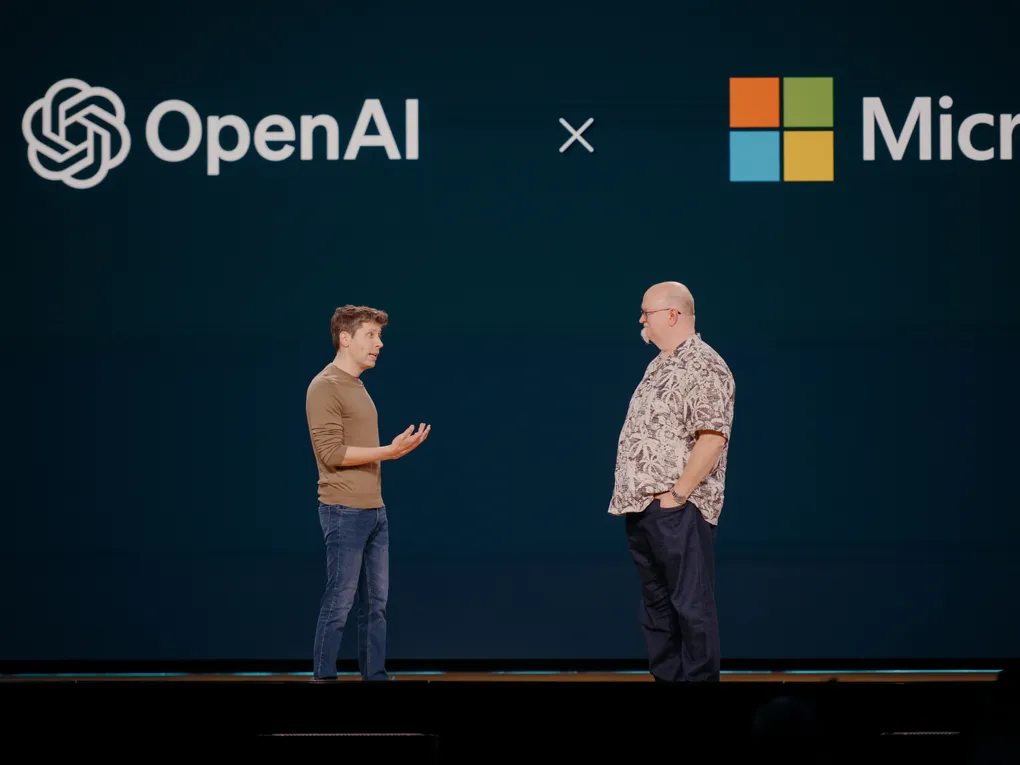
One of the most consequential partnerships in the history of artificial intelligence just changed shape. Microsoft and OpenAI announced on April 27 that they have restructured their agreement, ending Microsoft’s exclusive right to distribute OpenAI’s technology. The move opens the door for Amazon Web Services, Google Cloud, and others to offer OpenAI’s models directly to their customers.
What Actually Changed
Under the revised terms, Microsoft retains a licence to OpenAI’s intellectual property through 2032, but that licence is now non-exclusive. OpenAI may sell its products and serve customers across any cloud provider, not only Microsoft Azure.
The financial arrangement also shifted. OpenAI will continue paying Microsoft a revenue share through 2030 at the same rate, but that obligation is now subject to a total cap. In exchange, Microsoft will no longer pay a revenue share on OpenAI products it resells on its cloud.
The trigger for this restructuring was not a breakdown in the relationship; the proximate cause was a $50 billion investment from Amazon, with $15 billion upfront and another $35 billion to follow when certain conditions are met. That deal had created a legal grey area that the new agreement now resolves.
Why the Gulf Is Watching Closely
The Middle East is no passive observer in this realignment. Saudi Arabia and the UAE have both positioned themselves as global AI hubs, committing hundreds of billions of dollars to data centre construction, sovereign AI strategies, and partnerships with leading American technology companies.
OpenAI has a deepening presence in the region. Its partnership with the UAE-linked investment group MGX and Saudi Arabia’s emerging AI ambitions place the region squarely within OpenAI’s strategic expansion plans. Until now, any Gulf enterprise or government entity building on OpenAI’s technology was effectively building on Microsoft’s cloud infrastructure. That constraint no longer applies.
A More Competitive Landscape for Enterprise Buyers
The practical effect for regional enterprises is increased negotiating power. When a single cloud provider controls exclusive access to the most capable AI models, buyers have limited leverage. That dynamic has now shifted.
AWS and Google Cloud enterprise customers had previously been limited in their ability to integrate OpenAI’s products because of the exclusive relationship. Government entities, financial institutions, and large regional conglomerates that had chosen AWS or Google Cloud as their primary infrastructure providers can now access OpenAI models without switching platforms or operating through workarounds.
Microsoft Is Not Out of the Picture
It would be a mistake to read this as a weakening of Microsoft’s position. Azure had until now been the only public cloud on which OpenAI’s most capable models were natively available, giving Microsoft a differentiation that drove enterprise Azure adoption at the height of the AI arms race in 2023 and 2024. That advantage is surrendered, but Microsoft retains its equity stake in OpenAI, its primary cloud partner status, and a licensing arrangement extending to 2032.
OpenAI has also contracted to purchase an additional $250 billion in Azure services, which suggests the commercial relationship between the two companies remains substantial, even if the exclusivity is gone.
The Bigger Picture
What this restructuring signals is that OpenAI has matured from a startup dependent on a single patron into a company confident enough to distribute its technology across competing infrastructure providers. For the Middle East, this opens up choices that did not exist six months ago. The question now is how quickly regional governments and enterprises move to take advantage of them.