
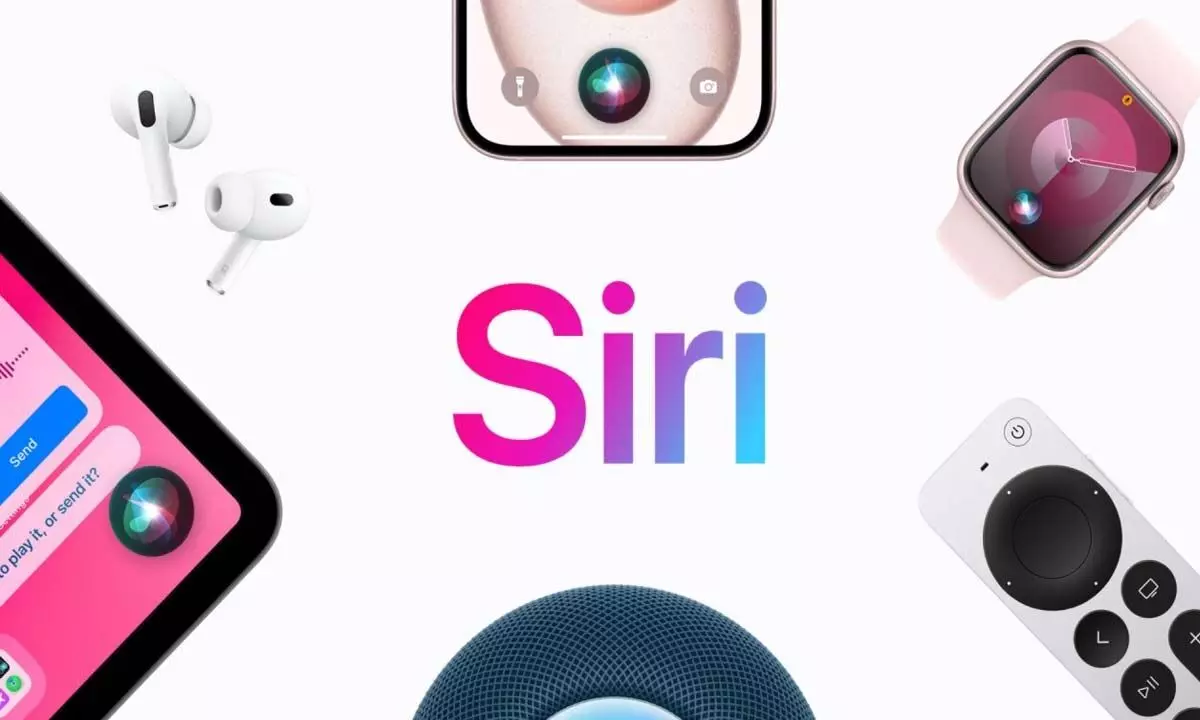
Apple has pushed back its most ambitious Siri upgrade yet, setting an internal target of spring 2026 for the release of its AI-powered voice assistant overhaul. The tech giant plans to launch the revamped Siri as part of iOS 26.4, marking nearly two years since the features were first announced.
The delayed upgrade will transform Siri into a more capable assistant that can access users’ personal data and understand what’s happening on their device screens. This represents a major shift from the current version, which has struggled to keep pace with competitors like ChatGPT and Google’s AI tools.
Multiple Setbacks Behind the Delay
The project has faced repeated delays since Apple first showcased the new Siri features at its developer conference in June 2024. Originally planned for fall 2024 alongside the iPhone 16 launch, the timeline shifted first to spring 2025, then to May 2025, before being postponed indefinitely in March.
A reliable source reports that internal engineering problems have plagued the development. The technology failed to work properly about one-third of the time during testing, forcing Apple’s engineers to rebuild Siri completely.
The main technical hurdle centers on Siri’s split architecture. Apple tried to combine its old system for basic tasks like setting timers with a newer platform for advanced AI features. This approach created bugs that required starting over with an entirely new foundation.
Leadership Changes and Internal Tensions
The delays sparked significant changes within Apple’s AI leadership. John Giannandrea, Apple’s senior vice president of AI, lost oversight of consumer products including Siri. Vision Pro headset creator Mike Rockwell and software chief Craig Federighi now lead the voice assistant project.
Internal finger-pointing has emerged between Apple’s AI and marketing teams. Engineers blame marketing for overselling features that weren’t ready, while marketing argues they worked with timelines provided by the AI teams.
Features Coming in the New Siri
The upgraded Siri will include several major improvements:
- Personal data access: The assistant will tap into user information and on-screen activities to provide more relevant responses
- App Intents system: Siri will gain precise control over applications and in-app actions across Apple devices
- Large language model foundation: The system will run on Apple’s own LLM technology, internally called “Siri LLM”
- Contextual understanding: The assistant will better understand multi-step requests and complex queries
This represents a significant leap from the current Siri, which was first introduced in 2011 and has received criticism for falling behind modern AI assistants.
Broader Impact on Apple’s AI Strategy
The Siri delays have created ripple effects across Apple’s product lineup. A planned smart home hub device that relies heavily on the new Siri features has been postponed indefinitely. The wall-mounted or desk-based device was originally set for a March release.
Apple’s broader AI ambitions also face challenges. The company wants to launch smart glasses with AI-enhanced cameras next year, but currently depends on partners like OpenAI and Google for image analysis capabilities.
Despite these setbacks, Apple continues expanding its AI efforts. At the developer conference, the company announced new Apple Intelligence features coming to iPhones, iPads, and Macs, though none involved the delayed Siri upgrades.
Competition Pressure Mounts
The extended timeline puts Apple further behind competitors in the AI assistant race. ChatGPT has gained widespread adoption, while Google has replaced its Assistant with the more advanced Gemini. Microsoft’s Copilot has also made inroads across its product ecosystem.
Apple currently integrates ChatGPT into its existing AI features as a stopgap measure, allowing users to access OpenAI’s technology when Siri can’t handle requests. However, this partnership highlights Apple’s current limitations in developing competitive AI capabilities internally.
Looking Ahead
Apple executives have acknowledged the delays publicly. At the recent developer conference, software chief Craig Federighi a
Apple has pushed back its most ambitious Siri upgrade yet, setting an internal target of spring 2026 for the release of its AI-powered voice assistant overhaul. The tech giant plans to launch the revamped Siri as part of iOS 26.4, marking nearly two years since the features were first announced.
The delayed upgrade will transform Siri into a more capable assistant that can access users’ personal data and understand what’s happening on their device screens. This represents a major shift from the current version, which has struggled to keep pace with competitors like ChatGPT and Google’s AI tools.
Multiple Setbacks Behind the Delay
The project has faced repeated delays since Apple first showcased the new Siri features at its developer conference in June 2024. Originally planned for fall 2024 alongside the iPhone 16 launch, the timeline shifted first to spring 2025, then to May 2025, before being postponed indefinitely in March.
A reliable source reports that internal engineering problems have plagued the development. The technology failed to work properly about one-third of the time during testing, forcing Apple’s engineers to rebuild Siri completely.
The main technical hurdle centers on Siri’s split architecture. Apple tried to combine its old system for basic tasks like setting timers with a newer platform for advanced AI features. This approach created bugs that required starting over with an entirely new foundation.
Leadership Changes and Internal Tensions
The delays sparked significant changes within Apple’s AI leadership. John Giannandrea, Apple’s senior vice president of AI, lost oversight of consumer products including Siri. Vision Pro headset creator Mike Rockwell and software chief Craig Federighi now lead the voice assistant project.
Internal finger-pointing has emerged between Apple’s AI and marketing teams. Engineers blame marketing for overselling features that weren’t ready, while marketing argues they worked with timelines provided by the AI teams.
Features Coming in the New Siri
The upgraded Siri will include several major improvements:
- Personal data access: The assistant will tap into user information and on-screen activities to provide more relevant responses
- App Intents system: Siri will gain precise control over applications and in-app actions across Apple devices
- Large language model foundation: The system will run on Apple’s own LLM technology, internally called “Siri LLM”
- Contextual understanding: The assistant will better understand multi-step requests and complex queries
This represents a significant leap from the current Siri, which was first introduced in 2011 and has received criticism for falling behind modern AI assistants.
Broader Impact on Apple’s AI Strategy
The Siri delays have created ripple effects across Apple’s product lineup. A planned smart home hub device that relies heavily on the new Siri features has been postponed indefinitely. The wall-mounted or desk-based device was originally set for a March release.
Apple’s broader AI ambitions also face challenges. The company wants to launch smart glasses with AI-enhanced cameras next year, but currently depends on partners like OpenAI and Google for image analysis capabilities.
Despite these setbacks, Apple continues expanding its AI efforts. At the developer conference, the company announced new Apple Intelligence features coming to iPhones, iPads, and Macs, though none involved the delayed Siri upgrades.
Competition Pressure Mounts
The extended timeline puts Apple further behind competitors in the AI assistant race. ChatGPT has gained widespread adoption, while Google has replaced its Assistant with the more advanced Gemini. Microsoft’s Copilot has also made inroads across its product ecosystem.
Apple currently integrates ChatGPT into its existing AI features as a stopgap measure, allowing users to access OpenAI’s technology when Siri can’t handle requests. However, this partnership highlights Apple’s current limitations in developing competitive AI capabilities internally.
Looking Ahead
Apple executives have acknowledged the delays publicly. At the recent developer conference, software chief Craig Federighi addressed the situation directly:
“This work needed more time to reach our high quality bar, and we look forward to sharing more about it in the coming year.”
The company may provide a preview of the new Siri features when it launches new iPhones this fall, though no final decisions have been made. The spring 2026 timeline could still shift if development work encounters new problems.
Beyond the immediate Siri upgrade, Apple is exploring even more ambitious AI projects. The company has teams working on an always-on device assistant that would be more conversational, as well as a chatbot app called “Knowledge” that could access information from the open web.
For Apple, the Siri upgrade represents more than just improving a voice assistant. It’s a crucial test of the company’s ability to compete in the AI era and maintain its reputation for polished, reliable products. Whether spring 2026 proves to be the final deadline remains to be seen.