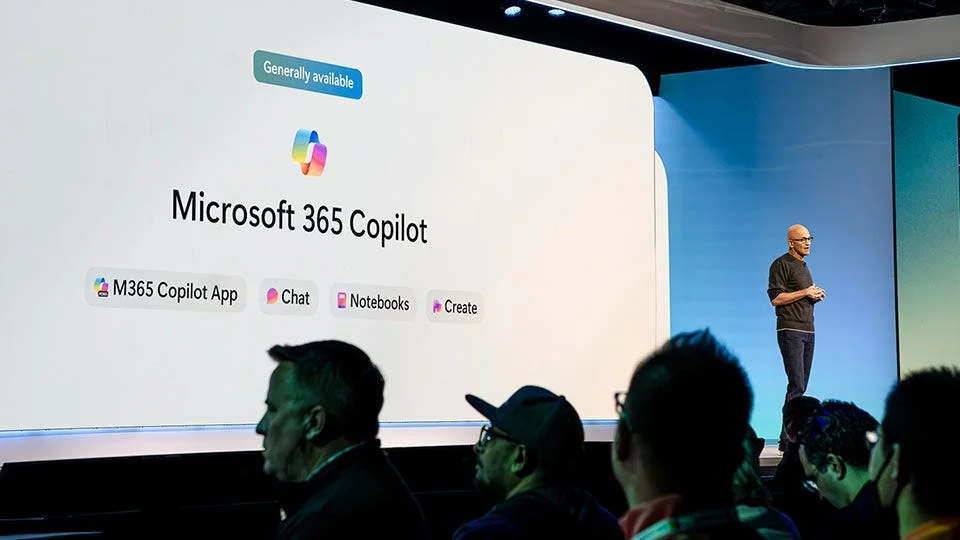
Microsoft has unveiled a sweeping upgrade to its Copilot platform, repositioning the tool from a passive assistant into an active collaborator as competition in enterprise artificial intelligence accelerates.
The update, rolled out across Microsoft 365, introduces new capabilities designed to handle complex, multi-step tasks, deepen research workflows, and integrate multiple AI models into everyday work processes.
From assistant to co-worker
At the centre of the overhaul is a new feature called “Copilot Cowork,” which allows AI to execute tasks over time rather than respond to single prompts. Users can now assign broader objectives, with the system breaking them into steps, coordinating actions across apps, and delivering outputs while keeping users in the loop.
This marks a shift towards what Microsoft describes as “agentic” AI. These are systems that can plan, reason, and act with a degree of autonomy inside workplace tools such as Word, Excel, Outlook, and Teams.
The feature builds on technology from Anthropic’s Claude models, signalling a deeper partnership as Microsoft looks beyond a single-model approach.
A multi-model AI strategy takes shape
One of the most significant changes is Copilot’s move to a multi-model architecture. Instead of relying primarily on OpenAI, Microsoft is combining different AI systems to improve performance and reliability.
New tools such as “Critique” allow one model to generate responses while another reviews and refines them, reducing errors and improving accuracy.
Another feature, sometimes referred to as a “model council,” enables users to compare outputs from multiple AI systems side by side, offering a broader perspective for decision-making.
This approach reflects a wider industry shift towards collaborative AI systems that specialise in different tasks rather than relying on a single general-purpose model.
Deeper research and enterprise workflows
Microsoft has also upgraded Copilot’s research capabilities, enabling it to analyse information across multiple sources and produce more comprehensive outputs. Early testing shows improvements in accuracy and completeness when compared to single-model systems.
These enhancements are aimed at knowledge-intensive roles, where AI is expected to move beyond drafting emails or summarising meetings to supporting strategic decision-making and long-form analysis.
At the same time, Microsoft is embedding these capabilities directly into its core productivity suite, ensuring that AI operates within existing workflows rather than as a separate tool.
A competitive push in enterprise AI
The revamp comes as Microsoft faces growing pressure from rivals, including Google and emerging AI startups, all racing to define the future of workplace software.
Internally, the company has also reorganised its Copilot teams to accelerate development and unify its consumer and enterprise AI efforts.
The broader strategy is to make Copilot indispensable to daily work. By combining automation, multi-model intelligence, and deeper integration into Microsoft 365, the company is betting that AI will become the primary interface for productivity software.