
Egypt has signed a $200 million agreement with Qatar’s Al Mana Holding to develop a sustainable aviation fuel plant in the Suez Canal Economic Zone. The project marks Al Mana’s first industrial investment in the zone and signals a new phase in Egypt–Qatar economic cooperation.

A new industrial foothold in Ain Sokhna
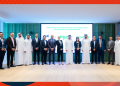
The agreement was signed during the Egyptian–Qatari Business Forum in Cairo. It commits Al Mana Holding to build the facility in the Ain Sokhna Integrated Zone, one of Egypt’s most strategically located industrial hubs.
The plant will sit on a 100,000 square metre site. Once operational, it is expected to produce up to 200,000 tonnes of sustainable aviation fuel each year. It will also generate by-products such as biopropane and bionaphtha.
Production will rely on refined used cooking oil. This choice supports circular economy principles and reduces reliance on fossil-based feedstocks.
Linking investment to Egypt’s green ambitions
Egyptian officials have framed the project as part of a broader push to reposition the Suez Canal Economic Zone as a centre for clean and future-facing industries. The development aligns with national efforts to expand renewable energy, attract export-oriented manufacturing, and integrate sustainability into heavy industry.
The location offers direct access to ports and global shipping routes. This provides the project with a clear pathway to international markets, particularly as airlines increase their demand for lower-carbon fuels.
Commercial certainty through long-term offtake
The project includes a long-term offtake agreement with Shell. The energy major is expected to purchase the full output of the plant once production begins.
This arrangement reduces market risk and strengthens the project’s commercial viability. Deliveries are expected to start by the end of 2027, subject to construction and commissioning timelines.
Aviation decarbonisation in focus
Sustainable aviation fuel is considered one of the most effective tools for reducing aviation emissions in the near term. Compared with conventional jet fuel, SAF can reduce lifecycle carbon emissions by between 50 and 80 per cent, depending on the feedstock and production process.
As global regulators and airlines push for lower emissions, demand for SAF is rising rapidly. This project positions Egypt to participate directly in that transition, not just as a transit hub but as a producer.
A signal beyond the deal
Beyond its immediate economic impact, the agreement carries regional significance. It reflects Qatar’s growing interest in cross-border industrial investments and Egypt’s drive to attract capital into green infrastructure.
For the Suez Canal Economic Zone, the deal reinforces its role as a gateway for energy transition projects serving Europe, Africa, and the Middle East. For aviation, it adds a new source of sustainable fuel in a market still constrained by limited supply.