
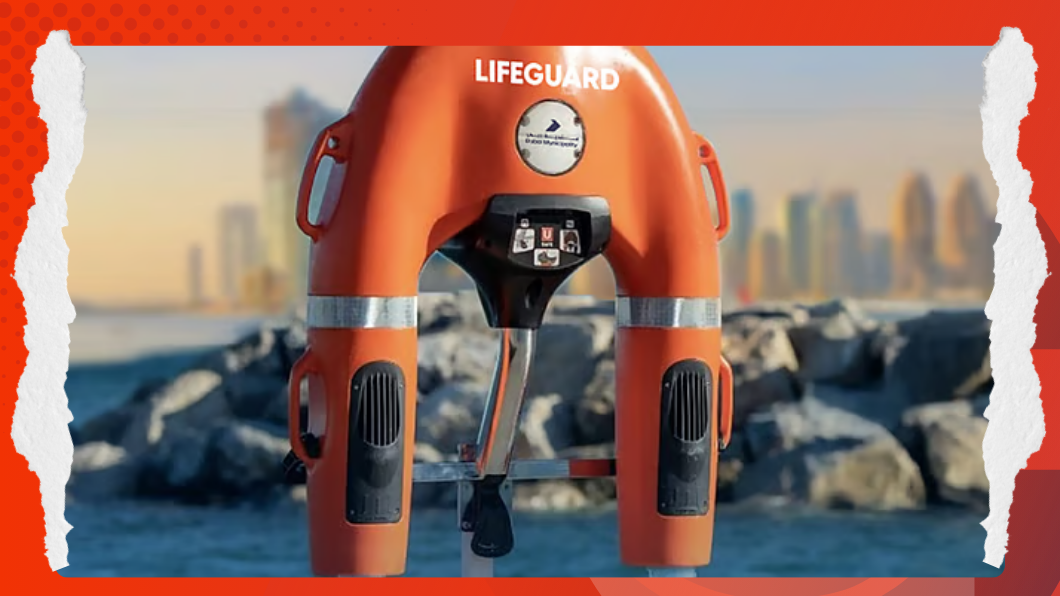
Dubai has started using robot lifeguards and beach rescue drones on public beaches as part of a new safety system led by Dubai Municipality. The goal is to spot trouble fast, reach swimmers faster, and reduce risk for lifeguards during the first critical moments of a rescue.
Dubai Municipality says it now runs an integrated setup that combines an aquatic rescue robot with an aerial water rescue drone. The machines help lifeguard teams cover more water and react more quickly when an emergency arises.
Dubai Municipality describes the rollout as a regional first for this type of combined system. It pairs a remote-controlled aquatic rescue robot with a drone that can drop support on the water. Teams also use continuous monitoring and centralized control to coordinate responses across larger stretches of coastline.
Dubai Municipality lists coverage that includes Umm Suqeim 1 Night Beach, Jumeirah 3 Night Beach, Jumeirah 1 Beach, Jumeirah 2 Beach, and Al Mamzar beaches. The city also notes it oversees public beaches and canals across the emirate.
How the robot lifeguard reaches swimmers fast
The aquatic rescue robot works as a remotely controlled, self-propelled device that lifeguards can send out quickly. Dubai Municipality says it can move up to five times faster than a lifeguard swimming during a traditional water entry rescue. That speed helps the team reach a struggling swimmer earlier, especially in rougher conditions.
Dubai Municipality also shares the operating limits it expects on the beach. The robot has a stated range up to one kilometer within line of sight and a towing capacity up to 500 kilograms. In plain terms, it can travel far enough to cover common swim zones and pull more than one person when needed, while lifeguards keep control from shore.
What the beach rescue drone does in an emergency
Dubai Public Beaches introduced an aerial water rescue drone that acts like a flying lifebuoy. Dubai Municipality says the drone can deploy quickly over the water, land on the sea surface, and give immediate buoyancy support to a person in distress. That matters because flotation buys time, and time reduces panic and exhaustion.
The drone also carries a live feed camera. Dubai Municipality says that live video helps lifeguards spot incidents sooner, judge risk faster, and coordinate the rescue with clearer direction. It also helps the team avoid guesswork when waves and crowds limit visibility from the sand.
How the full rescue system works together
Dubai Municipality frames this as a combined response that uses both air and water tools, supported by trained lifeguards and ongoing monitoring. The idea stays practical. The drone helps locate and support a swimmer early, while the aquatic robot closes the distance fast and assists with towing. Lifeguards then take over the hands-on parts of care and bring the person to safety.
Bader Anwahi, Chief Executive Officer of the Public Facilities Agency at Dubai Municipality, said the city wants a proactive, technology-led approach that improves protection for beach users and lowers risk for lifeguards. He also said Dubai aims to set global benchmarks for safety, readiness, and visitor confidence by investing in smart rescue solutions and upgrading its safety ecosystem.
What beach visitors should expect next?
This system does not replace lifeguards. It strengthens the first response, especially when a rescue starts far from shore or in tough water. Visitors will still see the usual beach rules, flags, and lifeguard stations. They will also see more rapid support in the water when trouble starts, since the team can send help without delay and without putting a rescuer into danger at the first step.
Dubai Municipality also links this work to year-round beach readiness. Dubai keeps busy public beaches during the day and at night in some areas, so response speed and coverage matter for residents and tourists alike.