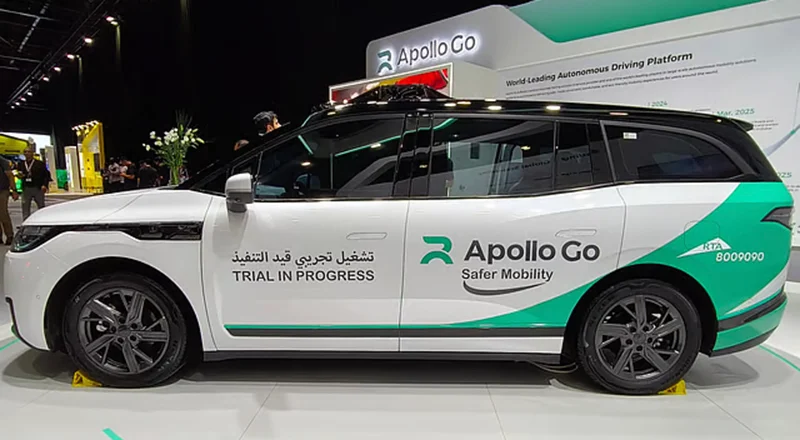
Dubai has become one of the first cities in the world to run fully driverless taxis as a commercial public service, marking a turning point in the global race toward autonomous urban mobility.
The emirate’s Roads and Transport Authority officially launched commercial operations on March 30, 2026. The service started in Umm Suqeim and Jumeirah and is accessible to the public through the Uber app and the Apollo Go app.
Two Companies, One Road
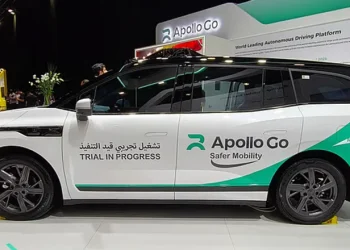
The rollout is the product of partnerships with two Chinese autonomous driving firms. WeRide, listed on the Nasdaq, supplies vehicles bookable through Uber, with day-to-day fleet operations handled by Tawasul Transport. Apollo Go, a subsidiary of Baidu, runs its own service through a dedicated app in collaboration with the Dubai Taxi Company.
The Baidu partnership has a particular significance: Apollo Go secured Dubai’s first permit for fully autonomous testing without a safety driver in January, and the Dubai deployment represents the app’s first international launch. The RT6, Baidu’s sixth-generation autonomous taxi, carries over 40 sensors, including high-precision LiDAR, multi-band radars, and advanced cameras, enabling it to perceive surroundings, respond to changing traffic conditions, and make real-time decisions on the fly.
The technology is backed by substantial real-world validation. The fleet has logged over 150 million kilometres of safe driving and completed more than 10 million autonomous trips globally.
A Fleet That Will Keep Growing
The initial deployment covers 100 driverless vehicles, with authorities indicating the fleet will gradually increase in the coming years to meet growing demand. Under the Dubai Taxi Company’s agreement with Baidu alone, the service is expected to scale from 50 vehicles in the first year to more than 1,000. The long-term target is 4,000 autonomous taxis on Dubai’s roads by 2030.
That expansion sits inside a broader strategic ambition. Dubai’s Self-Driving Transport Strategy aims to make 25 percent of all trips in the city driverless by 2030. To support operations, a dedicated 2,000-square-metre Operations and Control Centre was inaugurated in January 2026 at Dubai Science Park to monitor the fleet in real time and ensure safety oversight.
What Riders Should Expect
Riders booking through Uber can select an “Autonomous” option when in the designated areas. Fares are expected to run approximately 30 percent higher than standard Dubai taxis, positioning the service closer to limousine taxi rates, a premium that reflects both the technology and the novelty of the experience.
Beyond Dubai
Dubai is not the only city testing autonomous taxis, but it is one of the few to move from trials to full commercial operations without a safety driver on board. The city is fast becoming a proving ground for autonomous driving companies looking to demonstrate their technology outside China and the United States.
For the wider world, the significance is less about the taxis themselves and more about the policy conditions that made them possible; a regulatory environment willing to approve fully driverless operations at scale. That is a signal other cities will be watching closely.