
Dubai’s AI Feeding Stations Might Change How You See Tech
So if you’ve ever rolled your eyes at the whole concept of AI, thought it was cold corporate spying, or that it only served the purpose to deliver ads and track people, then this little anecdote from Dubai might help you change your mind.
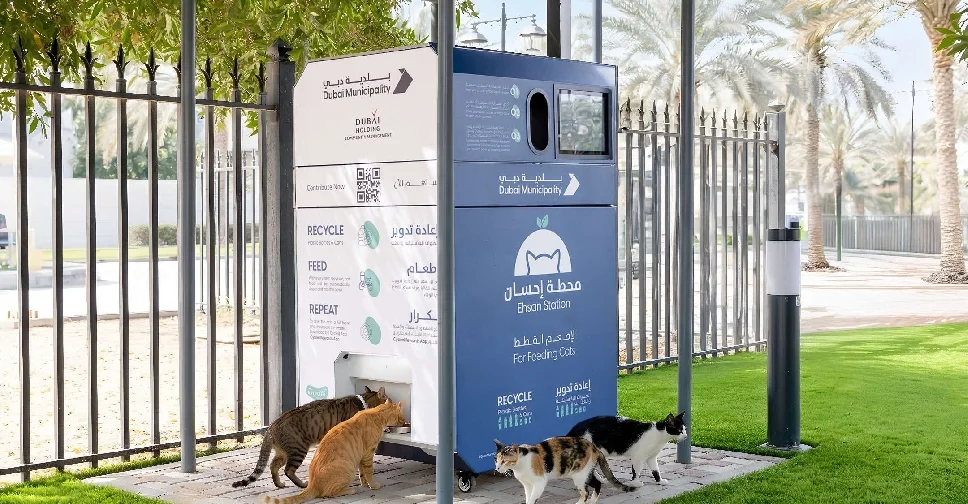
Dubai Municipality rolled out Ehsan Stations on the 8th of March 2026. It’s the first smart feeding kiosks powered by AI that serve the sole purpose of feeding the stray animals in the area (mostly cats) clean food without making a mess.
Ehsan is an Arabic term meaning kindness or compassion. And that’s exactly what these little devices do: they deliver kindness through technology.
What are Ehsan Stations? (The Intersection of AI and Animal Welfare)
Each station is a small, modern-looking kiosk located in various public parks and some Dubai Holding locations (12 stations in the pilot phase: 10 in parks, 2 in managed locations).
- Uses an AI camera and computer vision technology that detects the presence of stray cats (or other small animals).
- Automated distribution of food for the animal; no more random food distribution that leads to food spills, rodents, and uncontrolled waste.
- Tracks some basic information: the number of animals that visit, the frequency, and the general state of the animal’s body (using AI technology); these statistics are useful for the municipality in terms of animal welfare and the management of stray animal populations.
- It’s solar-powered, low-maintenance, and aims to keep the environment clean, supporting animals that cannot ask for help.
It’s not meant to replace human work; rather, it’s an extension of Dubai’s current TNR/TNVR programs (Trap-Neuter-Vaccinate-Return), which are humane approaches to the management of stray animal populations that involve sterilizing, vaccinating, and releasing the cats back into their territories.
How the Technology Works: Solar Power, Cameras, and Computer Vision
Most of the AI stories we hear about involve data privacy, job loss, deepfakes, or profit-driven algorithms. Not this one. This one is different. This one is about AI doing something small, tender, and unselfish, like helping voiceless stray cats eat regularly so that they stay healthy and do not cause conflicts with humankind. No one is being monitored. No one is being sold anything. The AI is simply ensuring that a living creature does not starve in a sanitary manner. It is unusual to see officials in a city known for its skyscrapers, supercars, and luxury malls use AI for feeding cats.
Beyond Feeding
Social media response has been positive. People are sharing pictures and small videos of these stations, calling it “Dubai at its best” – smart, compassionate, thinking ahead.
Feeding of strays is already allowed in Dubai, though under certain regulations to avoid health problems. There are many local initiatives for feeding strays. Ehsan stations simply institutionalize it most efficiently.
It’s also in keeping with UAE animal welfare laws, as well as Dubai’s fixation with being a “smart city” – but this time, it’s for something gentle.
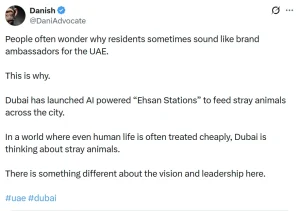
Why Ehsan Matters: Moving Toward a Non-Dystopian AI Future
Ehsan Stations are just 12 kiosks in the pilot phase and are not exactly the revolution the world has been missing.
But they do demonstrate something very quietly and effectively:
Technology doesn’t have to be dystopian or exploitative.
It can be used in ways that make the world a slightly better place for creatures with no voice.
And if AI can be used to feed hungry street cats in Dubai, have we not judged AI too harshly?