
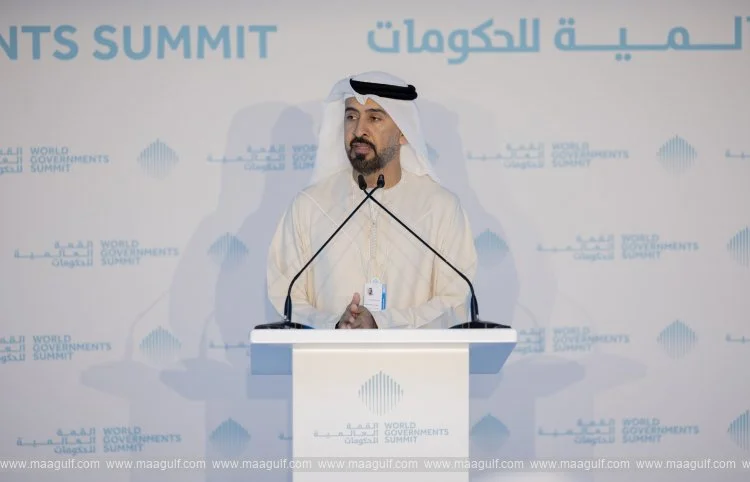
Abu Dhabi has launched a comprehensive solar self-supply policy that allows residents, businesses, and landowners to generate their own electricity through rooftop panels and battery systems. Announced at the World Governments Summit last week, the policy represents one of the most significant regulatory shifts in the emirate’s energy sector.
Empowering Consumers, Easing the Grid
The Solar Energy Self-Supply Policy gives customers a straightforward choice: continue consuming electricity directly from the grid, or adopt flexible renewable solutions including photovoltaic panels, solar-powered water heaters, and battery storage systems. The initiative targets improved daytime electricity efficiency and reduced dependence on grid power during peak hours.
Abdulaziz Mohammed Al Obaidli, Director General of Regulatory Affairs at the Abu Dhabi Department of Energy, described the policy as enabling the community to actively participate in meeting clean energy targets. By allowing customers to generate power at the point of use, the emirate expects to reduce grid pressure while advancing its Energy and Water Efficiency Strategy 2030 objectives.
The policy will initially focus on the agricultural sector, rest houses, and ranches, segments with high electricity consumption and ample space for solar installations. These early adopters can leverage the full range of solutions: rooftop panels for daytime electricity, solar water heaters for thermal needs, and battery systems to extend solar usage into evening hours when the desert sun disappears.
Strategic Timing in a Renewable Transition
The launch aligns with Abu Dhabi’s broader climate commitments and its push toward diversified energy sources. As an oil-rich emirate traditionally reliant on fossil fuel generation, Abu Dhabi is deliberately shifting toward renewable capacity while maintaining energy security and supply reliability.
The policy contributes to grid efficiency improvements by distributing generation closer to consumption points. When thousands of facilities produce their own daytime electricity, centralised plants face reduced demand during peak solar hours. This distributed approach also strengthens supply security by creating backup capacity across the emirate rather than concentrating generation in fewer locations.
For consumers, the economic case is compelling. Significant savings become possible through reduced electricity bills, particularly for energy-intensive operations like farms and facilities with substantial daytime consumption.
Building a Policy Ecosystem
The solar self-supply policy doesn’t exist in isolation. Abu Dhabi’s Department of Energy is simultaneously launching an Energy Efficiency Appliances Policy and a guidance manual on high-efficiency appliances. These complementary initiatives create a comprehensive framework: generate your own clean power, then use it efficiently through optimised equipment.
Additional policies will roll out throughout 2026 as part of a coordinated energy and climate strategy. This phased approach allows regulators to learn from initial implementation, adjust based on uptake patterns, and fine-tune incentives before expanding to broader consumer segments.
Global Best Practices, Local Application
Abu Dhabi’s approach mirrors successful models from markets with mature distributed solar programs. The policy emphasises customer choice rather than mandates, scalability over pilot projects, and integration with existing grid infrastructure rather than wholesale system redesign.
The Department of Energy explicitly references global best practices in its framework while adapting them to local conditions, abundant sunshine, concentrated urban centres, dispersed agricultural operations, and a population accustomed to reliable, subsidised electricity.
Whether the policy achieves its transformative potential depends on factors beyond regulatory language: connection procedures, equipment standards, grid compatibility requirements, and how utilities adapt to bidirectional power flows. The focus on farms and ranches suggests pragmatic sequencing, starting with applications where the value proposition is clearest and space constraints are minimal.
For now, Abu Dhabi has signalled that renewable energy is about rooftops, ranches, and giving consumers direct participation in the energy transition. The grid isn’t going away, but it might increasingly become a backup rather than the primary source for a growing segment of the emirate’s electricity users.