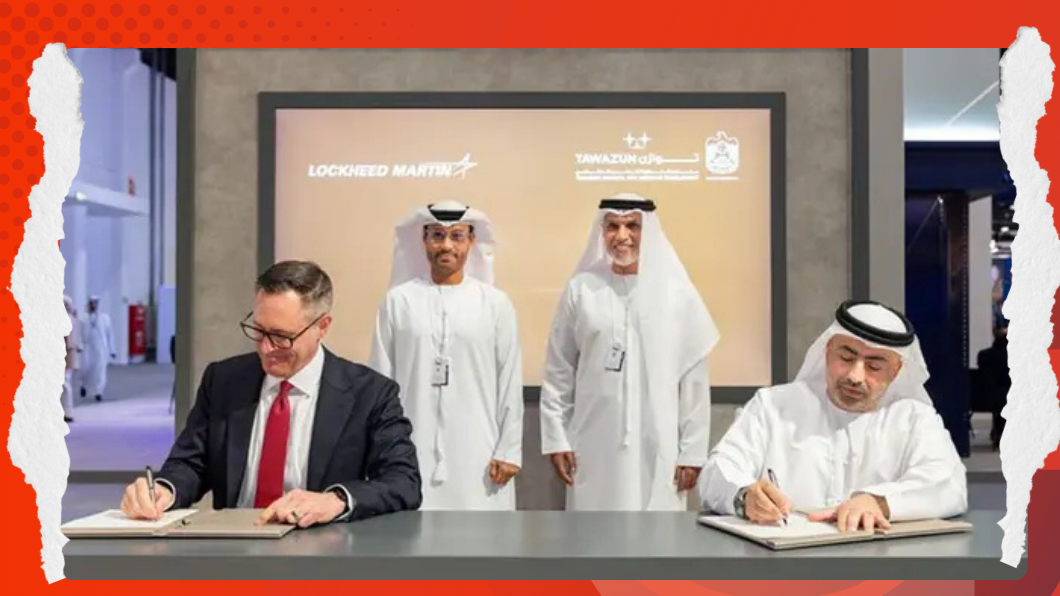
Tawazun Council for Defence Enablement and Lockheed Martin have agreed to set up a Cybersecurity Centre of Excellence in the UAE. They signed the deal at Make it in the Emirates 2026 in Abu Dhabi. The plan also brings in Abu Dhabi-based Data7 and coordinates with the UAE Cybersecurity Council. The goal is to build stronger local cyber skills, bring more know-how into the country, and give the UAE deeper control over critical digital security work.
Recent cyber deals no longer focus solely on software. Buyers now want training, local operations, faster incident response, and tighter control over sensitive systems. That gives this UAE move real weight. It is not only about opening a centre. It is about building cyber muscle inside the country.
The deal in simple terms
The agreement puts Lockheed Martin and Data7 in charge of establishing the Cybersecurity Centre of Excellence under the Tawazun Economic Programme. Tawazun says the centre will support national cyber readiness, spark local innovation, and help shape a stronger digital security ecosystem that fits the UAE’s strategic goals. In plain terms, the centre is meant to become a home base for cyber capability, not just a showroom for foreign tools.
The announcement also stresses technology transfer. That matters because the UAE wants more than vendor access. It wants local teams that can run, improve, and defend key systems on their own soil. Tawazun, Lockheed Martin, Data7, and the UAE Cybersecurity Council all framed the centre around sovereign digital capability and Emirati talent development. That language reflects a direct push toward skills, ownership, and long-term resilience.
Why the UAE wants this now
The UAE has spent years building a formal cyber plan. Its National Cybersecurity Strategy sets out five pillars and 60 initiatives. The strategy calls for stronger regulation, better incident response, protection for critical sectors such as energy, finance, health, transport, and government, plus tighter cooperation between public agencies, private firms, and academia. It also sets a goal to develop more than 40,000 cybersecurity professionals. This new centre fits that direction almost line by line.
IBM’s 2024 Cost of a Data Breach Report says the global average breach cost reached 4.88 million dollars. IBM also found that 70 percent of breached organisations faced major or moderate disruption. On top of that, firms with severe security staffing shortages paid far more after an incident. Those numbers explain why countries and large contractors now put cyber talent, faster detection, and automation near the top of their investment plans.
That context makes the UAE announcement more practical than symbolic. The centre answers three problems at once. It supports local skills. It supports faster cyber response. It supports stronger control over important systems and data. That is the direction the cyber market has taken in recent years, especially in sectors tied to national security and critical infrastructure.
Lockheed Martin already has a local base
Lockheed Martin does not enter this project as a new visitor. The company says it has worked in the UAE for 50 years. It also says its Center for Innovation and Security Solutions in Masdar City has operated since 2014. That centre has supported defence, security, and technology development programs for Emirati engineers and industry professionals. Lockheed also points to the first UAE Cyber Security Challenge as part of that local work. This history gives the new agreement more substance because it builds on an existing footprint.
Data7 gives the plan a local delivery layer. The company says it started in Abu Dhabi in December 2023 and offers services in cybersecurity, data, infrastructure, software, and training. That profile matches the agreement’s focus on tech transfer and local capability building. For Tawazun, this kind of structure matters. A global defence company brings experience and reach. A UAE-based partner helps root the work in the local market and local talent base.
Delivery will decide the outcome
The announcement sets a strong direction, but delivery will decide its value. The real test will come when the partners show how the centre will train teams, support live cyber operations, and turn technology transfer into repeatable work inside the UAE. If that happens, the centre will do more than add another name to the market. It will help the UAE keep more cyber expertise, response capacity, and industrial value at home.
That is why this story deserves attention beyond defence circles. The deal speaks to a broader truth in tech today. Countries want cyber strength that they can train, run, and improve locally. Tawazun and Lockheed Martin have now put that goal into a clear UAE project. The next phase is execution.