By the time SAMA announced its open banking licensing framework on 26 March 2026, Saudi consumers had already done the work. They’d moved to digital payments, adopted BNPL at checkout, opened accounts with neobanks, and built financial habits on top of apps that didn’t even have full visibility into their own data. Electronic payments accounted for 85% of total retail transactions in Saudi Arabia in 2025. That number didn’t happen because regulators told people to go digital. It happened because people went digital on their own, using whatever tools existed, whether or not the infrastructure beneath them was ready.
The infrastructure is now ready.
A Market That Moved Before the Rules Did
To understand why SAMA’s licensing announcement matters, it helps to understand what Saudi consumers were doing without it.
Open banking — the idea that your financial data can be securely shared with third-party apps you trust, with your permission — was always the missing layer. Without it, a budgeting app couldn’t see your transactions across multiple banks. A lender couldn’t verify your income from real data. A BNPL platform had to make credit decisions with limited visibility into what you already owed elsewhere. SAMA describes open banking as enabling customers to securely share their financial information with regulated entities, allowing them to access new and innovative financial products and services. What that means in practice is that the products Saudi consumers were already using — Tamara, Tabby, digital bank accounts — were operating with one hand tied behind their back.
Despite that, the market grew anyway. D360, one of Saudi Arabia’s first fully digital Sharia-compliant banks, crossed one million customers after launching in late 2024. Tamara became embedded in checkout flows across the Gulf. The consumer appetite was clearly there. The data layer wasn’t.
From Sandbox to Real Market
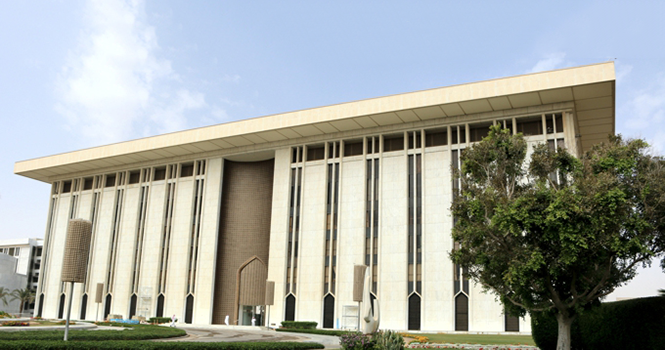
SAMA moved open banking out of its controlled testing environment and into a formal licensing regime on 26 March 2026, signalling that the framework had reached a level of maturity suitable for broader market adoption. That followed four years of supervised sandbox testing, during which selected companies trialled open banking products under close regulatory watch before any of it went live at scale.
The first company to emerge from that process with a full licence was Lean Technologies. During the sandbox phase, Lean connected over 1 million bank accounts and processed more than 1 billion transactions, establishing an operational track record before receiving full authorisation. That’s not a pilot. That’s a company that spent years quietly proving the infrastructure works before anyone handed it a commercial licence.
Lean’s infrastructure is already powering financial services through partnerships with Tabby, Tamara, Abdul Latif Jameel, Sukuk, and Tasheel, enabling enhanced KYC, improved risk assessment, and data-driven products across BNPL, consumer finance, and automotive sectors. The licence doesn’t change what Lean is doing. It changes the scale at which it can do it.
What Becomes Possible Now
The practical implications are more concrete than most regulatory announcements. For SMEs — which have historically struggled to access credit in Saudi Arabia because lenders couldn’t verify their real financial position — open banking means a loan application can now be assessed against actual transaction data rather than self-reported numbers. That changes who gets credit and how fast.
For consumers, it means a budgeting app can finally see the full picture across all their accounts. For merchants, it means payment flows that actually understand spending patterns. One of the most consequential impacts is open banking’s ability to broaden financial access for Saudi Arabia’s growing workforce of non-traditional income earners — freelancers, gig workers, small business owners — who’ve historically fallen outside the credit system because their income doesn’t fit a standard payslip. Economy Post
Who Built the Pipes
None of this arrives without the companies that spent the sandbox years doing the foundational work. Lean Technologies, founded in 2019 by Hisham Al-Falih, Ashu Gupta, and Aditya Sarkar, provides financial infrastructure that enables secure access to banking data across use cases, including BNPL, consumer finance, automotive, and investment services. It’s not a consumer-facing brand. Most Saudi users will never hear of it. But they’ll use the products it enables every time they split a payment or apply for credit through an app.
Lean’s CEO put it simply when the licence came through. The conviction behind founding the company six years ago, he said, was that open, regulated access to financial data would become the foundation for the next generation of Saudi financial services. The licence, in his words, was the moment that conviction became official.
That framing matters. Lean wasn’t building a product. It was building infrastructure for products that didn’t exist yet.
Saudi consumers proved the demand was real long before the infrastructure caught up. With open banking now a formally supervised activity, firms must demonstrate institutional readiness around governance, risk management, cybersecurity, and operational resilience — and maintain transparent customer protection measures around consent and data use. The regulatory framework is built. The consumer behaviour is established. The companies doing the foundational work have their licences.
The products that Saudi Arabia’s fintech market actually needs are the ones that haven’t been built yet.