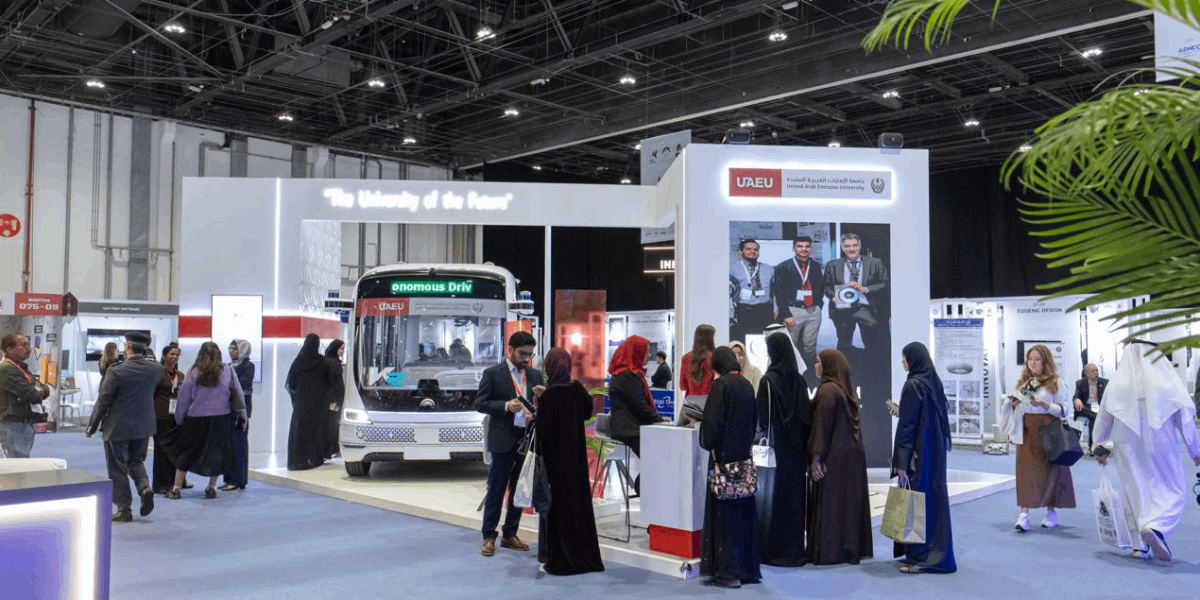
Students at the United Arab Emirates University can now witness the future of transport up close. The institution just launched a pilot program that puts autonomous vehicles on campus roads. This makes UAEU one of the first universities in the region to turn its grounds into a testing site for tomorrow’s mobility solutions.
The university announced the pilot phase in January 2026, following the project’s unveiling at UMEX 2026. UAEU partners with K2 and coordinates with the Integrated Transport Centre to run this ambitious program. The Centre oversees regulations to maintain safety standards throughout the trial.
Real-World Testing Ground for Innovation
The Emirates Center for Mobility Research leads this initiative from the academic side. Professor Dr. Hamad Abdullah Al Jasmi directs the center and sees this project as more than just transport. He describes it as an advanced research platform that collects operational data and runs live trials.
Professor Dr. Ahmed Ali Al Raisi serves as Chancellor of UAE University. He states the project reflects how the institution uses innovation to improve campus life. The program connects academic research with practical applications through public-private partnerships.
The autonomous vehicles move students and staff across campus while researchers gather performance metrics. This data helps develop future mass transit solutions. The information also supports Abu Dhabi’s efforts to build infrastructure for autonomous technology.
Building on Previous Success
UAEU already showcased autonomous mobility concepts at GITEX Global 2025. Students from the Department of Electrical and Communications Engineering presented a smart transport system at that event. Their project used artificial intelligence and autonomous control to manage campus vehicle movement.
The students designed their system to reduce congestion and carbon emissions. The technology relies on continuous communication between vehicles and a central hub. RFID tags, autonomous navigation, and AI algorithms work together to track locations and regulate traffic flow in real time.
This earlier project showed strong promise during GITEX Technology Week 2025. The positive reception encouraged university leadership to move forward with actual on-campus deployment.
Benefits Beyond Transportation
The campus pilot delivers multiple advantages for students and faculty. Wait times for campus shuttles decrease as autonomous systems optimize routes. The vehicles operate more efficiently than traditional transport options.
Environmental benefits come from reduced emissions. The smart system manages traffic flow to minimize fuel consumption and carbon output. This aligns with sustainability goals that many educational institutions now prioritize.
Students gain hands-on exposure to emerging technologies. Engineering and computer science programs benefit from having autonomous vehicles as living laboratories. Research opportunities multiply when cutting-edge technology operates on campus daily.
The project also enhances safety through consistent operation and real-time monitoring. Autonomous systems eliminate human error factors like distraction or fatigue. Sensors detect obstacles and hazards faster than human drivers.
Preparing Infrastructure for Tomorrow
The pilot tests how autonomous vehicles integrate with existing campus infrastructure. Roads, parking areas, and pedestrian zones must work together with new technology. UAEU uses this trial to identify necessary upgrades and modifications.
Communication networks need robust bandwidth to handle vehicle data streams. Campus Wi-Fi systems must support continuous connections between vehicles and control centers. The university evaluates these requirements during the pilot phase.
Weather conditions in the UAE present unique challenges. Heat and occasional sandstorms test vehicle sensors and systems. The campus environment allows researchers to study these factors and develop solutions.
Campus topography also matters. Hills, curves, and intersections all affect autonomous vehicle performance. The pilot reveals how well current technology handles these variations.