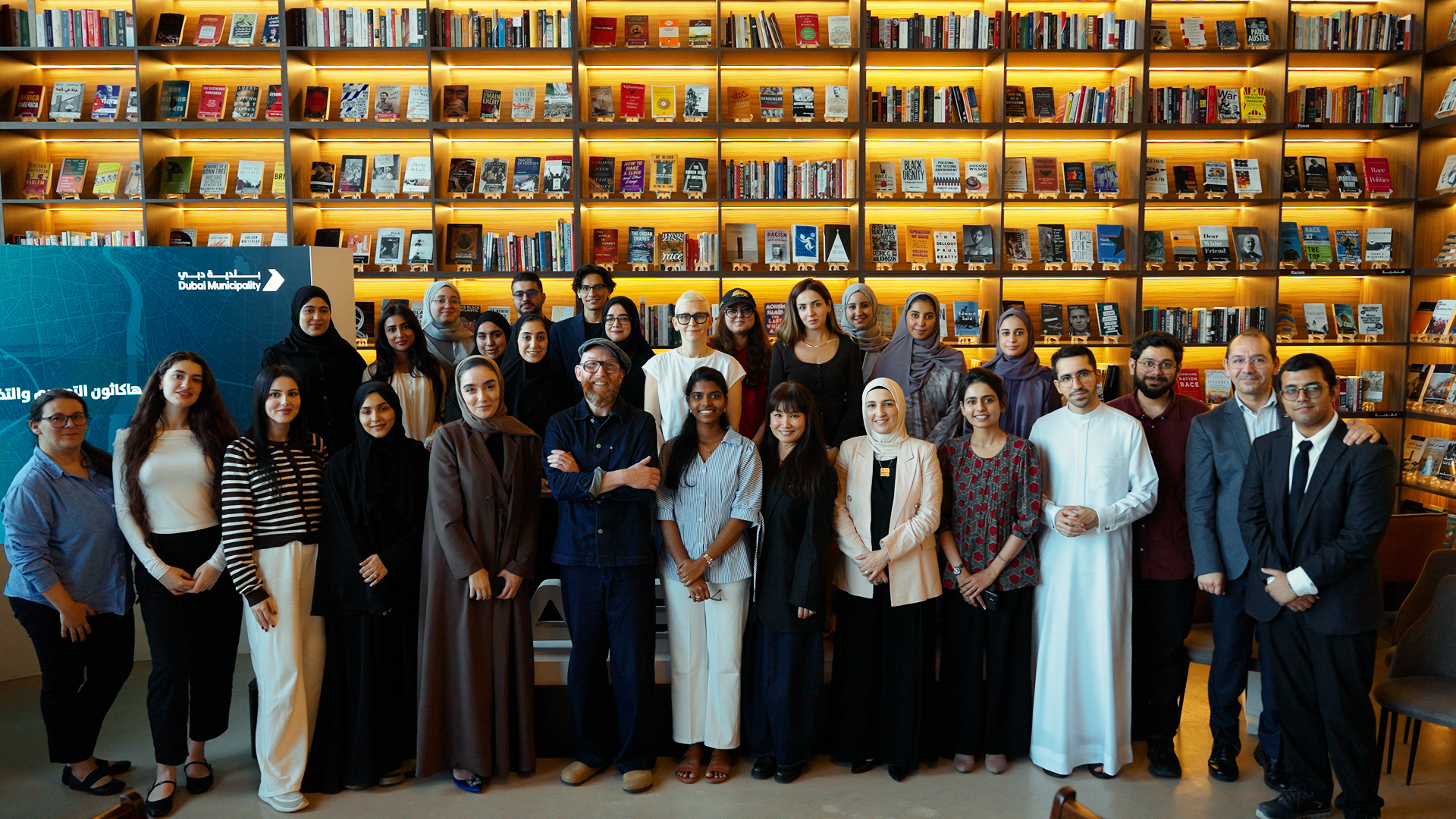
Dubai Municipality has shown that urban innovation is possible with the right collaborative approach. Their newly launched Urban Think Tank and Design Lab has delivered remarkable results in its first 100 days, producing 45 design concepts and laying the groundwork for 25 active urban projects.
The initiative is a shift from traditional top-down city planning to a collaborative model that brings together government officials, private developers, academics, and international experts. This approach has already attracted 13 local and international partners and engaged more than 80 participants in hands-on design activities.
35 Innovation Workshops Transform Urban Planning Approach
The Lab has conducted 35 innovation and ideation workshops, working closely with government entities, private sector partners, and academic institutions. These sessions focused on creating practical solutions for public spaces, building facades, walkways, community zones, and residential areas.
One standout achievement was organizing a large-scale co-design workshop that brought together 65 specialists from 30 different organizations. This collaborative effort demonstrates how diverse expertise can be channelled into unified urban development goals.
The program has also established partnerships with five leading global consultants, ensuring that Dubai’s urban planning benefits from international best practices while maintaining local relevance.
Urban Hackathon Explores Human-Centered Design Solutions
Dubai Municipality launched an Urban Hackathon as part of the program, focusing on the relationship between people and places through behavioural analysis and lived experiences. The hackathon examined historic areas of Dubai, seeking ways to enhance urban environments while preserving cultural identity.
Global architecture firm Foster + Partners contributed expertise through Bruno Moser, who highlighted the importance of behavioural insights in creating adaptable, human-centered urban environments. The hackathon aims to establish a shared design language connecting students, developers, and government entities.
This collaborative approach differs from traditional urban planning methods by prioritizing emotional connections and daily experiences over purely functional considerations. The initiative seeks to create spaces that strengthen community bonds while supporting Dubai’s global competitiveness.
Data-Informed Planning Replaces Traditional Development Models
His Excellency Marwan Ahmed bin Ghalita, Director General of Dubai Municipality, emphasized that modern city-building requires more than physical infrastructure development. The new approach focuses on comprehensive urban models driven by knowledge, future insights, and quality of life considerations.
“The results achieved through the Lab demonstrate a practical approach to participatory, data-informed planning that harnesses community insight and partner expertise to deliver implementable solutions,” bin Ghalita stated during the showcase event.
This methodology is a departure from conventional planning processes that often exclude community input until later stages. Dubai aims to create more responsive and effective urban solutions by involving stakeholders from project inception,
Historical Context Shapes Future Development Strategies
The program included dialogue sessions exploring Dubai’s urban heritage and its influence on contemporary planning. His Excellency Mohammed Ahmed Al Murr delivered a keynote address about Dubai Creek’s historical role in shaping the city’s identity and how spatial memory affects modern urban design.
These sessions featured rare historical photographs of Al Shindagha and announced an upcoming publication titled “Memories of old Al Shindagha.” This historical perspective ensures that future development respects and builds upon Dubai’s cultural foundation.
Global urban design expert Adam Scott also contributed with a lecture on “Reimagining Urban Life Through Experience-Driven Design,” which examined how emotions and lived experiences influence people’s relationships with cities.
Collaborative Platform Sets New Standards for Urban Innovation
The Urban Think Tank and Design Lab has evolved into what Dubai Municipality calls an “active co-design platform” that translates strategic visions into practical projects. This model brings together diverse stakeholders who might not typically collaborate in traditional planning processes.
Students from the American University of Sharjah participated alongside major developers, including representatives from Emaar Properties, Binghatti Holding, and Sobha Realty. This combination of academic perspectives with commercial expertise has produced innovative approaches to urban challenges.
The platform’s success in engaging multiple sectors simultaneously suggests that collaborative urban planning can be both efficient and comprehensive. The initiative has created a replicable model for other cities seeking to modernize their planning processes.
25 Active Urban Projects Enter Development Phase
Beyond conceptual work, the Lab has already laid foundations for 25 urban projects currently entering the development phase. These projects span various scales and applications, from neighbourhood improvements to district-wide initiatives.
The rapid progression from ideas to implementation demonstrates the Lab’s effectiveness in moving beyond academic exercises to practical urban solutions. This speed of execution sets a new benchmark for how quickly collaborative planning processes can produce tangible results.
The diverse project portfolio addresses multiple urban challenges simultaneously, suggesting that the collaborative approach generates more comprehensive solutions than traditional sector-by-sector planning methods.
Global Recognition for Participatory Planning Methods
Dubai’s approach aligns with global trends toward participatory urban planning, but the scale and speed of implementation set it apart from similar initiatives worldwide. The 100-day timeline for achieving substantial results contrasts with longer development cycles common in other cities.
International participation from global consultants and academic institutions has provided external validation of the Lab’s methods. This recognition positions Dubai as a leader in innovative urban planning approaches that other cities may seek to emulate.
The program’s success in engaging private sector partners alongside government and academic participants demonstrates a model for public-private collaboration in urban development that addresses both commercial viability and public benefit.
The Urban Think Tank and Design Lab demonstrates Dubai’s commitment to human-centered urban development that prioritizes collaboration, innovation, and rapid implementation. With 45 design concepts already generated and 25 projects underway, the initiative proves that inclusive planning processes can accelerate rather than delay urban progress.