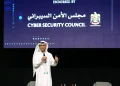

As the Middle East accelerates its digital transformation from smart cities and digital banking to energy tech and e-health, it also becomes a more lucrative target for cybercriminals. Yet, amidst the headlines of attacks and rising threats, there’s also innovation, strategy, and growing regional cooperation.
To unpack the state of cybersecurity in this dynamic region, we spoke with Aliu B. Sanusi, a cybersecurity consultant who has worked across Nigeria and Qatar. His perspective bridges the technical, cultural, and strategic dimensions of cyber defence in the Middle East.
In this exclusive Q&A, he outlines the key threat vectors, policy blind spots, investment opportunities, and why localisation, linguistic and strategic is the next frontier.
1. What was your first encounter with cybersecurity in the Middle East and what did it reveal to you?
My first significant encounter with cybersecurity in the Middle East happened while working with a logistics firm in Qatar. Unlike Nigeria, where the focus is often on foundational IT security, I was struck by the region’s vulnerability due to its sheer digital footprint and the strategic nature of its sectors. That early experience exposed how much confidential data was flowing across digital platforms with inadequate protection. It made me realise the urgent need for proactive investment in cybersecurity infrastructure, not just to keep up with tech advancement but to safeguard national and economic interests.
2. Which sectors are most vulnerable to cyberattacks in the region and why?
The most vulnerable sectors, in my view, are energy, health, and finance. Energy, especially, is a prime target because of the operational technology (OT) systems that underpin it, these are often not designed with cybersecurity in mind. Health systems, with their massive digital records and infrastructure, are attractive to ransomware actors. The finance sector, while more mature, is also a magnet for attacks due to the financial gain it offers and the complexity of its systems. These sectors collectively account for a significant portion of GDP, which makes them high-value targets.
3. What organisational blind spots have you observed that weaken cybersecurity across the Middle East?
One of the biggest blind spots I see is the absence of incident response plans. I consulted for an organisation that had sophisticated systems but no contingency structure in place. It’s like building a house with no smoke detectors, when a fire starts, you’re blind to it. Fortunately, a policy now mandates incident response teams across institutions in some countries in the region, but compliance and operational maturity still vary widely.
4. Is the region prepared for emerging threats like AI-powered phishing or deepfake disinformation?
The Middle East is investing heavily in both AI and cybersecurity, which is promising. However, we need more automation in threat detection and response. AI-generated phishing, infrastructure sabotage, and deepfake-based disinformation campaigns are not future threats, they are current realities. Preparedness will hinge on expanding cybersecurity talent, adopting automation tools, and fostering real-time monitoring capabilities. Cross-border collaboration will also be key to detecting and neutralising threats early.
5. How can Middle Eastern countries balance cyber sovereignty with the need for global threat intelligence sharing?
Cyber sovereignty is important, but isolation is dangerous. Countries in the Middle East should see collaboration as a strength, not a weakness. Establishing regional SOCs (Security Operations Centres) integrated with threat intelligence platforms is vital. Cross-border security agreements, particularly among GCC states can create a buffer of shared insights and coordinated response without sacrificing national control.
6. You’ve pioneered localised cybersecurity education. What would a culturally resonant cyber awareness programme look like in the Middle East?
In Nigeria, I localised cybersecurity training in Yoruba to reach wider demographics traders, youth, retirees. It worked because it made the abstract tangible. For the Middle East, I’d create awareness programs in Arabic and local dialects, using culturally relevant analogies and visual storytelling. Think interactive mobile modules, short-form videos with regional accents, and even mosque or community-centre-based workshops. Cyber awareness must be demystified and democratised.
7. What cultural or behavioural patterns impact cybersecurity in Middle Eastern organisations?
Culture plays a subtle but critical role. In many Middle Eastern firms, particularly where expat IT staff dominate, there’s sometimes a disconnect between technical implementation and local trust. Speaking the local language helps bridge this gap. Insider threats remain a silent risk, trust is high, but verification systems are often lax. Improving cyber hygiene will require stronger behavioural policies and more culturally attuned leadership training.
8. Where do you see the biggest entrepreneurial opportunities in Middle Eastern cybersecurity?
This is one of the most exciting frontiers. Building the first Arabic-language threat intelligence platform tailored to regional needs would be game-changing. There are gaps around ICS (Industrial Control Systems) protection, identity management, and access control. Startups that address these with cultural nuance and deep technical insight will find both market demand and investment appetite. There’s also huge potential for localised cybersecurity training-as-a-service models.
9. Are there any successful regional cooperation models the rest of the world should be paying attention to?
There was a recent MOU between two GCC countries focused on cyber crime tracking and joint drills. These are promising steps. The region is also experimenting with shared FinTech regulatory sandboxes and cybersecurity frameworks. These cooperative models not only enhance incident response but also allow for collective pressure against transnational threats. The rest of the world should be watching these emerging alliances.
10. If you were advising a national cybersecurity task force in the Middle East, what would your top three recommendations be for 2030 readiness?
- Establish national SOCs that are integrated with global and regional threat intelligence systems.
- Embed cybersecurity education across all levels of the national curriculum, from schools to executive training.
- Plan ahead. Prepare now for emerging tech disruptions AI, quantum computing, Web3 so your national security isn’t always playing catch-up. Qatar’s Strategy 2030 is an excellent reference point. Every country needs its own long-range cyber roadmap.
What’s Next?
This conversation with Aliu B. Sanusi reveals a region in transition, from reactive defence to strategic foresight. The Middle East isn’t just catching up; in some areas, it’s leading. But the gaps are still wide, between investment and implementation, between global partnerships and sovereign control, and between awareness and action.
The next phase of cybersecurity in the region will be local, multilingual, cross-border, and deeply human. That’s the challenge and the opportunity.